

Five habits that can halve the waste your kitchen throws out every day
Separating wet and dry waste, reusing peels, carrying a cloth bag, cooking to measure and reusing containers can cut household kitchen waste by more than half.
 Images are not validated/verified
Cooking every day produces waste, and it makes the kitchen dirty. Vegetable trimmings, fruit peels, used tea leaves, empty packets and leftover food together fill the kitchen bin within a day. If the bin is not emptied on time, a stench spreads through the house. Many women wonder what to do with all this waste. A few small changes in habits can cut more than half of it.
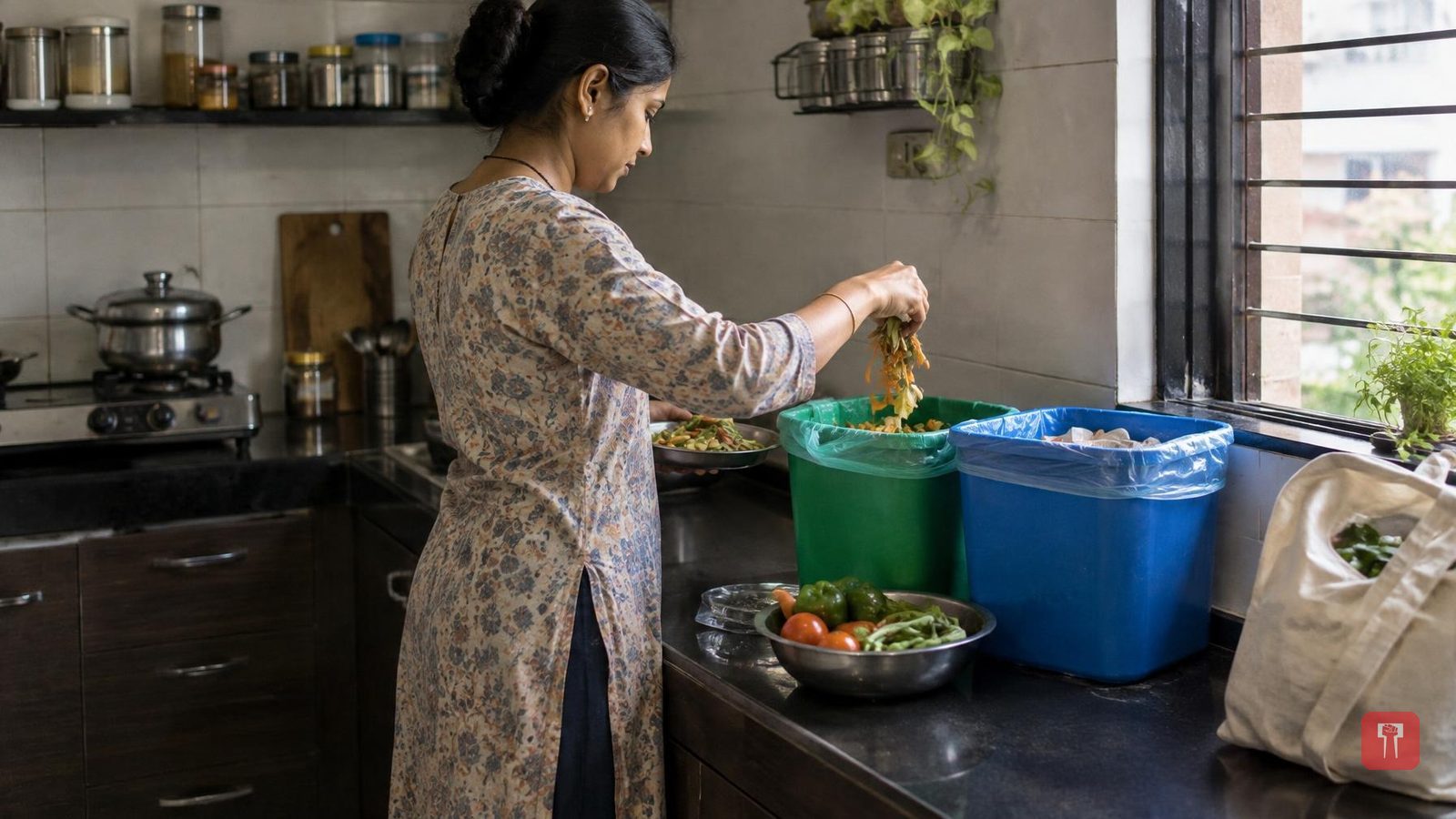
The first rule is to keep two bins. Never put wet and dry waste together. In most homes in India, all the waste goes into a single bag, which is why it smells. Keep two separate bins instead.
Put only wet waste in one bin, such as vegetable peels, fruit pieces, eggshells, leftover rice and other food items. Keep dry waste, meaning plastic, paper and glass, in the other. This stops the smell and makes it easier to hand the waste over when the municipal vehicle arrives. Those who are keen can also turn wet waste into compost for plants on the balcony.
Second, think twice before throwing away peels. Peels are often tossed straight into the bin as soon as they are seen, but not every peel belongs there. Some peels are rich in vitamins. For instance, a chutney made from pumpkin and bottle gourd peels tastes very good. Potato peels can be made into crisp wafers. Radish leaves, the outer leaves of cabbage and cauliflower stalks can also be cooked as a vegetable. Washed well and used, they give a new dish and reduce waste.
The third habit is a cloth bag. Taking a separate plastic bag for every vegetable at the market has become a habit. At home these bags pile up and are then thrown away. It is better to carry one cloth bag when leaving the house. Once bought, it lasts 2-3 years comfortably and can be washed. Old plastic bags lying at home should not be thrown away either. Return them to the vegetable seller, who will use them to give you vegetables. This will cut plastic considerably.
Fourth, cook to measure. Leftover food creates the most waste. Indian homes often cook more than is needed. What is left over goes into the fridge, and the same food is thrown out three days later. Instead, decide beforehand how much each person in the house will eat and cook accordingly, and food will not be wasted. If the week's menu is planned in advance, the quantity of groceries to be bought can also be worked out. Then no excess food will be cooked and none will go to waste. Leftover rice can be made into pulao, and leftover chapati into a tempered chivda or laddoos.
Fifth, do not throw away empty bottles and containers. When an oil can or a pickle jar is finished, it is usually thrown away, though these things are quite useful. Glass jars can be washed and filled with salt, sugar and pulses, which changes the look of the kitchen. Old plastic containers can be used to grow plants. Old cotton clothes can be torn up and used as cleaning cloths. There is no need to buy new ones.
