

Five common mistakes that undermine SSC exam preparation, and how to avoid them
Lakhs of young people work hard for SSC CGL, but a wrong approach to preparation can keep success out of reach.
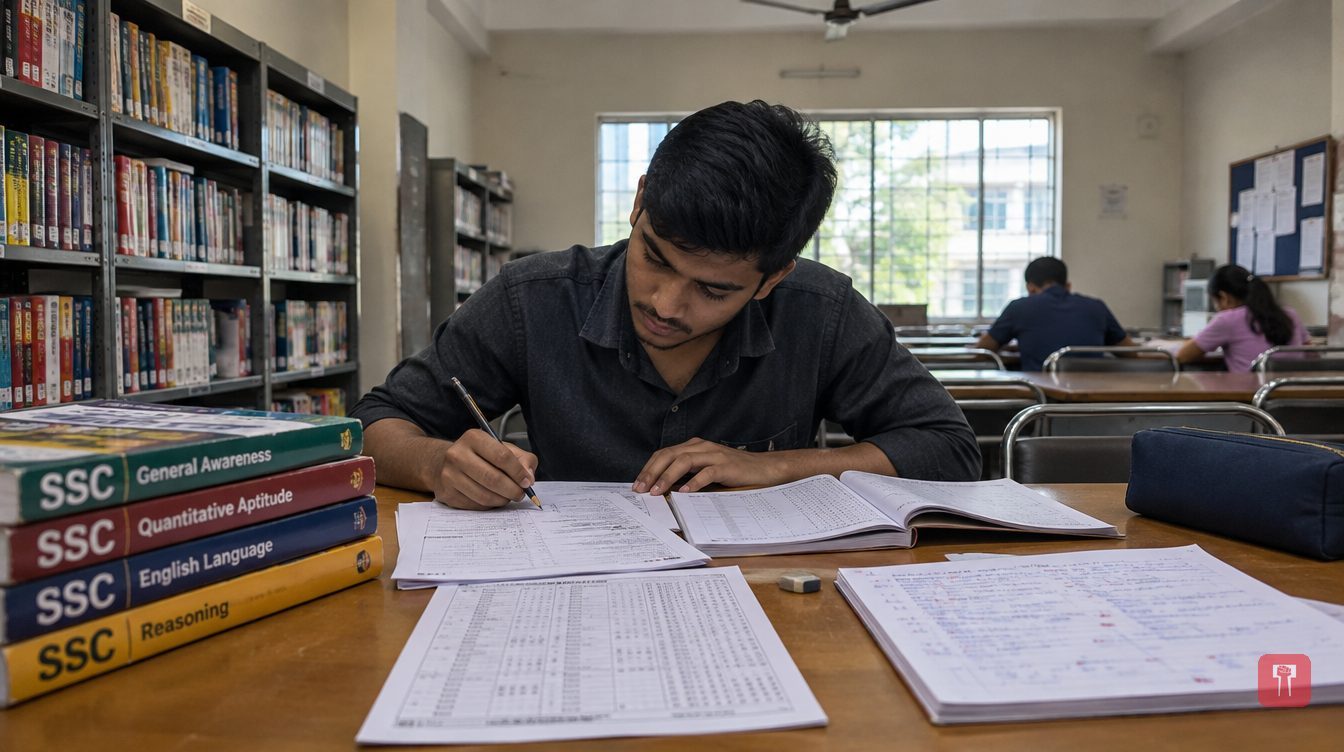 Images are not validated/verified
Lakhs of young people across India work day and night to clear the SSC CGL exam. Some spend hours solving mathematics problems, while others are busy preparing English and general knowledge. Even so, many candidates face repeated failure. The question is why success eludes them despite so much effort. One major reason could be a wrong method of preparation.
Students often study a great deal but neglect essentials such as understanding the exam pattern, taking mock tests and revisiting old topics. Those preparing for SSC CGL, CPO, GD or MTS need to recognise these five mistakes.
The first mistake is starting to study without understanding the exam pattern. Before beginning preparation, it is important to know what kinds of questions are asked and which subjects deserve more attention. Many candidates, with no plan, give every subject equal time. Important subjects can then fall behind and time is not used well. To avoid this, solve previous years' question papers. They help in understanding the types of questions, the difficulty of the exam and one's own weaknesses. Set separate targets for mathematics, English, reasoning and general knowledge. Also understand the rules of negative marking and build a strategy for attempting questions.
The second mistake is buying a pile of books and courses. Many candidates believe that the more books and online courses they have, the better their preparation will be. In this pursuit they buy courses from different teachers and also start using several mock test platforms. But too much study material can add to confusion and leave no time to understand any one subject properly. So choose a few reliable books for each subject. Reading one good book repeatedly and practising its questions can be more useful than reading many books halfway. Once the material is chosen, stick to it and revise continuously.
The third mistake is shying away from mock tests or not analysing one's errors. Mock tests give candidates a sense of solving questions in an exam-like setting. Yet many students avoid taking tests for fear of low scores. Some take tests but do not look at their mistakes afterwards. Both habits can weaken preparation. Start taking mock tests after completing an important part of the syllabus and gradually increase the number of tests. After each test, see which questions went wrong, which took more time and which were left out. This shows which subject needs more effort.
The fourth mistake is ignoring revision. Preparation does not become strong merely by studying new topics. To remember mathematics formulas, English rules and general knowledge facts for a long time, repeated revision is necessary. Many candidates, in their rush to finish the new syllabus, keep forgetting old topics. To avoid this, set aside time every day to look again at topics already studied. Devote one day a week to revising old topics and questions answered wrongly. This will make it easier to recall information at the time of the exam.
The fifth mistake is not having a fixed study routine. Many students study 10 hours on some days and do not open a book for two days at other times. Such irregular study slows the pace of preparation. Studying many hours a day is not necessary, but studying regularly is. Make a daily timetable according to your capacity and fix time for mathematics, English, reasoning and general knowledge. If study is missed on a day, return to the routine the next day. If needed, you can set study goals with a friend so that consistency is maintained.

Comments
No comments yet. Be the first.