

Board exams: how to build a timetable, practise writing and revise in the weeks before
As board exams near, students need a good timetable, regular writing practice and timely revision rather than just long hours of study.
 Images are not validated/verified
As board examinations draw closer, students need to focus more on their studies. But simply sitting for more hours is not enough. Studying the right way, revising on time and practising questions are equally necessary. A good timetable and daily effort can make preparation easier and help avoid trouble at exam time.
How many hours to study each day differs for every student. It depends on how much schoolwork there is and which subjects need more attention. To begin with, a student should study attentively for 3 to 4 hours every day after school, split into short sessions. The time can then be raised gradually as needed. The mobile phone should be kept away during study, so that attention is not distracted and good work gets done even in less time.
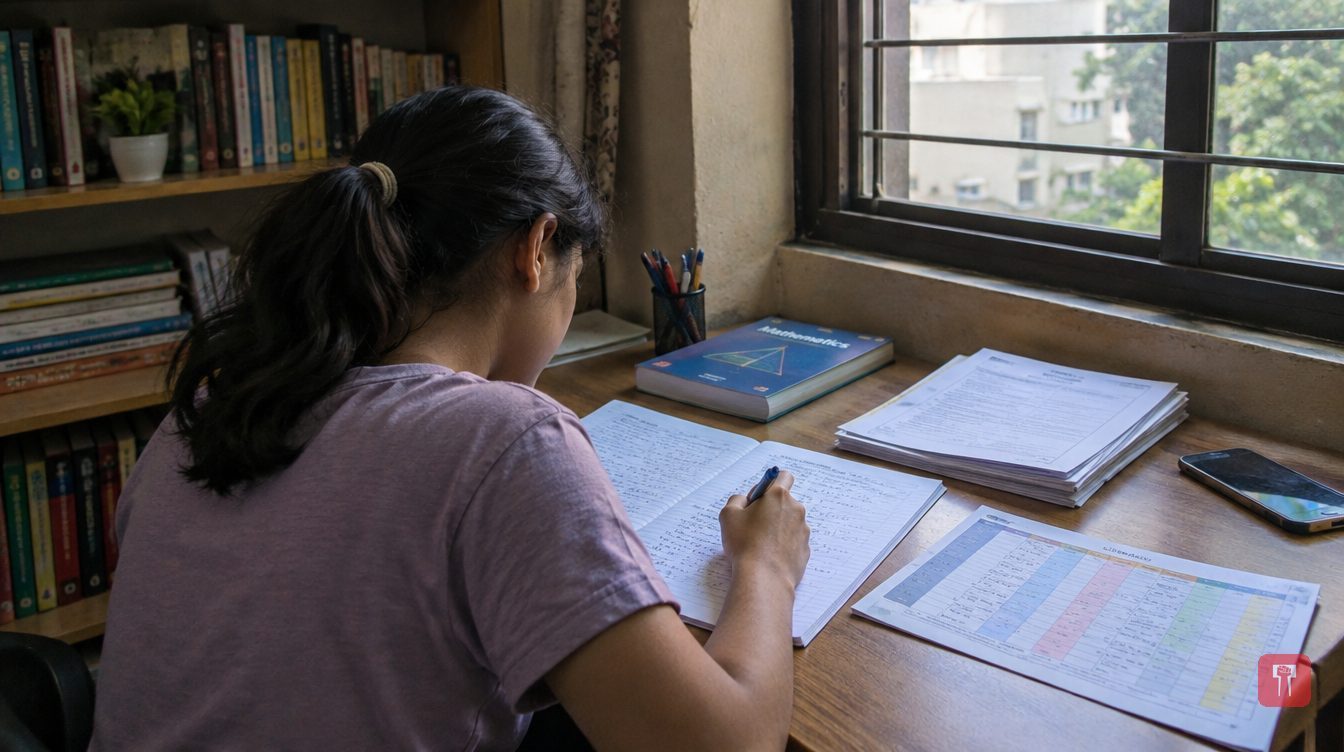
The first step is to make a personal timetable. It should have space for every subject, with a little more time for subjects that seem difficult. Taking up different subjects through the day, rather than reading one subject all day, also keeps the mind engaged. Students can study in the morning or the evening, whichever suits them. Small goals should be set for each day and completed before the day ends. This makes the pressure of study feel lighter and makes it easier to give attention to all subjects.
Preparation is not complete by only reading the textbook. Board exams require writing answers, so practising by writing is necessary. In mathematics, problems should be solved every day. In science, the diagrams and formulae needed should be looked at again and again. In social science, short notes on important points should be made. Writing practice should also be done in subjects such as Hindi and English.
Students should also solve question papers from previous years and sample papers. This gives an idea of the kind of questions that come in the exam, and builds the habit of finishing the paper in the given time.
Revision is very important. A topic read today should be looked at again after some time, which helps in remembering what has been read. Short notes of important dates, formulae and definitions should also be kept. Once a week, students should check their progress: which subjects are complete and which topics are to be read again. Doing so keeps preparation moving in the right direction.

Comments
No comments yet. Be the first.