

El Nino heat and thin rain threaten Konkan Hapus crop, Ratnagiri mango growers worried
Low rain, October heat and a forecast of a short winter have left Ratnagiri's Hapus growers fearing another poor harvest after this year's 80 to 90 per cent drop.
 Images are not validated/verified
Konkan's world-famous Hapus (Alphonso) mango is set to face the weather's blow once again. Mango growers in Ratnagiri fear that the continually shifting weather will hit their yield this time too. Hapus productivity has been seen declining steadily for several years.
Rainfall was very low this year, so growers have had to endure the scorching heat of October from September itself. On top of that, weather experts have forecast, under the influence of El Nino, that winter will be absent this time and that the next eight months will be hot throughout. This has badly alarmed the mango growers.
Hapus has made a major contribution to the Konkan economy and to foreign exchange earnings. But since Cyclone Phyan in 2009, the crop has been falling into one crisis after another. Every year the main crop appears to be ruined by one natural calamity or another.
Last year flowering was heavy, but the blossom turned black because of severe cold. This year, under the influence of El Nino, rainfall was very low, and as a result three tehsils, including Ratnagiri, have been declared drought-hit. The weather has become so erratic that distinctly different and odd conditions are being seen just three or four kilometres apart.
Earlier this year, in the March 2026 season, Hapus production had fallen by about 80 to 90 per cent because of unseasonal rain, heat waves and the hopper (phudka) disease. Now, because of low rain and rising temperatures, the next season's crop is under threat for the second time in a row. That crop is due in early 2027.
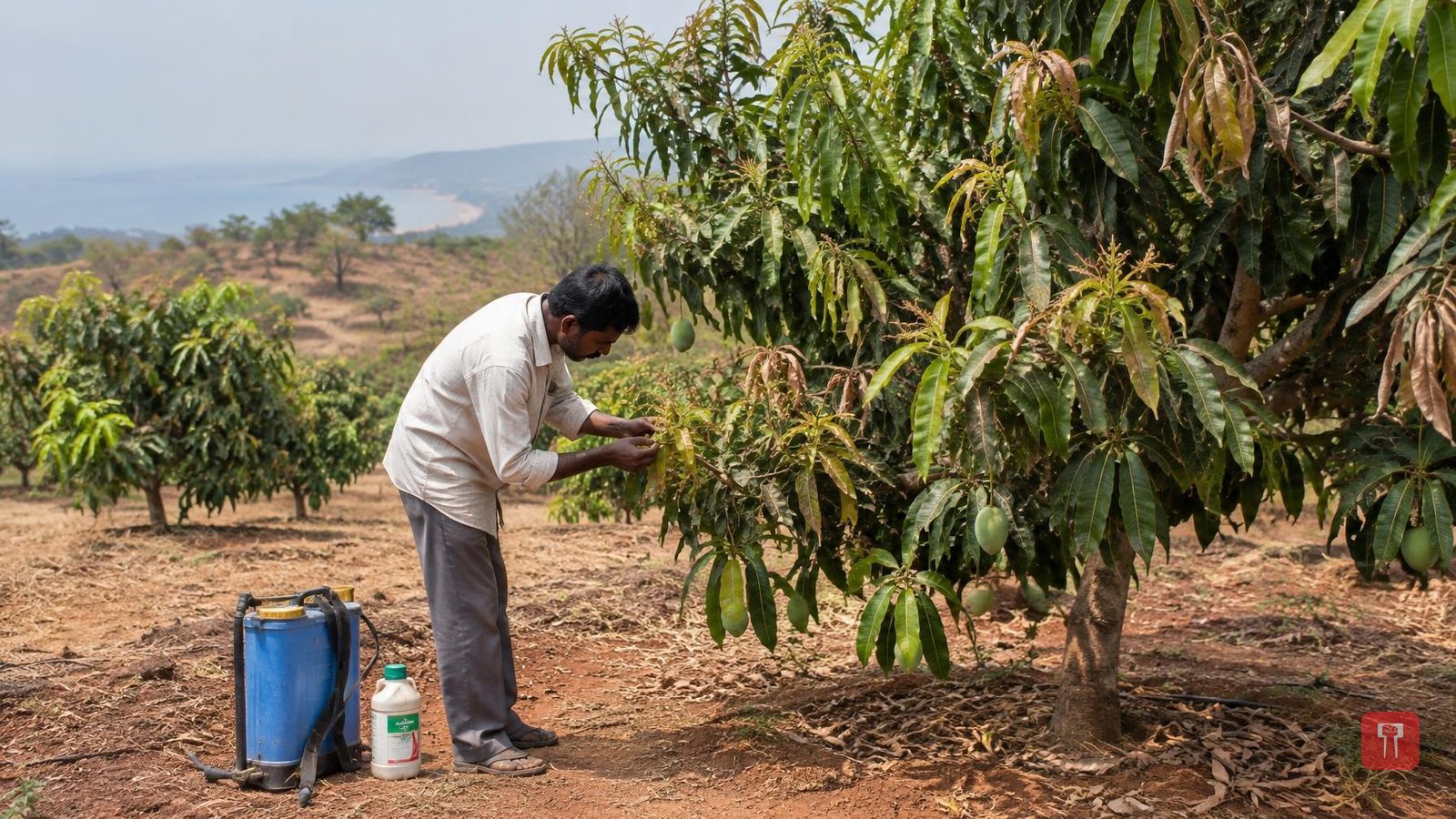
Looking at the present condition of the orchards, trees that flowered last year have put out fresh shoots, while trees that did not flower look lush and green. But a heavy infestation of hoppers is visible on these new shoots.
To protect the trees from this pest, growers have to spray expensive pesticides repeatedly, which has added considerably to costs. Growers say that if the cold sets in on time and properly after the October heat, only then can the trees be expected to flower well.
However, the cold period is forecast to be short and temperatures high this time, so the Hapus yield will be seriously affected. There is also deep fear that blossom that does appear will drop because of the shortage of water in the soil and the heat. Mango growers are now caught in a financial crisis.
