

Semi-arid belt widens over Vidarbha, Marathwada; warm monsoon zone spreads in Konkan-Goa: IMD study
A study in the India Meteorological Department's Mausam journal says climate zones have shifted, raising questions for water planning in Maharashtra.
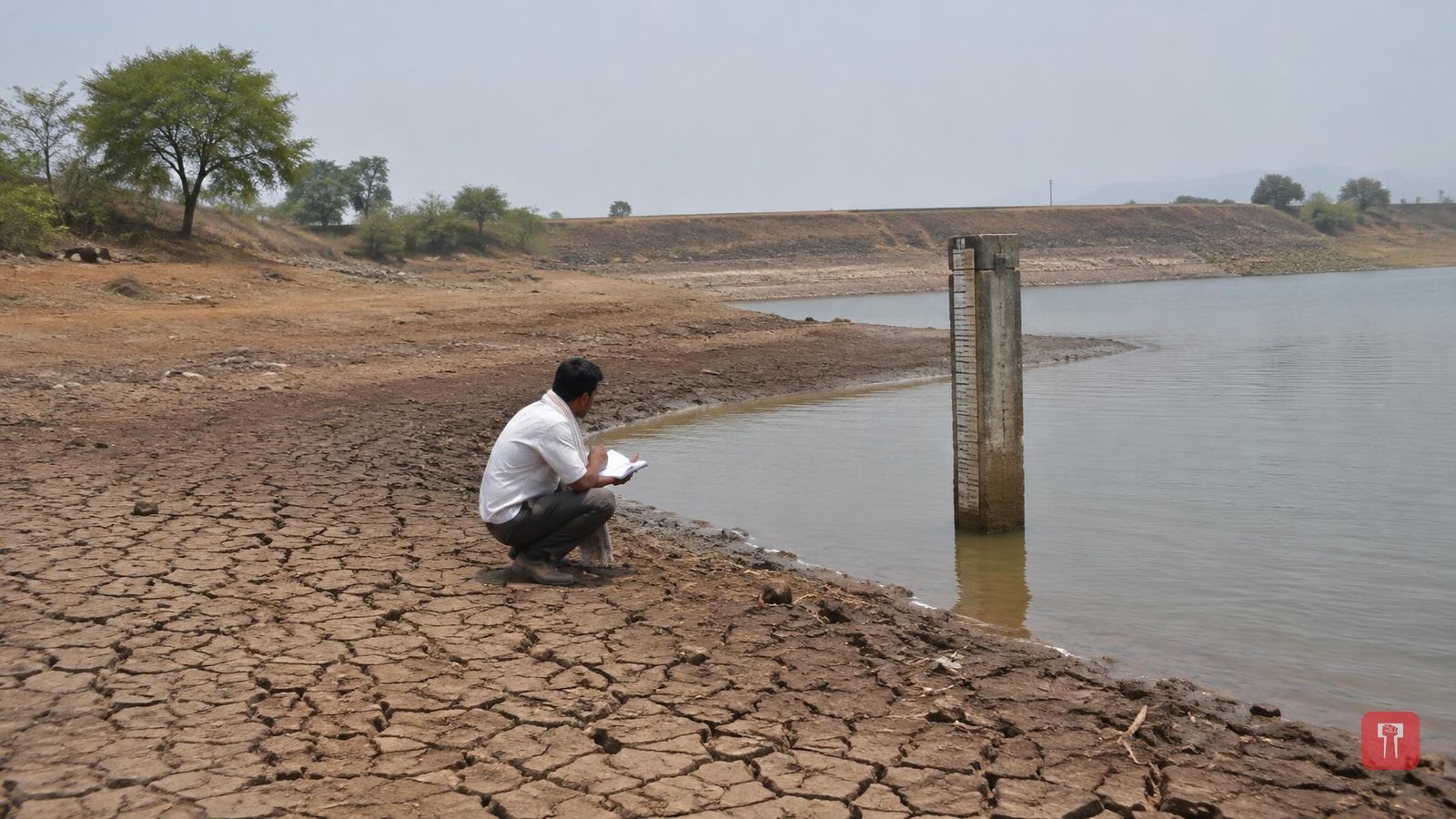
This year's rainy season has fallen short under the influence of El Nino, and a new concern is now emerging. Signs have appeared that the semi-arid belt is expanding in West Vidarbha and Marathwada and that the warm monsoon climate belt is spreading in Konkan-Goa. The possibility that water will evaporate faster cannot be ruled out. Storage in catchment areas is already lower than usual, so if evaporation speeds up, the water shortage will worsen.
This emerged from a research study titled "Mausam" by the India Meteorological Department. According to the study, the pattern of India's climate zones has been changing over a long period. It records that West Vidarbha and Marathwada in Maharashtra have now come under the semi-arid climate belt, while the warm monsoon climate belt has expanded in Konkan and Goa.
The research was carried out by five scientists, including senior scientist Krishnanand Hosalikar. It examines temperature records from 1951 to 2020. According to the study, compared with the 1961-1990 period, the climate class of West Vidarbha and Marathwada appears to have shifted from a warm type towards semi-arid in 1991-2020. In Konkan and Goa, on the other hand, an expansion of the warm monsoon climate zone has been recorded.
As a result, the need to test the planning of dams, lakes, drinking water sources and catchment areas in Maharashtra, including Mumbai, against the changing climate has become clearer. If the quantity, intensity or distribution of rain changes, the water collecting in dam catchments could be affected. If very heavy rain falls in a short time, a large volume of water may run off, and if there is a long dry spell during the monsoon, the refilling of reservoirs could be affected. Rising temperatures also raise the possibility of faster evaporation.
Long-term monitoring of rainfall, temperature and evaporation in the catchments of the lakes that supply Mumbai becomes more important. For reservoirs in Marathwada and Vidarbha too, the changing climate will have to be kept in mind when estimating water availability, recharging groundwater and planning irrigation.
However, a change in climate zone classification and an actual fall in water in dams are two different things. The findings do not prove that water scarcity has increased in every part of Maharashtra. Even so, they underline the need to examine changes in regional weather from the point of view of water management. To determine exactly how much reservoirs in Maharashtra will be affected, separate data on local rainfall, temperature, evaporation and catchment areas must be analysed. The study makes clear that water planning should not rest only on past averages and must also take into account the likely effects of the changing climate.
