

DA hike from 60% to 63% expected, but Centre yet to confirm; all eyes on October 21 Cabinet meet
Central employees and pensioners await a dearness allowance decision, with a 3-point rise the most discussed, though the government has confirmed nothing.
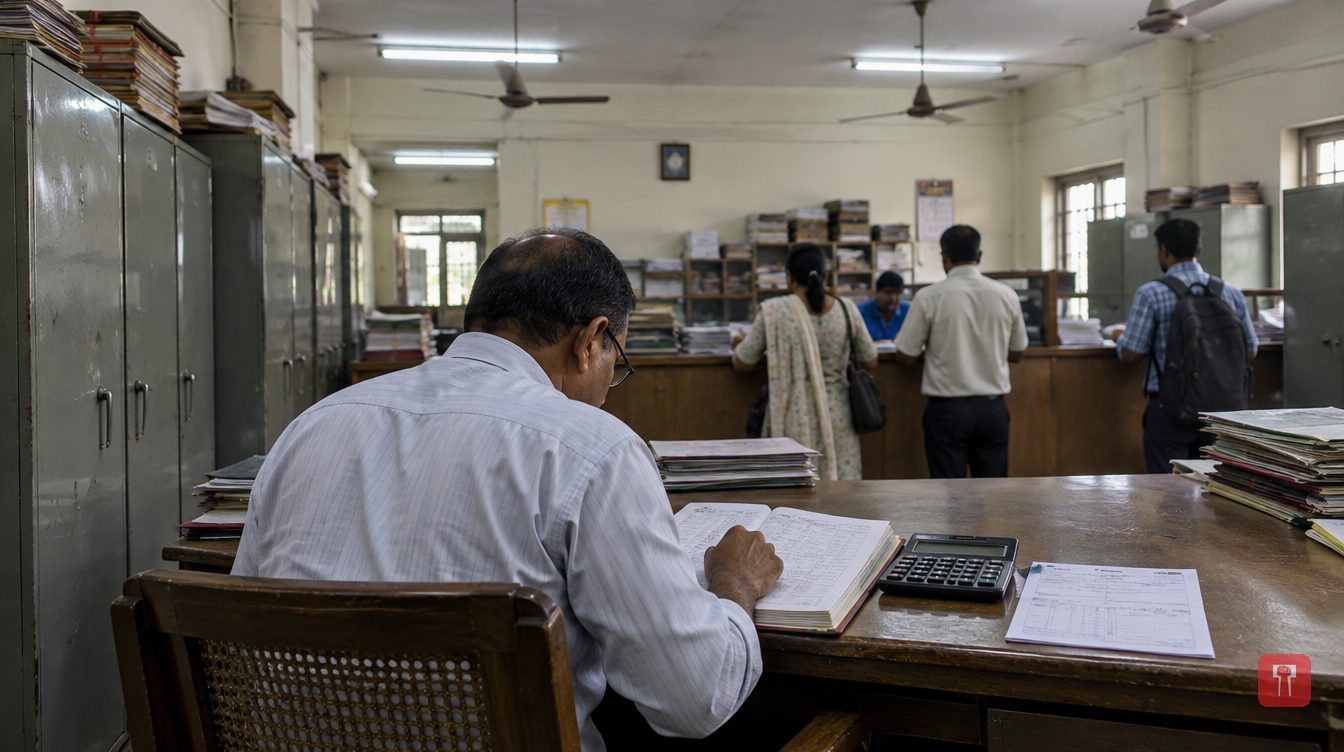 Images are not validated/verified
Central government employees and pensioners are now watching the Union government's next Cabinet meeting. Everyone wants to know whether the dearness allowance (DA) will be raised and, if so, how much difference it will make to monthly pay. A 3 per cent increase is being discussed around the likely Cabinet meeting on October 21, 2026. If approved, the DA, now at 60 per cent, could go up to 63 per cent. However, the government has given no official confirmation of either an increase or the date of an announcement. The answer to whether it will be 3, 4 or 5 per cent will come only after the government's decision.
Employees are waiting for the next instalment of the allowance, and there is hope that the government will decide on it at the likely October 21 meeting. Earlier, there was talk that an announcement would be made before Dussehra, at the October 14 meeting. But no announcement on DA was made at that meeting, which approved a 78-day productivity-linked bonus for railway employees. Employees must therefore wait again for a decision on the allowance.
C. Sreekumar, secretary of the All India Defence Employees Federation, has said he hopes the DA increase may be announced at the next Cabinet meeting. Manjeet Patel, president of the All India NPS Employees Federation, had said before the meeting that an announcement was unlikely. All of these remain expectations, and the government has not yet made an official decision.
Central employees currently get DA at 60 per cent of basic pay. Inflation data up to June 2026 is available for the next instalment, which takes effect from July 2026, and the likely increase is being estimated on that basis. A 3 percentage point rise would take the allowance to 63 per cent, a 4 point rise to 64 per cent and a 5 point rise to 65 per cent. The 60 to 63 per cent move is the most discussed. A rise of 4 or 5 percentage points has no official confirmation yet, so it would not be right to treat either as a settled decision.
The All India Consumer Price Index for Industrial Workers (AICPI-IW) is used to determine the allowance. It shows how much industrial workers have to pay for goods and services in the retail market. According to Labour Bureau data, the CPI-IW index stood at 151.9 in June 2026. The calculation of the allowance effective from July 2026 takes the average index for the 12 months from July 2025 to June 2026. These figures point to a 3 percentage point increase. But the calculation only helps in understanding the likely rate and does not bring approval automatically. The final decision rests with the Union government.
For example, an employee with a basic pay of Rs 18,000 now gets Rs 10,800 as DA at 60 per cent. At 63 per cent, this could rise to Rs 11,340. That means an extra Rs 540 a month, and additional DA of Rs 6,480 over 12 months. This calculation covers only DA. It does not include changes in other allowances or deductions from salary.
If the government approves the increase with effect from July 2026, eligible employees are likely to receive arrears from that date. How many months of arrears there will be, and when they will be paid, will become clear only after the official order. The likely October 21 Cabinet meeting could therefore be important for central employees, who will have to await the government's announcement.
