

Chandrapur farmers urged to plan fodder now as drought threatens shortage
With drought in Chandrapur district, a Krishi Vigyan Kendra scientist has asked livestock keepers to plan fodder management from now.
 Images are not validated/verified
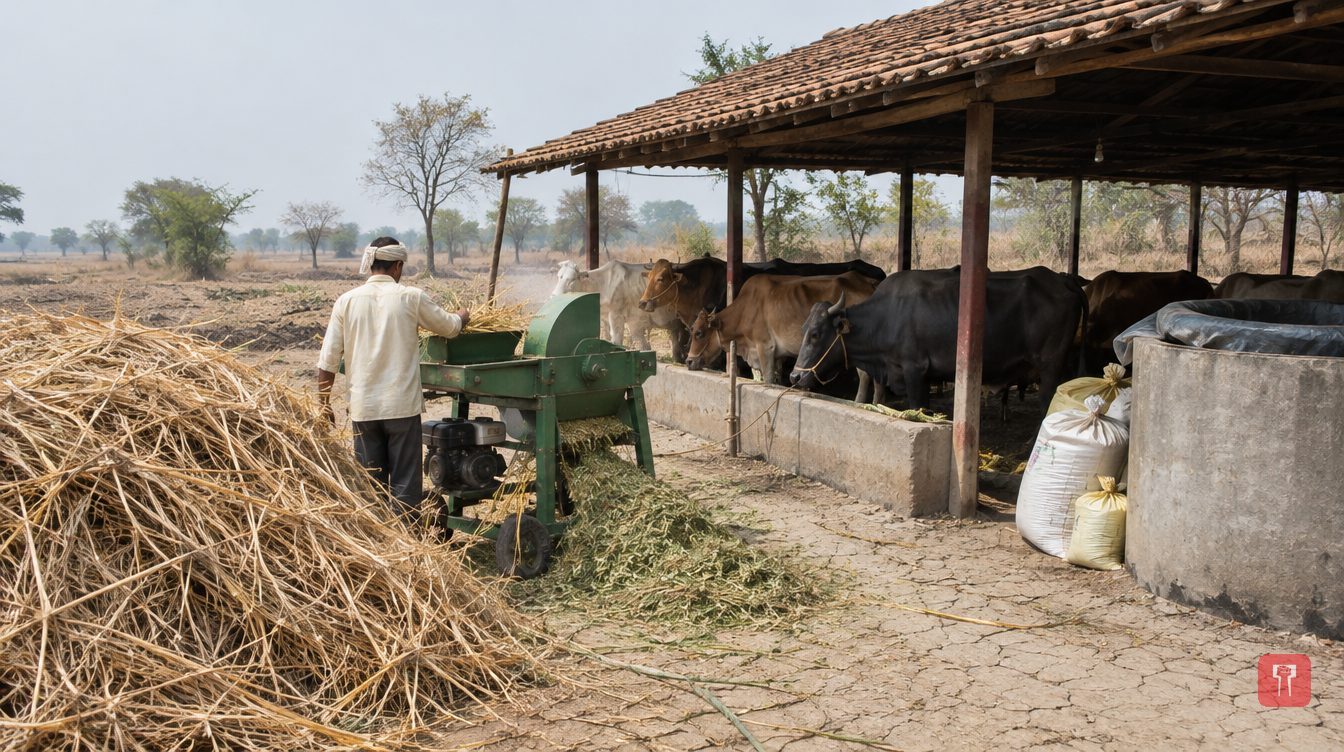
Drought conditions prevail in Chandrapur district, and a fodder shortage is likely to follow. Dr Sonali Dupte, senior scientist at the Krishi Vigyan Kendra, Sindewahi, has appealed to livestock keepers to plan fodder management from now. She said livestock can be saved by using the available fodder sparingly, preparing silage, cultivating azolla, and processing and using crop residues from the fields.
In a drought, providing green and dry fodder is a major challenge for livestock keepers. It is necessary to avoid wasting fodder and to feed animals in the right quantity. Chopping fodder before feeding can save about 20 to 25 per cent. If poor-quality dry fodder is treated by a scientific method, it becomes easier to digest and its nutritional value also rises.
Fodder for animals can be obtained by making proper use of paddy straw, soyabean stalks, maize residue, wheat straw and tur husk. Emphasis should be placed on using crop residues scientifically rather than burning them. However, guidance from a veterinary officer or an animal nutrition expert is necessary when preparing urea-treated fodder. Fodder that has turned mouldy or is contaminated should not be given to animals.
Silage is an effective way to store green fodder. Green maize or sorghum should be cut at the right stage and chopped fine. The chopped material should be stored airtight in a pit, a cement tank or special silage bags. Properly processed silage can be used in about 45 to 50 days. In a drought it is also useful for providing succulent fodder to animals and for sustaining milk production.
It has also been advised that planting of fodder crops be planned from now. Depending on water availability, fodder crops such as lucerne, berseem and oats should be planted in October-November. In areas facing water scarcity, crops should be chosen only after considering the water available. If villages plan collective fodder storage and silage-making, the severity of the shortage can be reduced.
Azolla is a protein-rich plant that grows on water and is useful as a supplementary feed for animals. If it is grown with proper arrangements in a shaded place, harvesting can begin in about 15 to 18 days. Azolla can be included in the diet of cows, buffaloes and goats as a supplementary feed.
