

Chandrapur farmers urged to secure fodder now to save cattle in drought
A senior scientist at Krishi Vigyan Kendra, Sindewahi, says chopping, silage, azolla and treated crop residues can ease the fodder shortage in drought-hit Chandrapur.
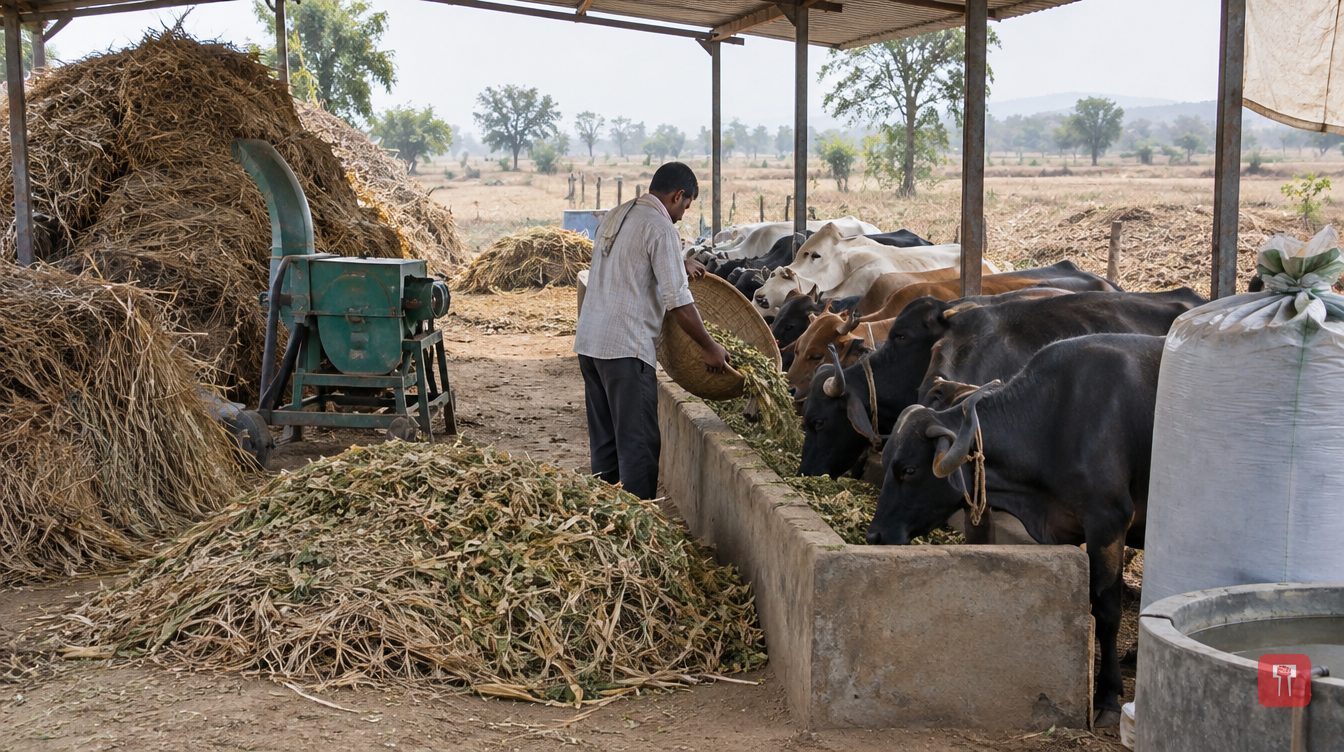 Images are not validated/verified
Drought conditions persist in Chandrapur district. To save cattle and deal with a possible fodder shortage, farmers and livestock keepers need to arrange fodder properly from now, Dr Sonali Dupte, senior scientist at Krishi Vigyan Kendra, Sindewahi, has appealed. She said the impact of the shortage can be reduced considerably by making good use of available fodder, treating crop residues, making silage, growing azolla and giving balanced feed. Farmers should adopt scientific methods for this.
For green and dry fodder, farmers should keep available fodder from going to waste and keep a proper account of it. Chopping fodder before feeding can save about 20 to 25 per cent. If poor-quality dry fodder is treated scientifically, it is digested easily and the quality of the feed also improves.
Nutritious fodder can be made from crop residues. Paddy straw, wheat stalks, maize residues, soybean husk, cotton stalks and tur husk can serve as fodder. Soybean husk has comparatively more protein, but with proper treatment it becomes soft and more useful. Similarly, the digestibility of paddy straw can be raised by treating it. Instead of burning cotton stalks, the possibility of using them safely and scientifically in fodder arrangements should be examined.
Special care is needed when making urea-treated fodder. Depending on the quantity of urea, the quality of the fodder, the duration of treatment and the age of the animals, the work should be done only under the supervision of a veterinary officer or an animal nutrition expert. Such fodder should not be given to young calves or to animals whose digestive system has not developed properly. Mouldy, rotten or dirty fodder should not be fed to animals under any circumstances.
Silage can be a good option to make up for the lack of green fodder during drought. Fodder crops such as green maize or sorghum should be cut at the right stage and finely chopped. The chopped material should then be packed airtight in a silage pit, a cement tank or a special silage bag. Properly made silage becomes fit to feed animals in about 45 to 50 days. It preserves the essential nutrients of green fodder, gives animals succulent feed in summer and during fodder scarcity, and also helps maintain milk production.
Azolla is a protein-rich plant that grows on water and is used as a supplementary feed for animals. For this, make a water tank or a plastic-lined pit in a shaded place and add water, nutrients and azolla culture in the right quantities. In favourable conditions, azolla grows in about 15 to 18 days and harvesting can begin. It contains protein, vitamins and several minerals, so it can be used as a supplementary feed for cows, buffaloes, goats and poultry.
Depending on water availability, sowing of fodder crops such as lucerne, berseem and oats should be planned for October and November. In favourable conditions, the first cutting of these crops comes in about 45 to 60 days, and later cuttings can be taken at intervals of 25 to 30 days. In areas short of water, fodder crops should be chosen keeping the available water in mind.
Fodder arrangements are also needed at the village level. Farmers should not burn crop residues but use them properly. Where possible, they should plan to collect fodder jointly, make silage and manage fodder together. Livestock keepers should not hurriedly decide to sell animals out of fear of a fodder shortage. Saving cattle by using other sources of fodder should be given priority.
For more information, contact the nearest veterinary dispensary, the agriculture department or Krishi Vigyan Kendra, Sindewahi. The appeal has been made on behalf of the Krishi Vigyan Kendra.
