

Army chief Munir proposes splitting Pakistan's four provinces into 12 to 15, sparking political debate
Field Marshal Asim Munir has proposed overhauling Pakistan's administrative structure, with an alternative plan to divide the country into 160 smaller units.
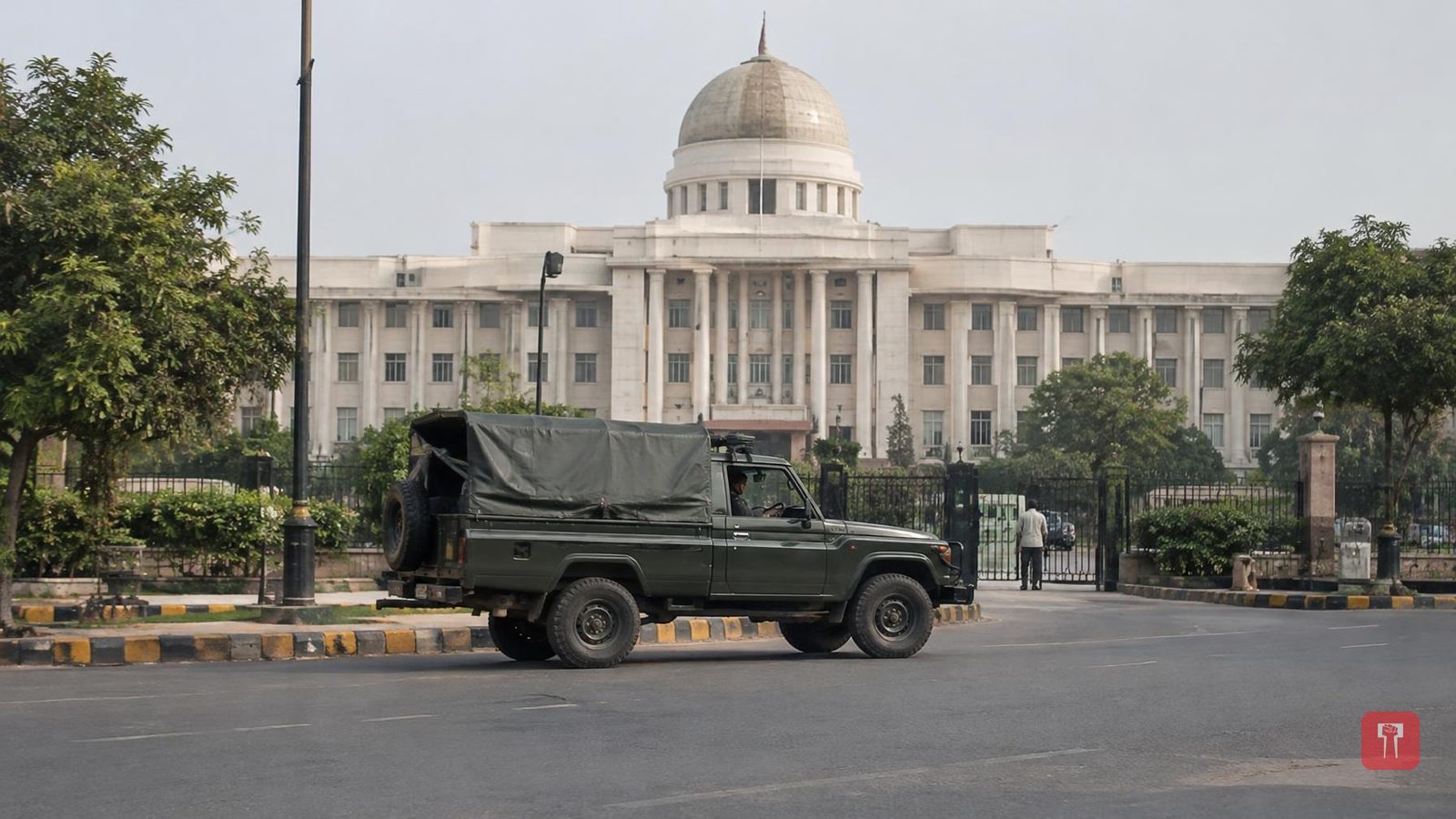 Images are not validated/verified
A major proposal has stirred political debate in Pakistan. Army chief Field Marshal Asim Munir has proposed a complete overhaul of the country's present administrative structure. Under it, Pakistan's four existing large provinces could be broken up to create 12 to 15 new provinces. A second option would divide the entire country into 160 smaller administrative units.
Pakistan currently has four main provinces: Punjab, Sindh, Khyber Pakhtunkhwa and Balochistan. By area, Pakistan is the 33rd largest country in the world. A vigorous discussion has now begun over the army's intentions behind such a big change.
The imbalance between provinces in the present structure is plain. Punjab alone has a population of about 128 million, roughly 50 per cent of the country's total. For this reason Punjab has always dominated Pakistan's politics and economy. Balochistan, on the other hand, is the largest province by area but has a population of only 15 million. Running a vast province like Punjab and taking government schemes to its remote areas has always been a major challenge for the administration. The army chief has argued for administrative reform on this basis.
The reason being given for the proposal is that villagers do not get civic services on time. According to an analytical report, people in rural Punjab have to travel for several hours to big cities for basic government work. Less than a quarter of Punjab's population has access to clean drinking water. People are troubled by rising prices, sluggish economic growth and the burden of debt. The army's argument is that it is difficult to run such huge provinces effectively, so they must be divided into smaller parts.
The proposal also has a political dimension. Analysts say that if the four large provinces are split into 15 smaller pieces, the new provinces will be extremely weak economically and politically. They would have to depend directly on the central government in Islamabad for every matter, large or small. This would make it easier for the army, which wields power from behind the scenes (the Establishment), and the central government to keep direct control over all regions. The move is thus seen as a strategic ploy to end provincial autonomy and maintain the army's dominance.
Punjab and Sindh would be affected the most. Economically important cities such as Lahore, Karachi, Hyderabad and Rawalpindi lie in these areas. The real strength of Prime Minister Shehbaz Sharif's Pakistan Muslim League-Nawaz (PML-N) lies in Punjab and Sindh. If these provinces are split, the ruling party's traditional constituencies would be divided and the influence of leading provincial politicians would automatically shrink.
Khyber Pakhtunkhwa and Balochistan remain the biggest headache for the army chief. Khyber Pakhtunkhwa is a stronghold of former Prime Minister Imran Khan's Pakistan Tehreek-e-Insaf (PTI). Its current chief minister, Sohail Afridi, is from the PTI. Since Imran Khan was jailed, sharp anger against the army and the central government has spread in the region. The army's attempt to break the political strength of Imran Khan's party by dividing the province appears evident.
The situation in Balochistan is more serious. The army has suffered heavy losses from the Baloch rebels' continuing demand for independence and deadly attacks on the Pakistani military. Asim Munir's intention is said to be to crush the autonomy movement and the insurgency in resource-rich Balochistan for good by dividing it into smaller parts.
In this political drama, the situation in Pakistan-occupied Kashmir (PoK) cannot be ignored either. People in PoK are already venting anger over inflation, electricity bills, heavy taxes and the Pakistan government's policies. They are taking to the streets in protest. In such delicate conditions, if the Pakistan government tampers with borders and the administrative structure by force, the resentment of the people of PoK could flare further, which could prove extremely dangerous for Pakistan.
