

Vidarbha water cuts hit citizens and farmers while industries get steady supply, question raised
A question is being raised in Vidarbha over whether ordinary people and farmers face water cuts while heavy water-consuming industries keep getting supply.
 Images are not validated/verified
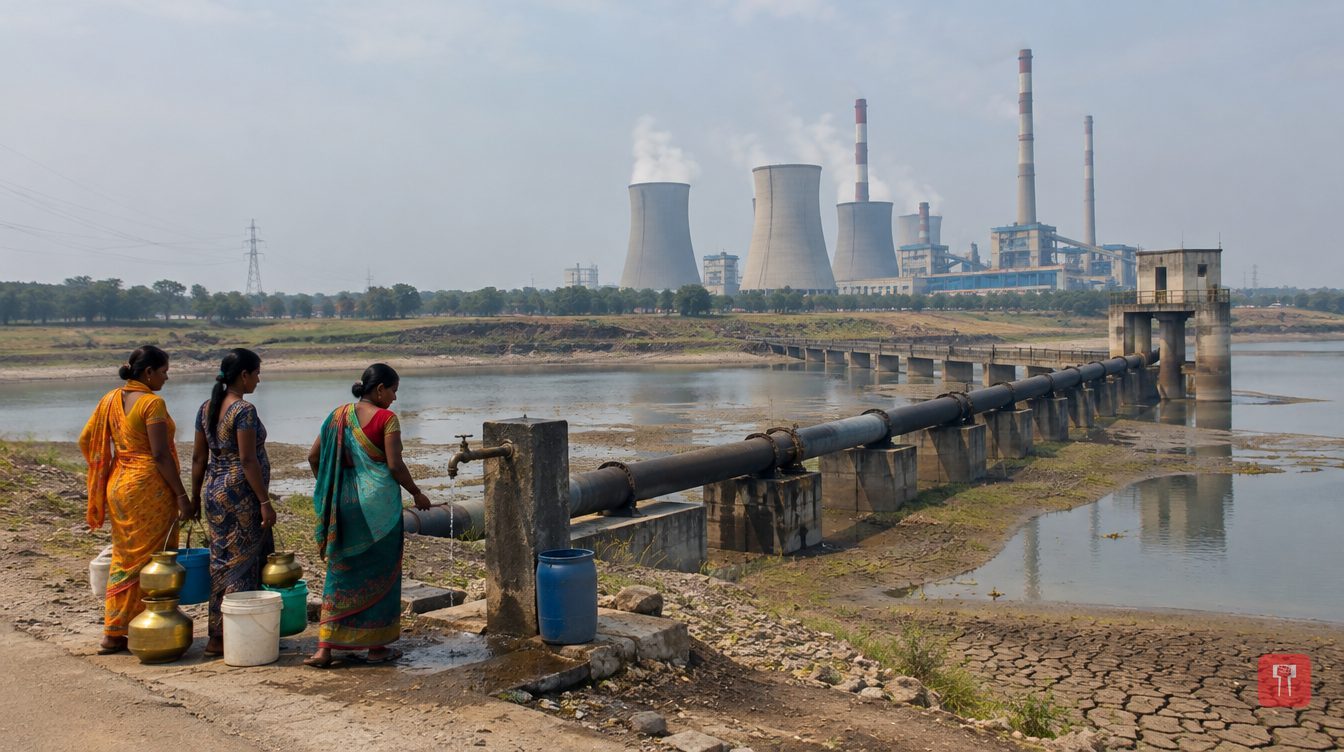
Nagpur: A question is being raised over the sharing of water in Vidarbha. Is a double standard at work, in which ordinary citizens and farmers are asked to bear water cuts while industries that consume large amounts of water keep receiving supply? The question has become more pressing amid concern over water scarcity and the region's growing industrial ambitions.
Vidarbha has emerged as an important industrial region. It has defence manufacturing units, thermal power plants, cement factories, steel industries and mineral processing units. The region is also seen as a potential site for further industrial expansion.
Water availability is a major issue for many of these industries, as they need a lot of water for manufacturing, cooling and other work. But concern over scarcity has raised the question of how much water will go to whom when demand exceeds availability.
In times of drought and falling groundwater levels, saving water becomes especially important. When water supply to cities is curtailed, daily household routines are disrupted, and in villages worry grows over drinking water and irrigation. When scarcity affects the needs of farming and crops, farmers are at the greatest risk.
Against this background, a larger question arises: if citizens and farmers are asked to cut their water use, will similar restrictions be imposed on large industrial consumers? The answer depends on the government's water allocation policy, the severity of local scarcity and the priority given to different uses of water.
Defence manufacturing, thermal power, cement, steel and mineral processing all need water, although consumption varies widely by plant and technology. Thermal power plants draw water for cooling and other uses, while cement, steel and mineral processing units have their own requirements. Where units lack adequate storage, recycling systems or other sources, reducing water allocation could affect production. Even so, the impact will depend on the type of industry and its capacity to cope with reduced supply.
The real issue is whether the government has a transparent framework for sharing water during scarcity, and whether industrial units are required to adopt clearly defined water conservation measures.
Interest in Vidarbha continues in sectors such as defence manufacturing, energy and cement production. Proposed industrial expansion will also have to account for long-term water availability, environmental clearances and the competing demands of existing consumers. Uncertainty over water supply can affect investment decisions, especially for projects that depend heavily on a continuous supply of water.
At the same time, industrial development creates jobs and gives momentum to the region's economy. The challenge, therefore, is to ensure that industrial growth does not harm drinking water security, farming needs or environmental sustainability.
The current debate puts several important questions before the government. Will industries that consume large amounts of water face restrictions during scarcity? How much priority will drinking water, agriculture and industry each get? Will water allocation data for large industrial units be made public? Are industries being encouraged, or compelled, to increase water recycling and reduce fresh water use? And how will the water needs of proposed projects be assessed before approval is given?
Clear answers to these questions would show whether water conservation measures are being applied transparently and equally.
Vidarbha's challenge is not merely a choice between industry and farming. The real task is to find a sustainable balance between industrial growth, farmers' livelihoods and drinking water for citizens. As water availability becomes more important to the region's future, the government's approach to allocation and conservation will decide how these competing needs are met.

Comments
No comments yet. Be the first.