

UN peacekeepers to leave Lebanon, around 641 Indian troops to return home
UN peacekeepers deployed for decades on the Israel-Lebanon 'Blue Line' are set to withdraw after the US and Israel vetoed the mission's continuation, and about 641 Indian soldiers will return.
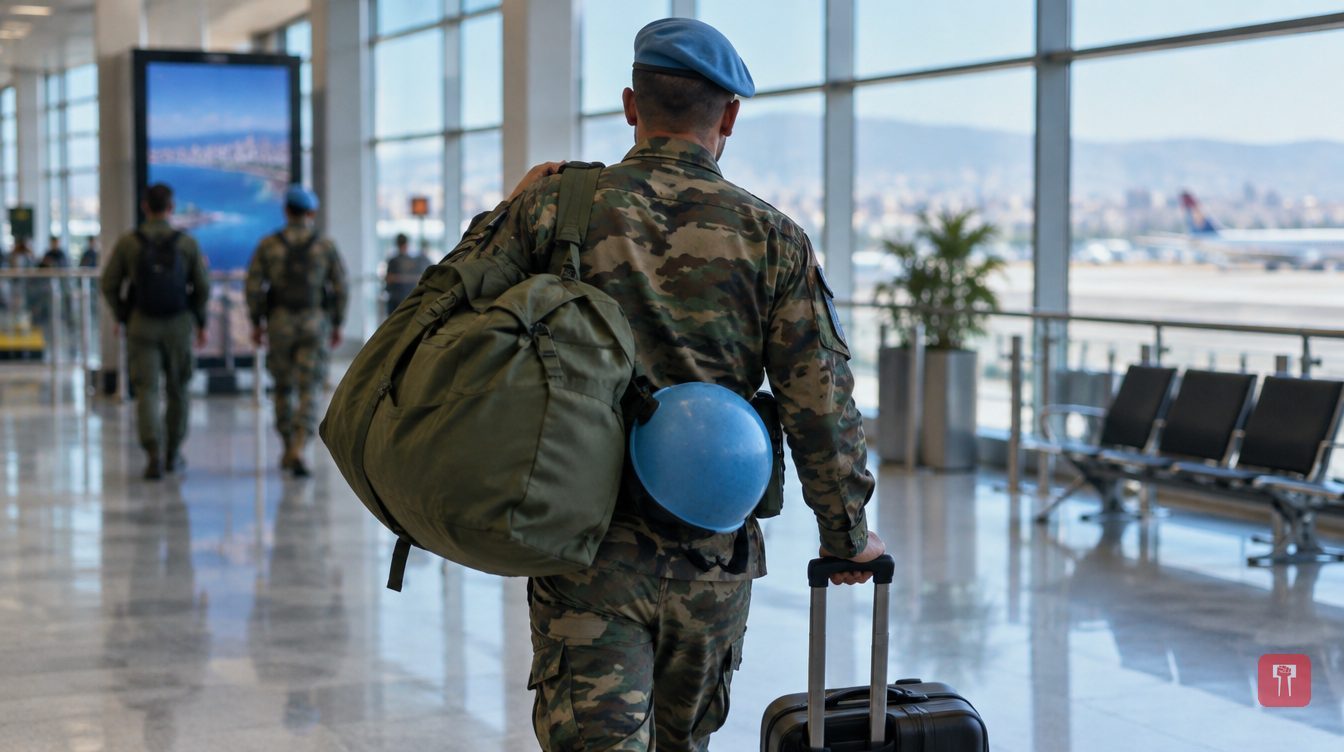 Images are not validated/verified
United Nations peacekeepers, who have been deployed for several decades on the 'Blue Line', the highly sensitive border between Israel and Lebanon, are now set to return. Lebanon's President had made every effort to stop the force from being withdrawn and to keep the mission going. But the US and Israel used their veto against the decision, and all of Lebanon's efforts came to nothing.
As a result, about 641 Indian soldiers who have long been serving in southern Lebanon will also return to India soon. The withdrawal of UNIFIL (United Nations Interim Force in Lebanon), one of the longest-running UN missions, marks a major shift in the geopolitical equation of the Middle East. A new proposal to deploy European forces in place of the UN force is under consideration.
The sudden withdrawal has caused considerable disappointment in Lebanon's political circles and among ordinary people. From Israel's perspective, it is being seen as a major geopolitical relief. Israel has always objected that the peace force failed to stop Hezbollah's activities on the border.
For more than 48 years, soldiers of the UN interim force were stationed like sentinels in the villages and border areas of southern Lebanon. During this time they made continuous efforts to maintain peace along the 120-km-long 'Blue Line'. On June 7, 2000, the UN formed the UNIFIL contingent to verify the withdrawal of the Israeli army from southern Lebanon and to keep peace in the border area.
The main task of the troops was to keep a close watch on movement along the border, record ceasefire violations and send full details to the UN. According to Saeed Kazah, a retired brigadier general of Lebanon, the troops worked only as 'observers' and could not intervene in direct military conflict. Even so, their presence helped keep tension between the two countries within limits.
Lebanese President Joseph Aoun had used all his diplomatic strength to prevent the UN peacekeepers from being withdrawn. But the US and Israel took a stand against the mission and vetoed the proposal. The President has now backed the idea of deploying a European force as an alternative, through European countries such as France and Italy.
Lebanon alleges that Israel repeatedly intrudes into its sovereign territory, and that these international troops used to keep a record of each such incident. With the force now leaving, there are fears that Lebanon's security arrangements will be left more isolated.
For India, the significant development is that the way has opened for the return of 600 to 641 Indian soldiers stationed at Ibel Saki in the east-southeast of southern Lebanon. India is among the leading countries contributing the largest number of troops to UN missions.
The Indian Army contingent has been serving in Lebanon since November 1998 in extremely difficult and dangerous conditions. During this period, in intense fighting between the Israeli army and Hezbollah, the vicinity of the Indian base was shelled and attacked several times, but the Indian soldiers never lost heart and stood their ground. Even amid tension on the border, they periodically delivered medical aid, foodgrain and humanitarian assistance to local civilians. With the mission ending, all these Indian soldiers will soon return safely to their country.
