

Thane family donates liver and both kidneys of brain-stem dead 43-year-old at KIMS Hospitals
The family had attended an organ donation awareness session at the hospital before deciding to donate after the man was declared brain-stem dead on September 22, 2026.
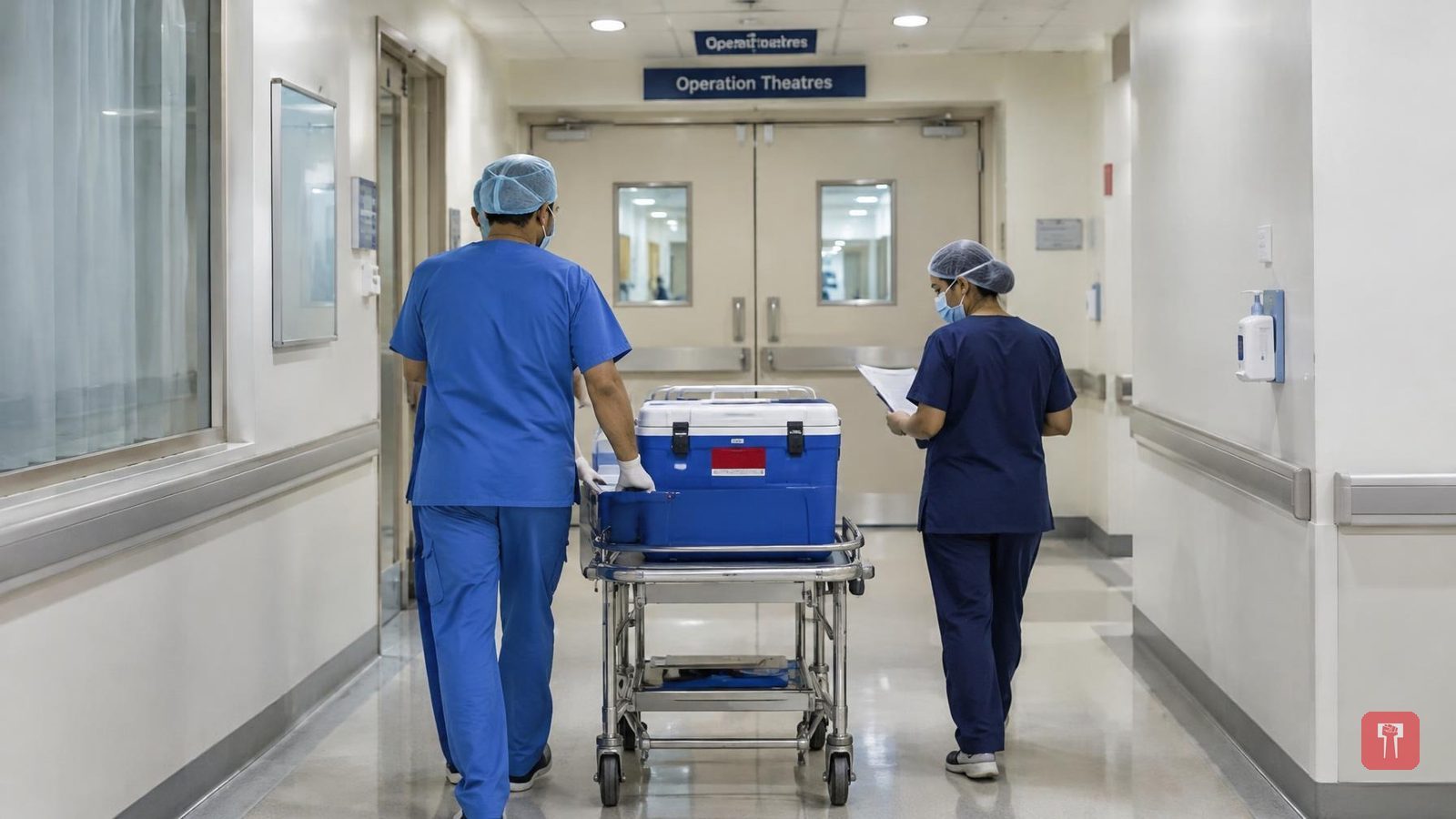 Images are not validated/verified
A family at KIMS Hospitals in Thane thought of others at the most difficult time of losing a loved one. The relatives of a 43-year-old man, who was declared brain-stem dead at the hospital, decided to donate his organs. The decision has given patients waiting for organ transplants hope of a new life. His liver and both kidneys were retrieved successfully and allocated through the Zonal Transplant Coordination Centre (ZTCC), Mumbai.
An organ donation awareness session held at KIMS Hospitals also played a part in the family's decision. Family members had attended the session, where they were told about organ donation after death, brain-stem death and how donating vital organs helps patients waiting for transplants. When they later faced the loss of their loved one, they remembered what was said at the session, and it inspired them to think about organ donation.
The patient first vomited, then suddenly lost consciousness, and his blood pressure had risen very high. He was first admitted to another hospital. As his unconsciousness deepened and he had difficulty breathing, he had to be intubated. A CT scan there showed a severe intracerebral haemorrhage in the left thalamo-capsular region. The bleeding had spread to the ventricular region. There was also acute hydrocephalus, and a significant midline shift in the brain was found. He was shifted to KIMS Hospitals, Thane, for further treatment and monitoring.
At KIMS Hospitals, the patient received immediate neurosurgical treatment, along with intensive neurological care, ventilator support and continuous neurological monitoring. Despite the medical team's continuous efforts, his neurological condition gradually worsened. Later clinical examination found that brain-stem reflexes were absent. The required tests were carried out as per the prescribed medical procedure. After the apnoea test, conducted twice, gave the expected positive results, brain-stem death was declared on September 22, 2026.
After counselling and discussion with the medical team, the family consented to organ donation after death. The liver and both kidneys were retrieved successfully accordingly. The allocation of the organs was completed in coordination with ZTCC, Mumbai, under the provisions of the Transplantation of Human Organs and Tissues Act and Rules.
Dr Saurabh Gupta, regional director of KIMS Hospitals, said, "For a family facing the sudden death of a loved one, deciding to donate organs takes great courage. This decision is especially significant because the family had received information on organ donation awareness before facing such a situation. The message they had heard stayed with them and, in a moment of deep grief, showed them a way to give others hope through organ donation. Their decision is deeply sensitive and an example of humanity. It also reminds us how awareness received at the right time can help families make informed decisions at a critical moment."
He added, "The ultimate aim of organ donation is to give another person a chance to live. The loss of a loved one can never be made up, but the family's decision to donate can carry that person's legacy forward in the lives of others. We hope more and more people understand the importance of brain-stem death and organ donation after death, so that more families can decide on the basis of correct information."
The case also underlines the importance of continuously spreading awareness about organ donation after death. Timely identification of brain-stem death, sensitive counselling of the family and proper coordination with transplant authorities are all essential to keep the donation process smooth.
