

Kuladevata, gramadevata, ishtadevata, sthaladevata: how the four deities differ in auspicious rites
Before weddings, housewarmings and thread ceremonies, many Maharashtrian families invoke four deities, each tied to a family, a village, a person or a place.
 Images are not validated/verified
Indian culture has a very old tradition of remembering God before beginning any auspicious undertaking. Many families worship the kuladevata, gramadevata, ishtadevata and sthaladevata at the start of a wedding, housewarming, vastushanti, thread ceremony (munj) or a new business. Many will have heard these four deities being invoked during the puja. What exactly is the difference between them, and why are they given such importance in religious life?
The kuladevata is regarded as the traditional deity of a family or lineage. The deity that members of a family have worshipped with faith for generations is called the kuladevata or kuladaivat. In many families, the original temple of the kuladevata is in the ancestral village. In many places, it is a tradition to take darshan of the kuladevata or worship her before important rites such as a wedding or munj. This keeps alive the family's tradition and its bond with its ancestors. The temples of deities such as Tulja Bhavani, Khandoba of Jejuri and Renuka Mata of Mahurgad are the family deities of many families in Maharashtra.
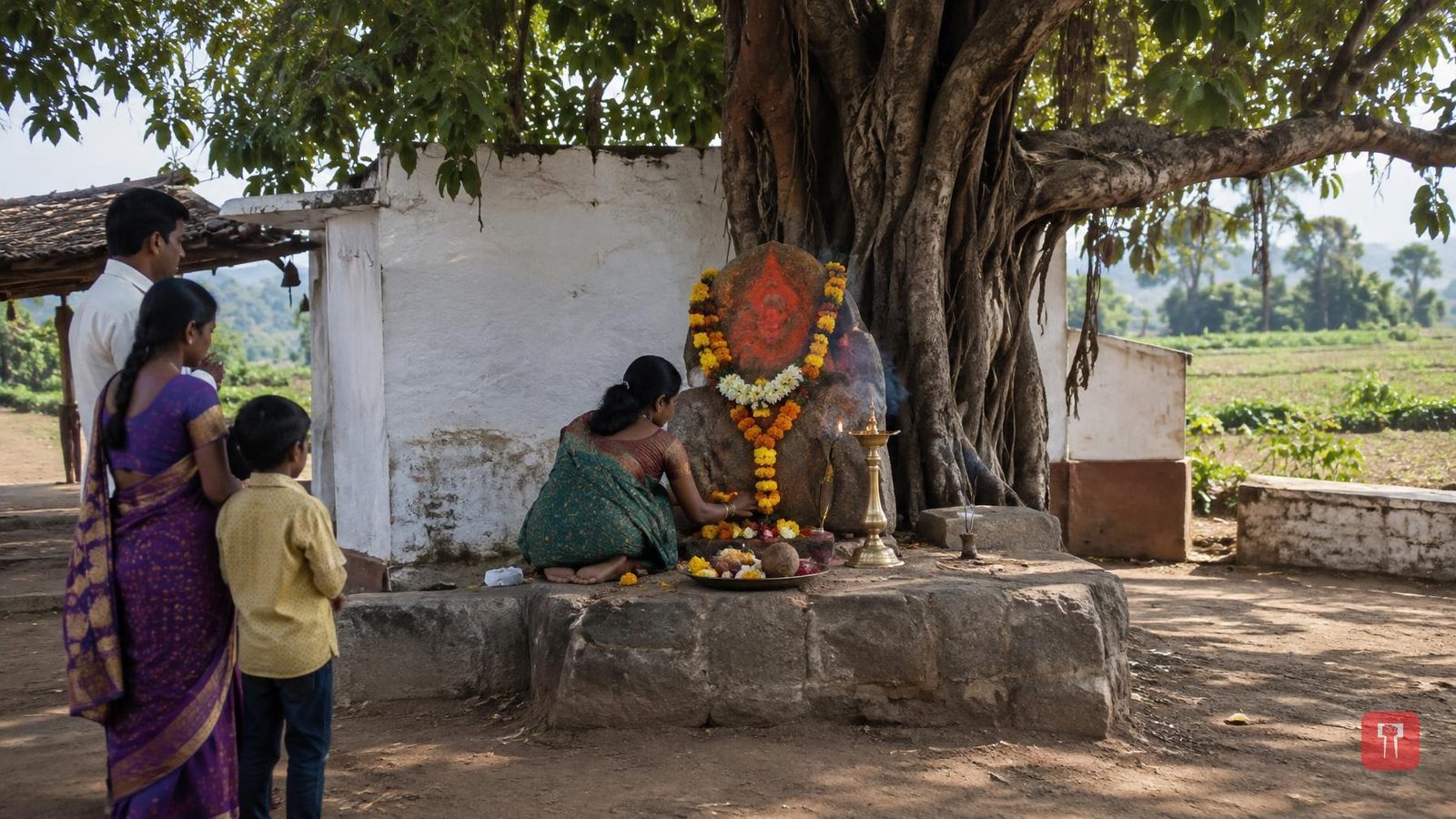
The concept of the gramadevata is linked to the protection, prosperity and collective welfare of a village. The gramadevata is the presiding deity of a village or settlement. In many villages in Maharashtra, the yatra, fair and annual festival of the village deity are celebrated with great devotion. Prayers are offered to the village deity for troubles of the village to go away, for good harvests and for peace in the village. The blessings of the village deity are sought for auspicious occasions at home, especially weddings and thread ceremonies. Maharashtrian families observe the gavdev custom before a wedding, in which the blessings of the village deities are sought and they are invited to the wedding.
The deity in whom a person has special faith and whom they worship regularly is called the ishtadevata. A person's ishtadevata may be Ganapati, Shiva Mahadev, Vishnu, Devi, Vitthal or some other deity. The ishtadevata is chosen according to personal faith, family upbringing or spiritual tradition. Remembering the deity can bring a sense of support, peace and positivity.
A deity associated with a particular place is called the sthaladevata. The religious tradition of this deity may be tied to a temple, pilgrimage site, house, field or a specific area. The deity connected with a place is worshipped when entering a new house, performing religious rites at a sacred site or starting work on a new plot. In Maharashtrian families, deities such as Narsoba and Mhasoba may be the sthaladevatas of the respective bhaubandki (kin group) and gavki (village community). Deities found in fields, in the wild, beside wells, on plateaus, on ghat passes or near hills can also be called sthaladevatas.
Worship of these deities is considered a symbol of faith, tradition and gratitude. The kuladevata is linked to the family's tradition, the gramadevata to the collective faith of the village, the ishtadevata to personal devotion and the sthaladevata to a specific place. Every family's way of worship may differ. These traditions help preserve family bonds, cultural heritage and harmony in society.
