

Shiva Tandava Stotram, composed by Ravana in pain, is linked to Mount Kailash legend
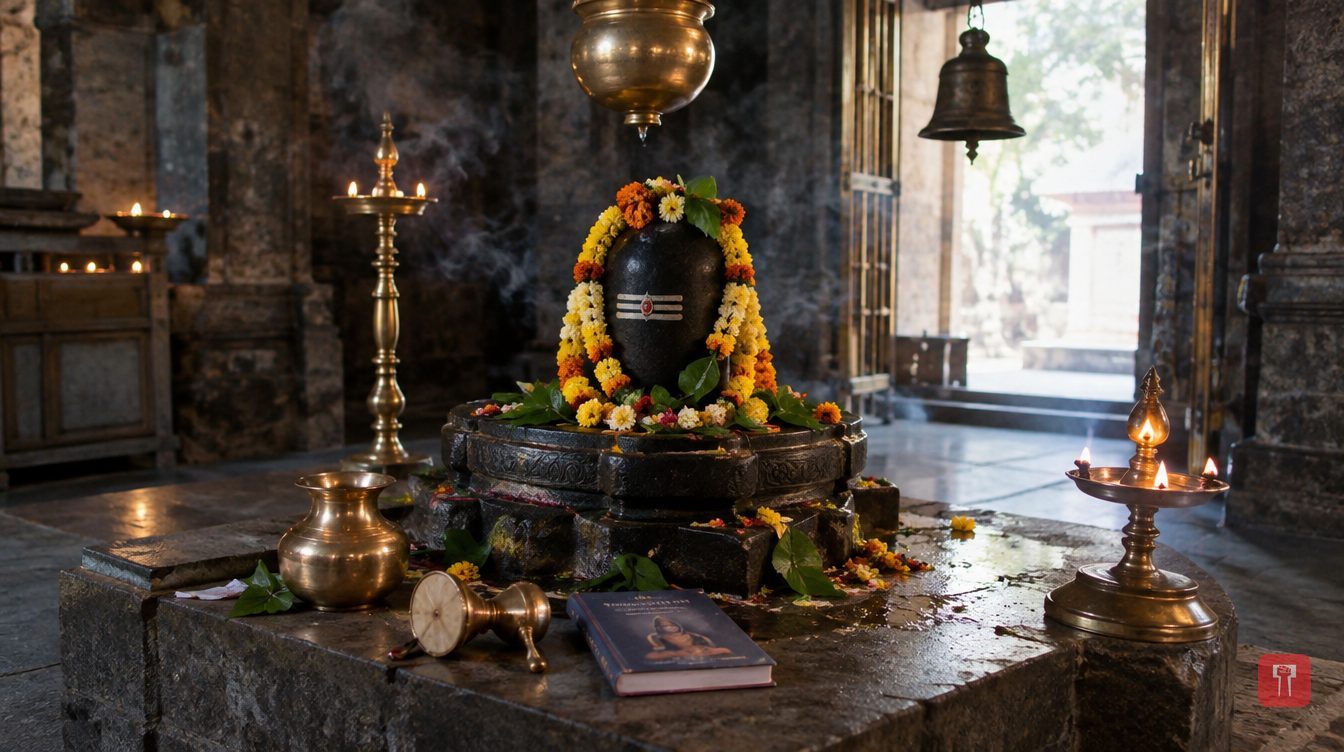 Images are not validated/verified
According to mythology, Ravana composed the hymn after Shiva pressed down Mount Kailash with his toe, trapping Ravana's hands beneath it.
Mythological accounts say the Shiva Tandava Stotram was composed by Ravana, the king of Lanka. The hymn describes Mahadev's tandava dance, the Ganga flowing from his matted locks and the serpent coiled around his neck. A legend connected with Mount Kailash is also told about its origin.
According to the legend, Ravana was a devout follower of Mahadev. Once he became extremely proud of his strength. He set out to please Mahadev and carry the entire Mount Kailash to Lanka. As soon as he tried to lift Kailash on his hands, the whole mountain shook.
Goddess Parvati was frightened. To break Ravana's pride, Lord Shiva then lightly pressed his toe down on Mount Kailash. Ravana's hands (fingers) were trapped under the mountain and he began to cry out in pain. In that intense agony, and under the influence of his devotion to Shiva, words of an exceptionally high order suddenly burst from Ravana's mouth in Sanskrit. The hymn Ravana sang to calm Mahadev's anger and beg his forgiveness is what is called the Shiva Tandava Stotram. The legend says Shiva, pleased with his unmatched devotion, released him.
The hymn gives a striking description of Mahadev's tandava dance, his locks, the serpents at his neck, and his fierce yet beautiful form. The sacred stream of the Ganga is seen flowing noisily through the forest of Shiva's dense locks, and a long serpent hangs from his neck like a garland. Playing the damaru with the sound "damad damad", Mahadev performs a fierce tandava. Fire blazes on his broad forehead, and the crescent moon adorns his brow like a jewel. The hymn describes Shiva as the supreme lord who burned Kamadeva to ashes, slew the demons Andhakasura and Tripurasura, and conquered Kaal, that is, death itself.
In the latter part of the hymn, Ravana expresses a wish: "When will my mind become steady? When I worship Mahadev with equanimity, making no distinction between stone and gold, enemy and friend, a blade of grass and a lotus-eyed woman."
The Shiva Tandava Stotram has 17 verses in all. The first 14 are its main part. They offer a "selfless praise" of Mahadev's form, his tandava dance and his power. For this reason, these first 14 verses are the ones mainly sung or recited.
The last three verses (15 to 17) are called the "phalashruti". They set out the significance of reciting the hymn and the method of doing so. They also describe how singing it brings a person chariots, elephants and horses (that is, comfort and prosperity) and lasting Lakshmi, or wealth.
From a literary point of view, the hymn is composed in the Sanskrit "Panchachamara" metre, in which each line has 16 syllables. The construction of its words (for example, jatatavigalajjalapravahapavitasthale) and the pattern of its rhyme are such that reciting it produces a kind of inner energy and speed. The hymn is not merely a praise. It is a beautiful, rhythmic description of Mahadev's might, his form and his supernatural tandava dance.
Reach readers on the ward they actually live in.
Advertise with Prime Time 24Reach readers on the ward they actually live in.
Advertise with Prime Time 24Reach readers on the ward they actually live in.
Advertise with Prime Time 24
Comments
No comments yet. Be the first.