

SC: Convert cannot claim backward class quota on old caste, dismisses Tamil Nadu appeal
The Supreme Court held that a person who leaves Hinduism cannot claim reservation in the backward class he belonged to before conversion, upholding the Madras High Court.
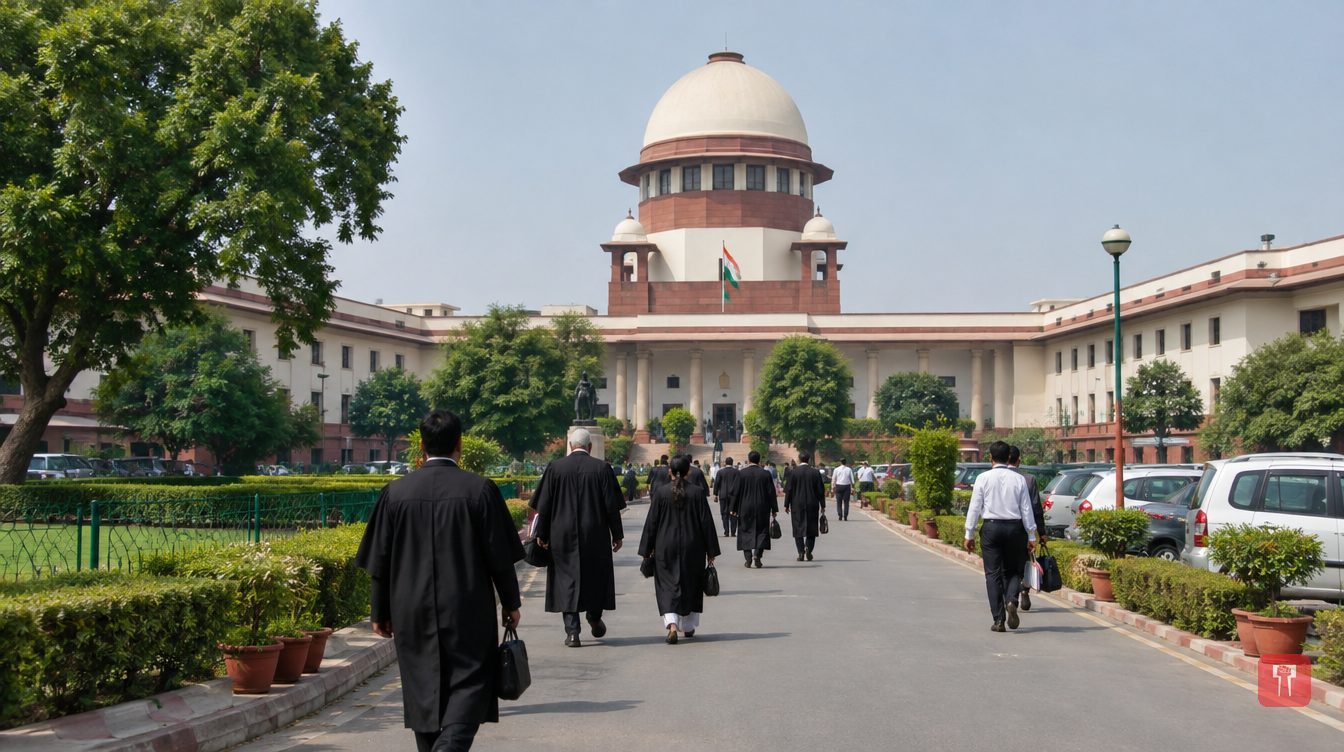 Images are not validated/verified
The Supreme Court has delivered an important ruling on religious conversion and caste-based reservation. The court held that a person who leaves Hinduism and adopts another religion cannot claim reservation in the backward class he belonged to before conversion solely on the basis of his earlier social backwardness.
The ruling was given by a Bench of Justice Prashant Kumar Mishra and Justice Chandrashekhar. The Bench dismissed the Tamil Nadu government's appeal and upheld the Madras High Court's decision.
The case relates to the Tamil Nadu government's ordinance of March 9, 2024. The ordinance provided for recognising as Muslims those backward Muslims, after their embracing Islam, from the Backward Classes (BC), Most Backward Classes (MBC), denotified communities and Scheduled Castes.
According to the Supreme Court's ruling, a person moving from the Hindu social order to a non-Hindu social order cannot claim reservation under Article 16(4) of the Constitution solely on the basis of his earlier social backwardness. The backwardness suffered in the earlier social order cannot be carried over to automatically confer backward class status in the religion adopted after conversion.
The court also referred to the Constitution (Scheduled Castes) Order, 1950. Under its third paragraph, a person professing a religion other than Hinduism, Sikhism or Buddhism cannot be deemed a member of a Scheduled Caste.
The ruling also says that if a person returns to Hinduism after conversion, he will still not automatically get backward class status. His eligibility for reservation cannot be decided solely on the basis of his earlier social position.
In this case, a young man was born in a Hindu family as Paramasivam. He embraced Islam in 2015 and changed his name to Sameer Ahmed. He later also married according to Muslim rites and sought a certificate from the "Muslim Labbai" community, which falls among the backward classes of Muslims in Tamil Nadu.
The tehsildar rejected his application. The Madras High Court then also dismissed his petition, holding the state government's 2024 ordinance unconstitutional. The state government challenged this decision in the Supreme Court, which also dismissed the appeal.
