

Sahasrachandradarshan: the tradition of honouring an elder who has seen a thousand full moons
The ritual marks the completion of about a thousand full moons in a person's life, usually at around 80 years and 8 months to 81 years of age.
 Images are not validated/verified
Indian culture gives every stage of life a special meaning. From birth to marriage, and from the various sanskars to the key turning points of age, a cultural and spiritual idea lies behind each occasion. One of the most auspicious and moving of these is Sahasrachandradarshan.
In Indian culture, the moon is more than an astronomical body. It is regarded as a symbol of coolness, happiness, beauty, peace and long life. When a person completes about a thousand full-moon sightings in their life, Sahasrachandradarshan is held to mark this milestone.
"Sahasra" means a thousand and "chandradarshan" means sighting the moon. A full moon usually comes once a month, so a person who has seen a thousand of them has, in essence, lived about a thousand moonlit nights.
At roughly twelve full moons a year, 80 years bring about 960 of them. Because of the adhik maas and the counting of lunar months, the thousandth full moon is reached at around 80 years and 8 months to 81 years. The tradition is to hold Sahasrachandradarshan around this age.
But it is not merely a matter of arithmetic. A thousand full moons means the person has lived through nearly eight decades. In that time they have seen countless changes in society, family, culture, technology and ways of living. Sahasrachandradarshan is therefore regarded as honouring both an individual's life and the experience of an entire generation.
The years after 80 bring the distilled essence of life's experience. Childhood, schooling, a job or business, marriage, family life, raising children, the ups and downs of their lives, moments of joy and sorrow, and varied experiences of society: countless memories gather along this journey.
By tradition, several religious rites are performed at the event, including Ganapati puja, Navagraha sthapana, chandra puja and homa-havan. Behind all of them lies a prayer for auspiciousness, health, peace and long life.
The moon holds a special place in the event. In Indian tradition the moon is linked with the mind, coolness and happiness. Through chandra puja, the wish is that the host (yajaman) enjoys mental peace, health and happiness.
Tuladan is also given importance. In some places there is a practice of weighing the host on a scale and donating money, grain or other items equal to their weight, or an amount fixed by tradition. A tradition of dashadan is also described, which includes cow, land, sesame, gold, clothing, grain, jaggery, salt, iron and woollen cloth. The underlying idea is that a share of the wealth and comfort received in life should be offered to society.
Even today, the meaning of this tradition can be widened. Charity can take the form of feeding the needy, helping students with their studies, helping patients, or contributing to social organisations.
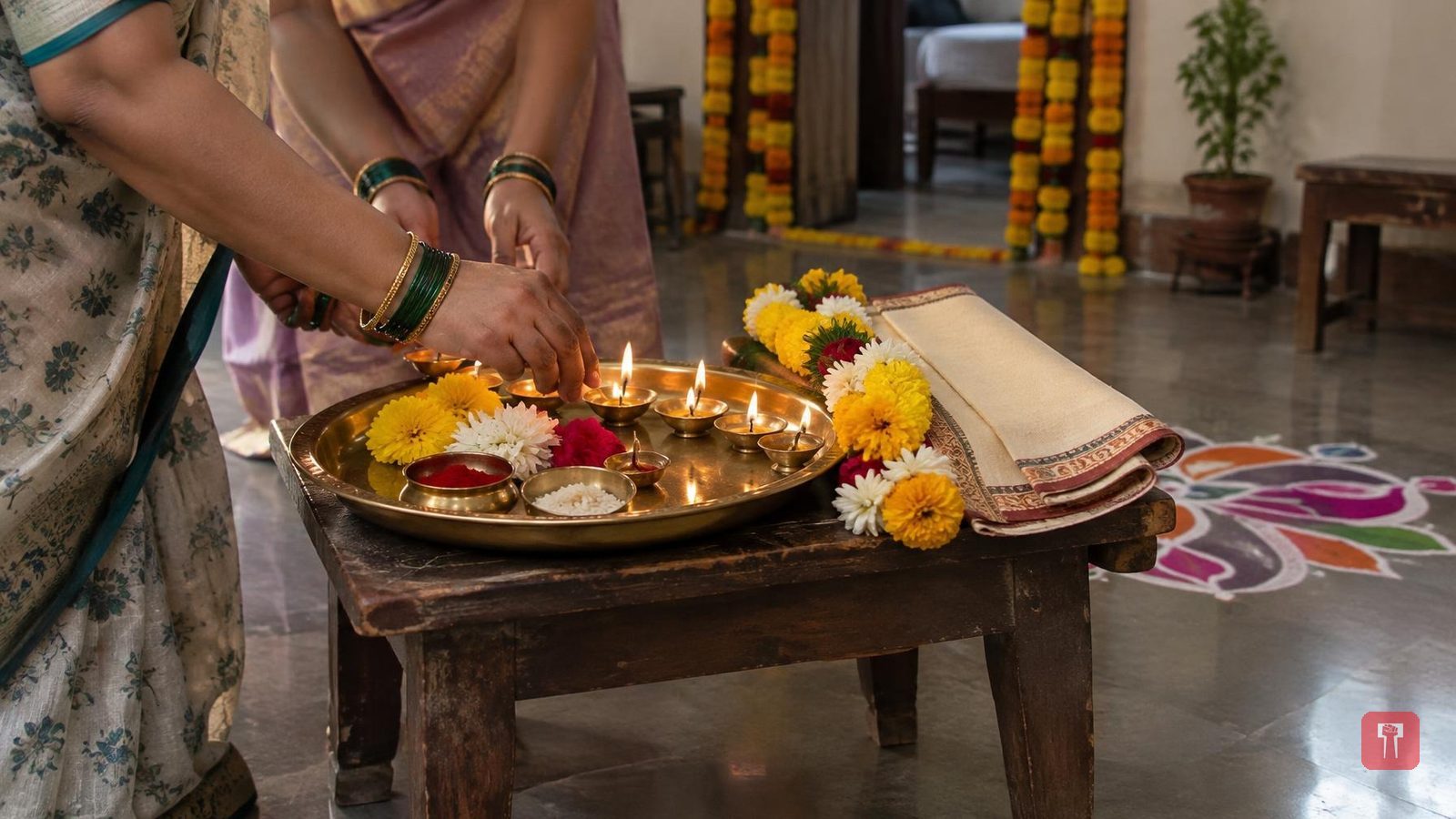
The most emotional part of Sahasrachandradarshan is the aukshan and honouring of the elder by the family. Sons, daughters, grandchildren, relatives and close friends gather together. The elder is honoured with garlands, clothes and gifts. By tradition, in some places suvasini women perform the aukshan by lighting as many lamps as the person's years. The event thus brings together respect for the past, joy in the present and values passed on to the future.
Sahasrachandradarshan is not just a religious rite, nor just a social function. It is a celebration of the joy of long life, respect for experience, the family's gratitude and the life values of Indian culture.
