

Saddula Bathukamma celebrated in Ghugus and Nakoda, with focus on preserving Telangana folk culture
The Telugu-speaking community marked the festival in Chandrapur district, raising the question of how to pass the tradition to younger generations.
 Images are not validated/verified
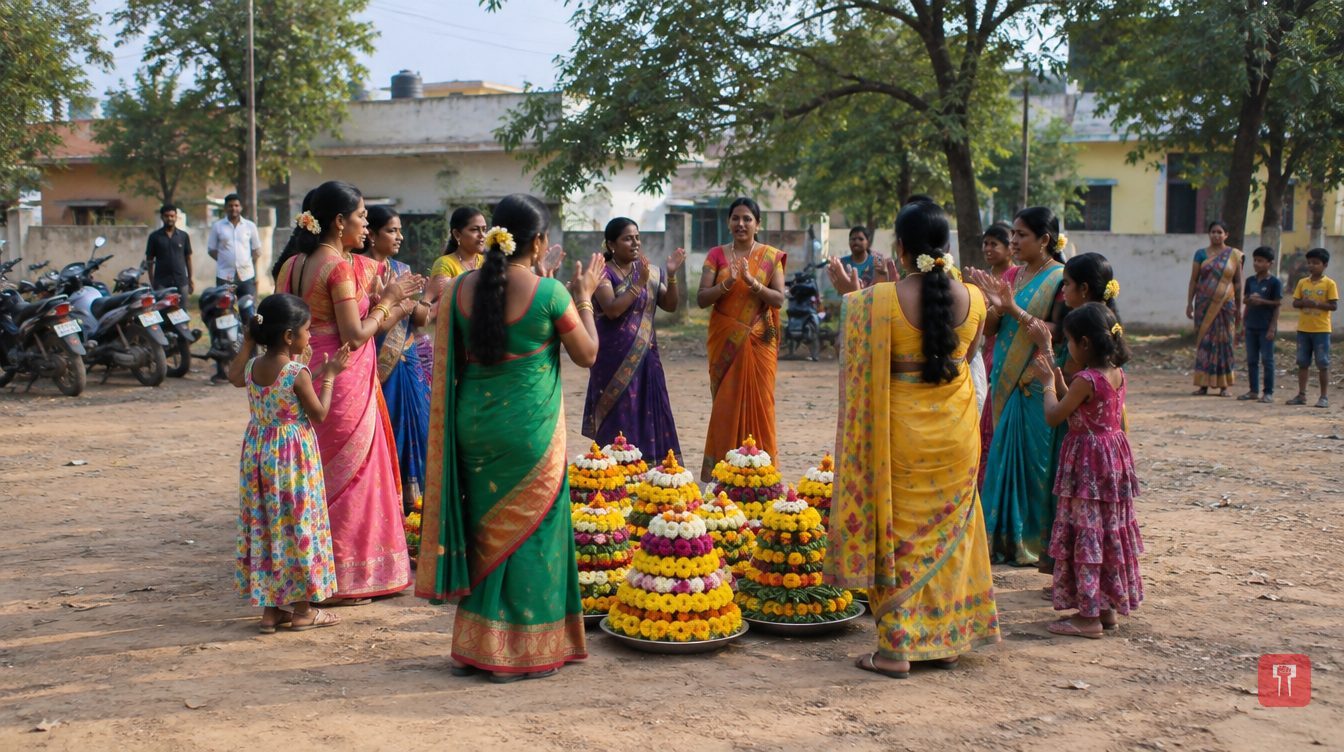
The Saddula Bathukamma festival was celebrated with great enthusiasm this year in Ghugus town and Nakoda village in Chandrapur district. The festival symbolises the rich folk culture and traditional customs of the Telugu-speaking community. Besides Telangana and Andhra Pradesh, it was also celebrated with traditional joy in Maharashtra, Karnataka, Tamil Nadu, Chhattisgarh, Odisha and other regions. At several places in Ghugus and Nakoda, women and members of the community took part in Bathukamma in the traditional way and sought to stay connected to their cultural roots.
Saddula Bathukamma is not merely a religious or traditional ceremony. It is an important folk festival linked to nature, flowers, women's empowerment, family unity and community participation. Through it, the Telugu-speaking community tries to pass its traditions, folk songs and cultural identity from one generation to the next.
The festival is known for its attractive decorations made of different seasonal flowers. Women prepare the Bathukamma by arranging flowers in the traditional way, and then all join the celebration singing folk songs. The festival ends with a collective prayer and, as per tradition, immersion in water.
Bathukamma has special cultural significance in Telangana. Over time, it has also become an important means for Telugu-speaking families living outside Telangana to preserve their mother tongue, tradition and social unity. The events in Ghugus and Nakoda also showed the presence of this cultural heritage locally. Such events give people of different communities a chance to come together and share their traditions.
On the occasion of Saddula Bathukamma, public representatives and social workers were welcomed and felicitated at programmes in some places. Their social contribution and work done in the public interest were appreciated. Such programmes give importance to social dialogue and mutual cooperation along with cultural celebration. The participation of public representatives, social workers and local residents gives these events a community character.
However, the success of a cultural festival does not rest only on stage programmes, the felicitation of guests or the grandeur of the event. It is equally important how actively the community participates and how much effort is being made to continue the tradition.
An important question arises on this occasion: are the challenges of preserving Telangana's traditional culture and folk traditions growing in some parts of Maharashtra? The cultural presence of the Telugu-speaking community has long been visible in areas such as Ghugus and Nakoda in Chandrapur district. But changing social conditions, the lifestyle of the younger generation, migration for jobs, changes in language and a possible decline in participation in community events make it necessary to discuss the future of traditional culture.
If the number of Telugu-speaking families locally, their participation in cultural programmes or their attachment to traditional activities is declining, it could be a cause for concern from the standpoint of cultural preservation. However, it would not be right to conclude from thinner crowds at a single event that the community's population is falling or that the culture is dying out. That would require a study of data on the local population, migration of families, use of the language and participation in cultural programmes.
Still, the question is whether the younger generation will be able to carry forward traditional festivals like Bathukamma with the same enthusiasm as earlier generations, and with an understanding of their cultural significance. Preserving any culture cannot be limited to celebrating once a year. Families, social organisations, cultural groups and local institutions will have to make sustained efforts.
To make the Bathukamma celebration in Ghugus and Nakoda more inclusive, children and young people can be introduced to folk songs, traditional dance, flower decoration and the historical and cultural importance of the festival. With the help of schools and social organisations, cultural programmes, folk art competitions and activities connected with the Telugu language can be held. Local organisers should also run cultural activities throughout the year, collect traditional songs and customs from elders, and take initiatives to preserve these traditions through digital media.
Saddula Bathukamma carries a message of respect for nature, the cultural role of women and community unity. For the Telugu-speaking community living in Maharashtra, it is an important occasion to keep its cultural identity alive. That the festival was held in Ghugus and Nakoda is a positive sign that the tradition endures. But for this enthusiasm to continue, active participation from every section of society is necessary.
The question is not only how enthusiastically Saddula Bathukamma was celebrated. It is also what concrete steps are being taken today to pass this culture, language and tradition to coming generations. If concrete steps are taken in time, Telangana's folk culture can reach the new generation effectively in these areas of Maharashtra. Otherwise, if participation in traditional events and cultural attachment keep declining, the possibility cannot be ruled out that the reach of this rich heritage will shrink.
