

RTI reply: WCL's Nagpur headquarters has no team to enforce its ban on smoking, liquor and gutkha
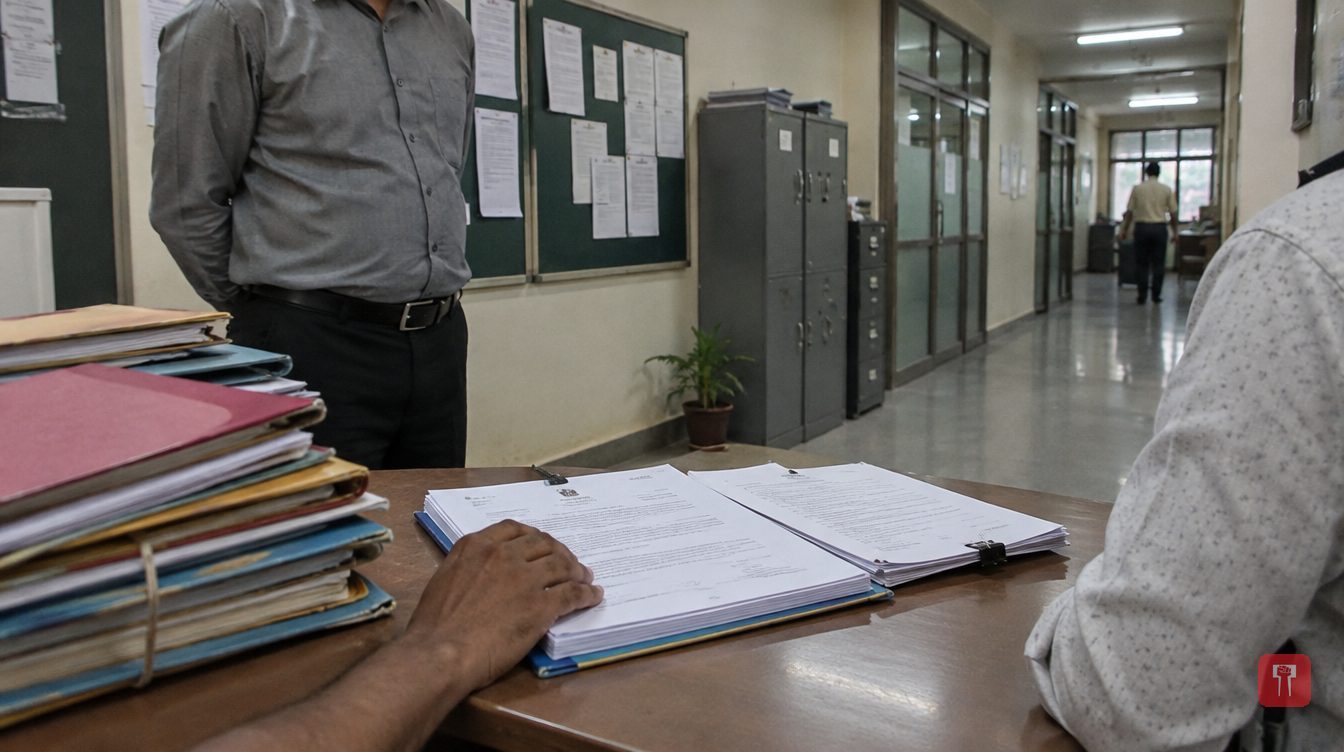 Images are not validated/verified
An RTI reply says Western Coalfields Limited has appointed no inspection team, committee or flying squad at its Nagpur headquarters to enforce the ban on smoking, alcohol, gutkha and pan masala.
Serious questions have been raised about the enforcement of rules at the Nagpur headquarters of Western Coalfields Limited (WCL). Employees get an advance of Rs 12,500 a year for uniforms. But no inspection team, committee or flying squad has been deployed at the headquarters to enforce the ban on smoking, liquor, gutkha and pan masala on office premises. This emerged from an official reply received under the Right to Information (RTI) Act.
Rajiv Ranjan Kushwaha, a Nagpur resident, filed the RTI application on September 3, 2026 (reference: WCL/RTI/SUKAA/2026/6719). The documents given by WCL's industrial relations department in reply have raised questions about how the company's rules are implemented.
The reply was prepared on the basis of a September 16, 2026 note (ref: WCL/IR/2026/346) from WCL's senior manager (HR/IR/SE) and was sent to the public information officer on September 17. The application had asked five key questions.
The first question was about the SOP or GR on uniforms. In reply, WCL provided a revised order of Coal India Limited (CIL). The second was about the ban on intoxicants in office and mine premises. Management said the ban is part of the company's certified Standing Order, which is available on the website. The third was about punishment for violations. According to WCL, the provisions for action are also in the Standing Order.
The fourth question was about a monitoring and inspection committee. On this, management stated plainly that no inspection team, committee or flying squad is currently appointed at WCL's Nagpur headquarters. The fifth was about details of annual inspections and punishments. Since no committee or team has been formed, the details sought were not provided either. The most significant point of the reply is that, despite rules and penalty provisions, no special arrangement has been made at the headquarters to monitor their enforcement.
The RTI reply also enclosed a CIL office memorandum dated April 28, 2026 (CIL/C-5B/JBCCI-XI/Uniform Dress-Code/20), detailing the revised uniform arrangement. It replaced an earlier order of June 6, 2025, after Coal India's 490th board meeting. Under the new arrangement, each employee will get Rs 12,500 a year for three sets of uniform. Earlier, bills had to be submitted within a month; now GST bills must be submitted within two months. If bills are not submitted in time, the amount can be recovered from the employee's salary. Employees about to retire must submit bills within two months or before their final salary is released, whichever is earlier.
According to Annexure A of the revised order, male employees are to have three grey formal shirts and three black formal trousers. Women employees can choose from three options: a grey or maroon shirt with black trousers; a grey or maroon kurta with black salwar and dupatta; or a grey or maroon saree with a black blouse. Women employees must have at least three sets of uniform as per the prescribed options. The colour codes are set as grey, PMS 444; maroon, PMS 209; and black, PMS 426.
Questions are being raised about effective enforcement of the uniform and drug-free office orders. According to sources, employees not wearing the prescribed uniform are seen coming and going from offices, including at the Nagpur headquarters and several regional headquarters. There are also allegations of open smoking in some office rooms. If the allegations prove true, the question will be how effective the monitoring system is when the company has both rules and penalty provisions. The management's official reply that there is no inspection team or flying squad to stop smoking and other prohibited activities on office premises raises questions of accountability in particular.
Several questions now need answers. Is the uniform rule being followed uniformly at the WCL headquarters? Who monitors action on complaints of smoking and intoxicant-related violations? When the rules provide for punishment, why has no special arrangement been made for effective monitoring? Will the CMD review the matter and clarify the state of compliance at the headquarters? And, given these facts, will the vigilance department or another competent authority consider an inquiry?
Following the RTI disclosure, discussion has intensified over the gap between the existence of rules at the WCL headquarters and their effective enforcement. However, the absence of an inspection committee does not mean no action was ever taken. The available records and the actual situation need to be examined separately.
It remains to be seen what steps WCL management takes to enforce the uniform rules and the ban on smoking and intoxicants. The real question is whether a monitoring system will be set up for a disciplined, smoke-free office at the headquarters, or whether the replies will remain confined to written orders. After the facts that emerged from the RTI, attention is now on WCL management's transparency, accountability and uniform enforcement of rules.
Reach readers on the ward they actually live in.
Advertise with Prime Time 24Reach readers on the ward they actually live in.
Advertise with Prime Time 24Reach readers on the ward they actually live in.
Advertise with Prime Time 24
Comments
No comments yet. Be the first.