

RSS turns 101 on Vijayadashami, from a Nagpur start to a family of about 40 major bodies
The Rashtriya Swayamsevak Sangh, founded in 1925 with 17-18 youths, now officially recognises 35 to 40 main affiliates.
 Images are not validated/verified
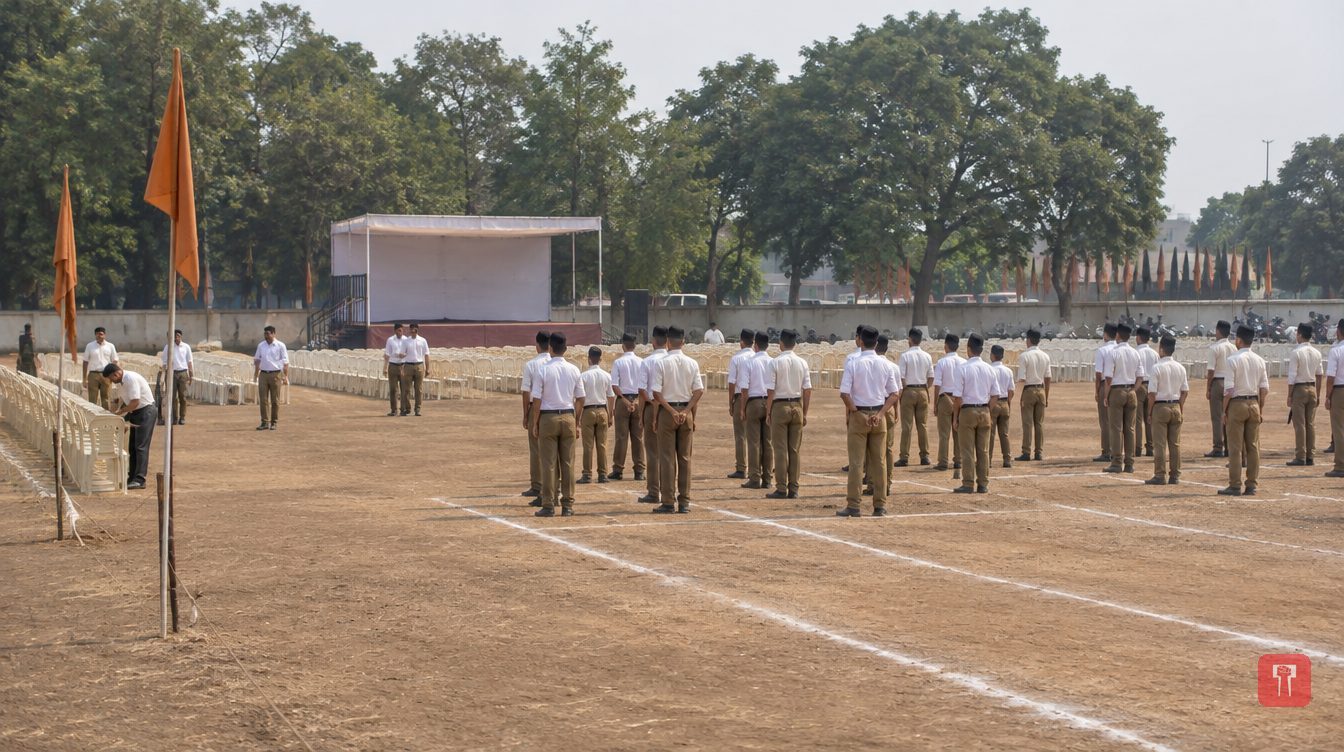
The Rashtriya Swayamsevak Sangh (RSS) completed 101 years today. Today is Vijayadashami, which is also the founding day of the Sangh. In 1925, Dr Keshav Baliram Hedgewar laid the foundation of the Sangh at Mohite Wada in Nagpur with just 17-18 youths. At the time, no one thought the organisation would grow into the biggest centre shaping the direction of India's social and political climate.
Many people know the Sangh only by its morning shakha, lathi and khaki shorts. But the RSS has now become an idea, and its influence is visible in every sphere of society. The Sangh does not enter politics or movements directly. For this it has set up separate organisations in different fields, which together are called the "Sangh Parivar".
The Sangh officially recognises roughly 35 to 40 main affiliated organisations. If their state-level wings, trusts and allied non-governmental organisations (NGOs) are counted, the number goes beyond 2,500. From politics to tribal welfare, and from schools to a forum of scientists, the Sangh Parivar is present everywhere.
In politics and the student-youth front are the Bharatiya Janata Party (BJP), the Akhil Bharatiya Vidyarthi Parishad (ABVP), Bajrang Dal and Durga Vahini. On the labour, farmer and economic fronts are the Bharatiya Mazdoor Sangh, Bharatiya Kisan Sangh, Swadeshi Jagran Manch, Laghu Udyog Bharati and Sahakar Bharati. In religion and culture are counted the Vishwa Hindu Parishad, Muslim Rashtriya Manch, Rashtriya Sikh Sangat, Sanskar Bharati and the Akhil Bharatiya Itihas Sankalan Yojana.
In education are Vidya Bharati, Bharatiya Shikshan Mandal and the Akhil Bharatiya Rashtriya Shaikshik Mahasangh. Service and tribal welfare work is handled by Seva Bharati, the Akhil Bharatiya Vanvasi Kalyan Ashram, Bharatiya Kushtha Nivaran Sangh, Deendayal Research Institute and Sakshama. Also on the list are names such as Vigyan Bharati, Akhil Bharatiya Adhivakta Parishad, National Medicos Organisation, Krida Bharati, Purva Sainik Parishad, Rashtra Sevika Samiti, Pragya Pravah, Bharat Vikas Parishad, Hindu Jagran Manch, Seema Jagran Manch, Vishwa Samvad Kendra, Hindu Swayamsevak Sangh and Kutumb Prabodhan.
The question arises whether the Sangh gives orders to all these organisations. Technically, the answer is no. All of them are fully autonomous in administration and strategy. Each organisation has its own constitution, its own office-bearers and its own budget. To keep coordination, the Sangh sends its experienced and senior pracharaks into these organisations as "sangathan mantri". These pracharaks see to it that the organisation's work does not stray from the Sangh's basic ideology, that is, cultural nationalism and nation-building.
After completing 101 years, the Sangh Parivar's attention is not only on running shakhas. The emphasis now is on youth of the digital age (IT Milan), modern science (Vigyan Bharati) and strengthening India's narrative on world platforms.
The main Vijayadashami function will be held today at Reshimbagh in Nagpur. Sarsanghchalak Mohan Bhagwat will be the main speaker. Former Vice President Jagdeep Dhankhar and an Israeli diplomat have been invited as special guests. The Sarsanghchalak's annual address from Reshimbagh serves as a guide for the Sangh Parivar and the country.
