

Remove peepal saplings from walls early, and do not rely on salt alone
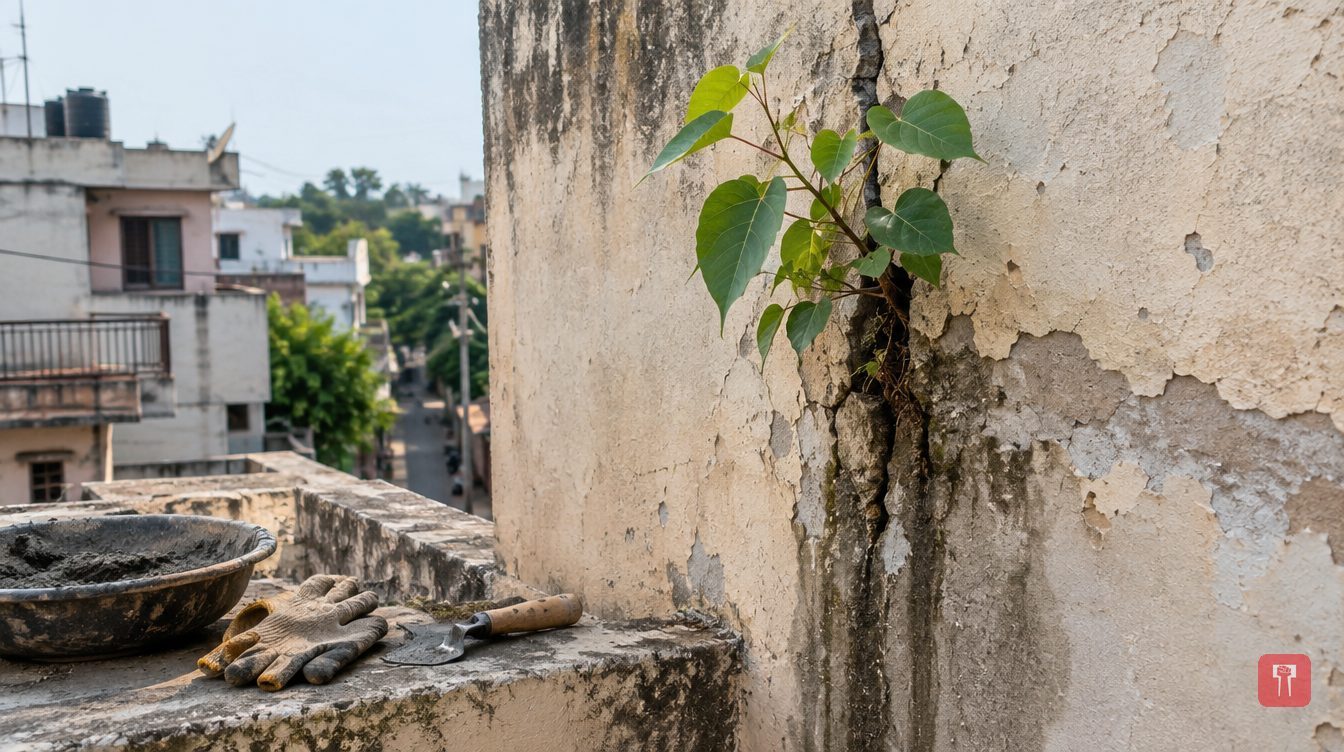
A peepal sapling in a wall crack can split the wall and let in rain, so it should be removed early and the gap sealed, says Surendra.
 Images are not validated/verified
In many homes, a small peepal sapling suddenly appears on the roof, in a crack in the wall or in a corner of the terrace. At first it is tiny, so people ignore it, thinking it is such a small plant that it will dry up. But this neglect can prove costly later. Its roots slowly enter the wall, the wall begins to crack and rainwater starts seeping into the house.
It is therefore very important to remove the sapling early. The question is how. Many people suggest putting salt on it to dry it out. Is that right? Surendra has suggested a simple home remedy.
First, understand how a peepal comes to grow in a wall. Peepal seeds are very light. They are carried by the wind or in bird droppings and land on the roof or in a gap in the wall. Once they get a little dust, soil and rainwater, they sprout at once. At first a small plant with two leaves is seen, but it grows very fast. So if you see anything green on the roof, pay attention immediately.
Does this plant really crack walls? Yes. Peepal roots are very strong. They enter small cracks that already exist and keep growing inside. As the roots thicken, the cracks widen. Damp patches then appear on the wall, plaster begins to peel and sometimes water comes through the wall in the monsoon. If you notice dampness in a wall, go up and check whether a plant has grown there.
Now the salt remedy. In villages and among home remedies, many people say that if you put salt on a peepal, it will dry up on its own. Salt raises the salinity of the soil and the roots cannot absorb water, so the plant dries. But this method is not 100 per cent effective. Sometimes the plant does not dry up even after salt is applied. It looks dried on top, but the roots stay alive inside.
Another major drawback is that if too much salt is used, the surrounding soil is spoiled. No other plant will grow there. It is also not good to put that much salt inside a wall. So do not rely on salt alone.
What, then, is the right method? If the sapling is very small, small enough to be pulled out by hand, remove it at once. Take care that it comes out with the root. Wear gloves and ease it out gently with a small hand hoe. But if the plant is somewhat larger, its roots have gone deep into the wall, or it has grown at a dangerous spot at the edge of the roof that you cannot reach, do not try anything yourself. In such cases, call a gardener or a mason. They will remove it properly.
The work after removing the plant is the most important. Many people make the mistake of thinking the job is done once the plant is out. It is not. When the plant is removed, a large crack is left, holding soil, pieces of root and moisture. If the crack is left as it is, rainwater will certainly get in through it. So clean the spot well and seal the crack completely with cement and a waterproofing chemical. Only then will your wall be strong again.
To keep the plant from coming back, keep the roof and terrace clean at all times. Do not let dry leaves and soil collect. If water collects, arrange for it to drain away. Check the whole roof once before the monsoon for cracks and for small saplings. Timely attention will save a great deal of expense. In short, when you see a peepal, do not leave it thinking it is small. Remove it early and have the wall repaired, or the house will not take long to weaken.

Comments
No comments yet. Be the first.