

Rice, pulses and jaggery cost more ahead of Dasara and Deepavali as low rain hits Karnataka crops
Prices of rice, ragi, jaggery and pulses have risen sharply in Karnataka, and families may spend more on groceries before the festivals.
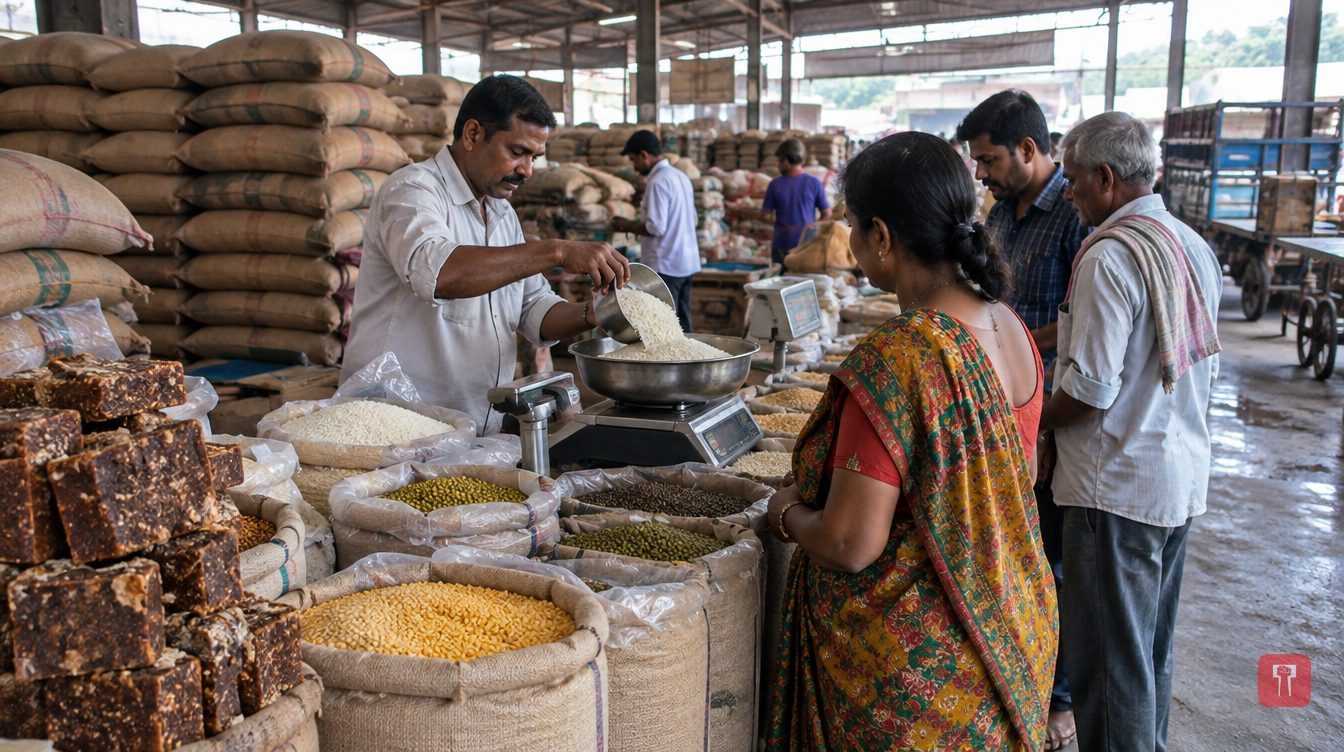 Images are not validated/verified
Dasara and Deepavali are near, and households have begun preparing festival dishes and sweets. This time, however, festival shopping is set to weigh heavily on the kitchen budget. Prices of rice, pulses, ragi, jaggery and other essential grains are rising. Ordinary families may have to spend more on groceries before Dasara and Deepavali.
Rainfall in Karnataka has reportedly been low, and water levels in reservoirs are falling. This has affected the cultivation of grain, and the result is showing in the market prices of rice and other food items. Several varieties of rice have become 25 to 30 per cent costlier over the past three months. Grocery prices are also said to be up by about 30 to 40 per cent compared with last year.
Rice is a daily necessity in Indian homes, so a rise in its price directly affects the monthly household budget. Different varieties of rice have become costlier in Karnataka's markets. Rice that earlier sold at Rs 50 to Rs 60 a kg has now reached Rs 70 to Rs 90 a kg. Ragi has also become dearer. It sold at Rs 35 to Rs 40 a kg last year and now sells at Rs 55 to Rs 60 a kg. Jaggery has risen from about Rs 50 a kg to Rs 80 to Rs 85 a kg.
In Karnataka's wholesale market, prices of different varieties of rice and pulses are fluctuating. The APMC market rates per kg are as follows: Sona steamed (parboiled) rice Rs 72 to Rs 75, Sona Masuri rice Rs 80 and Kolam rice Rs 90 to Rs 95. Idli rice is Rs 46 and dosa rice Rs 35 to Rs 40 a kg.
Among pulses, toor dal is Rs 130 to Rs 160 a kg. Two rates are given for chana dal, Rs 95 to Rs 100 and Rs 90 to Rs 95. Green moong is Rs 110 to Rs 120 and urad dal is put at Rs 100 to Rs 165 a kg.
Low rainfall and water scarcity are cited as the main reasons for the price rise. The shortfall in monsoon rain and low reservoir levels have affected the cultivation of paddy, ragi, jowar and other crops. When crop yields are hit, the risk of a shortage of grain supply in the market grows, and this can put pressure on prices. Demand for food items also rises during the festival season, so families feel the impact of higher prices more sharply.
