

Railway passenger safety split between RPF and GRP, raising questions of accountability
Protection of passengers and their belongings lies with two agencies, the RPF under the Centre and the GRP under state governments, and the split leaves accountability unclear.
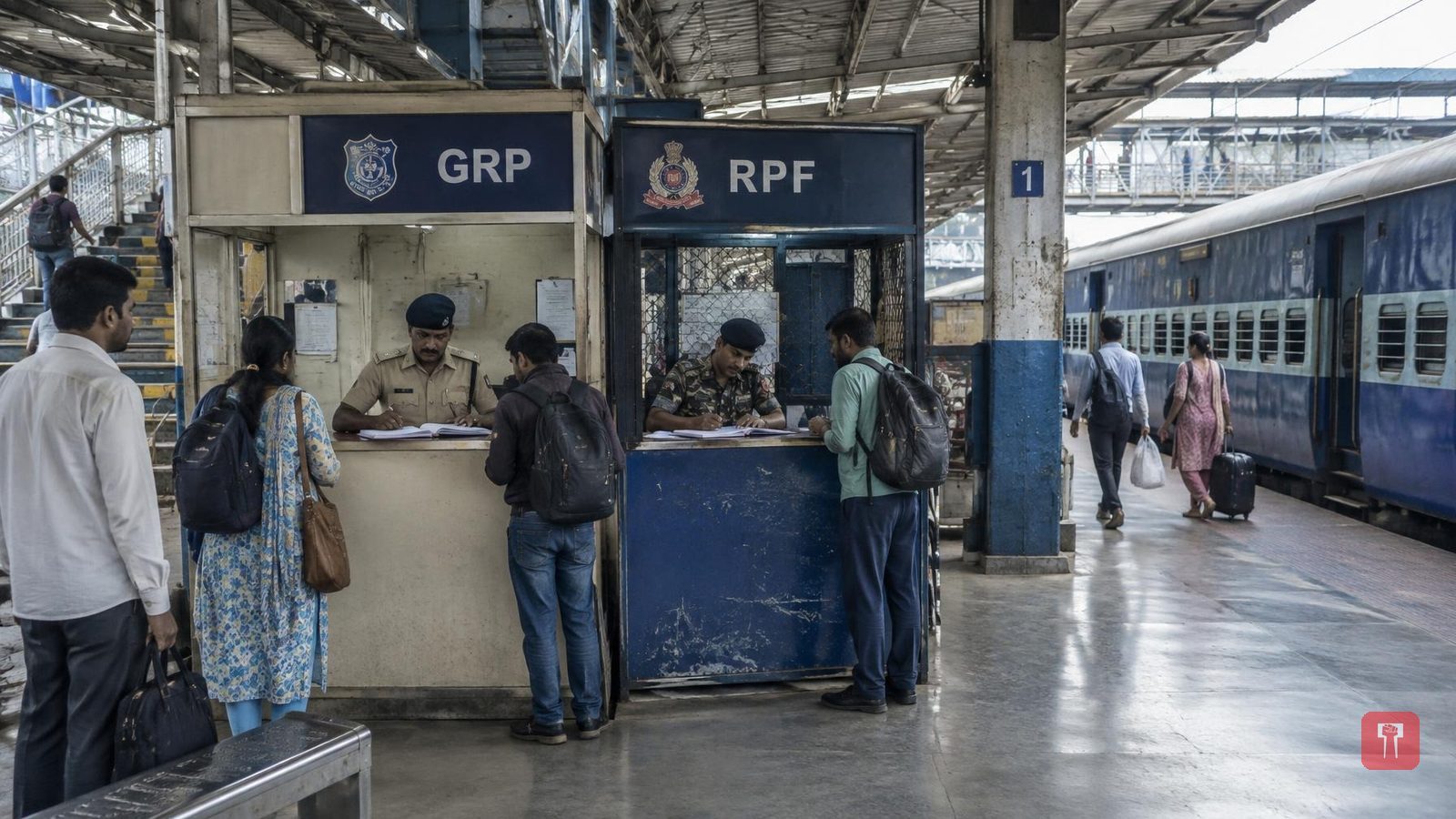
Indian Railways is called the country's lifeline, but the safety of passengers' mobile phones, laptops and other valuables, and of their lives, is divided between two separate systems. On one side is the Railway Protection Force (RPF), under the Centre, and on the other the Government Railway Police (GRP), under state governments. Two agencies share the responsibility, yet the question remains who is accountable.
The biggest problem is that investigation of railway crimes and registration of FIRs rest with the GRP, but in many states the posting of senior IPS officers there has become a short stint rather than a long-term strategy.
The central irony of railway passenger safety is that the force with the resources does not have the authority to investigate every crime, while the force with that authority depends on the state system for its resources and priorities. The RPF has modern equipment, security personnel and a large presence in railway premises. For offences under the Bharatiya Nyaya Sanhita (BNS), however, the main responsibility for registering FIRs and investigating lies with the GRP.
The two forces also follow different legal routes. For offences involving railway property, the RPF acts under the Railway Property (Unlawful Possession) Act, while the GRP works under state police laws and procedures. Their roles differ, but for criminals and passengers the railway is one. A permanent and clear national framework for data sharing, joint patrols, joint intelligence and swift action has long been felt necessary.
State-cadre IPS officers (ADG, IG, DIG and SP) are sent to the GRP on deputation. In most states a GRP posting has become a "soft" or short-duration posting for IPS officers. On average, an SP or IG-level officer is transferred back to mainstream policing within 8 to 12 months.
Meanwhile, the networks of railway criminals are not confined to one district or state. A train crosses several states in a day, and criminals exploit the same network. The result of this "musical chairs" is that by the time an officer understands the railway's complex network, the methods of interstate criminal gangs and coordination with the RPF, a new face has replaced them.
Under the Central Railway zone, the GRP's divisional headquarters are at Mumbai (Chhatrapati Shivaji Maharaj Terminus), Pune, Nagpur, Aurangabad and Mumbai suburban. IPS officers command them as superintendents of police. The IPS system could therefore act as a bridge.
Three decisions are now said to be needed. First, a minimum tenure: senior IPS officers posted to the GRP should get a stable tenure of at least two years so that they can implement long-term security plans. Second, clear roles for both agencies: which agency registers the FIR, which investigates and which takes action in each type of crime should be straightforward and simple for passengers too. Third, a special fund for railway security: given the GRP's railway-related needs, a financial arrangement coordinated between the Centre and states should be created so that CCTV, cyber intelligence, data analytics and modern investigation systems can be strengthened.
The question is not about crime alone but about the whole system. The railway is the country's largest public transport system, and security here is not only the responsibility of the RPF or the GRP but a matter of effective coordination between the Centre and the states. When a train does not respect state borders, why should the investigation of a crime be stuck at them? Until this question gets a policy answer, the "dual command" and "musical chairs" arrangement will keep running alongside the trains on the tracks.
