

President Murmu raises flag at Ramkund as Nashik-Trimbakeshwar Simhastha Kumbh begins
 Images are not validated/verified
The Simhastha Kumbh Mela at Nashik and Trimbakeshwar began on October 31, 2026 with flag hoisting, for the first time by the President; the main Amrit Snan falls in 2027.
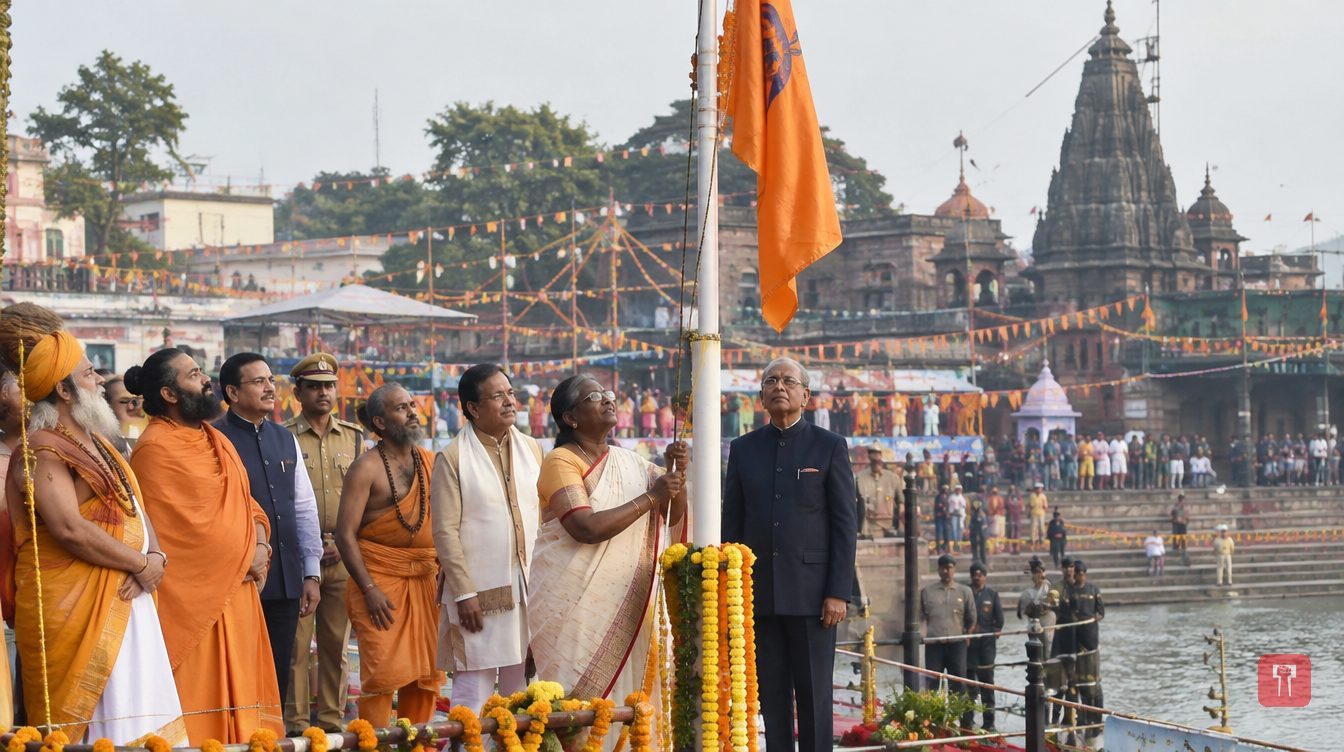
The Simhastha Kumbh Mela of Nashik and Trimbakeshwar got under way on 31 October 2026 with a flag-hoisting ceremony led by President Droupadi Murmu. It is the first time the head of state has raised the flag to open the event. The rites took place at two venues: the Godaghat and Ramkund area in Nashik, and Kushavarta Tirtha in Trimbakeshwar.
A conch was sounded at 12.02 pm, the auspicious moment fixed for the entry of Jupiter into Leo, and the mood of the gathering turned fervent. A dharmadhwaj went up at Ramkund, and the flag was also raised at Kushavarta Tirtha. Flags were hoisted at Panchavati as well. Vaishnav sadhus were present in Nashik, while Shaiva sadhus attended at Trimbakeshwar.
Chief Minister Devendra Fadnavis, Deputy Chief Ministers Eknath Shinde and Sunetra Pawar and Governor Jishnu Dev Varma stood with the President, along with sadhus and mahants from several akhadas. Devotees from many areas joined Nashik residents to watch. The Godaghat, Ramkund and the temple precincts had been decked with flags, pennants and strings of electric lights.
Because of the President's visit and the presence of other dignitaries, the police strength in the area was raised. Separate plans were drawn up to handle crowds of pilgrims and to keep vehicles moving.
The Mela will run until 24 July 2028, a span of about 21 months. Its heaviest crowds and main rites, however, are still some months away, in August and September 2027. The administration says it is concentrating on roads, water supply, cleanliness, lodging for pilgrims and traffic control.
The calendar ahead is as follows. The akhadas will hoist their own flag at Sadhugram in Nashik on 24 July 2027. A nagar pradakshina, a ritual circuit of Nashik city with sadhus, saints and akhadas taking part, is set for 29 July 2027. The first Amrit Snan, also called the shahi snan, falls on 2 August 2027, the Somvati Amavasya of Ashadha, which comes just before Shravan. It will be held at Ramkund and at Kushavarta Tirtha. The second and main Amrit Snan is on 31 August 2027, Shravan Amavasya, in both towns.
The third Amrit Snan, on Bhadrapad Ekadashi, is split across two days. In Nashik it takes place on 11 September 2027, for the Vaishnava akhadas, and in Trimbakeshwar it takes place on 12 September 2027, for the Shaiva akhadas. Devotees should note that the date differs between the two places.
The closing is also staggered. Trimbakeshwar is due to hold the concluding ceremony and the lowering of the flag, the dhwajavataran, on 24 July 2028. The programme for Nashik shows its closing on 29 July 2028.
Under a custom traced to the Peshwa period, Shaiva sadhus bathe at Kushavarta Tirtha in Trimbakeshwar, while Vaishnava akhadas and mahants bathe at Ramkund and in the Tapovan area of Nashik. A large Sadhu Gram is being built at Tapovan to house them.
The state government has cleared a development plan costing more than Rs 24,225 crore to receive the crores of pilgrims and sadhus expected. New, wider and safer ghats have been built along the Godavari in both towns, and a special drive has been run to clear the riverbed. Ring roads linking the city from all sides are ready, and parking zones and holding areas have been laid out for peak days.
For health and safety, the arrangements include big temporary hospitals, ambulances on call through the day and night, fire brigade services, and thousands of CCTV cameras watching the whole area. A website named Kumbh Mela Portal has been launched to keep pilgrims informed. Helicopter rides are also planned for tourists who visit on days outside the busiest periods.
The Hindu almanac places the Nashik event at the time when the Sun and Moon are in Cancer and Jupiter moves into Leo, which is why it is named Simhastha. The Mela is shared between Nashik and Trimbakeshwar, where Shaiva sadhus, who worship Lord Shiva, and Vaishnava sadhus, who worship Lord Vishnu, conduct their rites separately.
The Amrit Snan is regarded as the most important ritual. Sadhus, saints, mahants and Naga sadhus come to the bathing place in a traditional procession and bathe by established custom. Believers hold that during this period the river water turns to nectar, that a dip on the designated days earns merit, and that it can wash away sin, cure illness and bring moksha, freedom from rebirth.
The word kumbh means a pot. In the legend, the gods and demons churned the ocean in the Satya Yuga and fourteen gems emerged, the last being a pot of nectar. They fought over it for 12 days and nights, said to equal 12 human years, and drops fell at four places: Prayagraj, at the meeting of the Ganga, Yamuna and Saraswati; Haridwar, on the Ganga; Ujjain, on the Shipra; and Nashik-Trimbakeshwar, on the Godavari. The Kumbh therefore rotates among these four every 12 years. UNESCO lists the Kumbh Mela as an Intangible Cultural Heritage of Humanity.
Officials caution that the ghats, temple precincts and main roads may be packed on major bathing days, and urge devotees to plan early. Pilgrims should check diversions, vehicle curbs and designated parking, watch for official notices on akhada processions, bathing times and ghat entry, follow police and volunteers, and leave extra travel time. Since the administration may revise bathing dates, procession timings and ghat arrangements, travellers should rely on official notices and not on social media or unofficial websites.
Reach readers on the ward they actually live in.
Advertise with Prime Time 24Reach readers on the ward they actually live in.
Advertise with Prime Time 24Reach readers on the ward they actually live in.
Advertise with Prime Time 24
Comments
No comments yet. Be the first.