

Nagpur's Maskarya Ganpati, installed during Pitru Paksha, marks 239 years of a Bhosale-era tradition
Begun in 1787 by the Bhosale king Khandoji after a victory in Bengal, the festival is still held after the regular Ganeshotsav, now through a trust.
 Images are not validated/verified
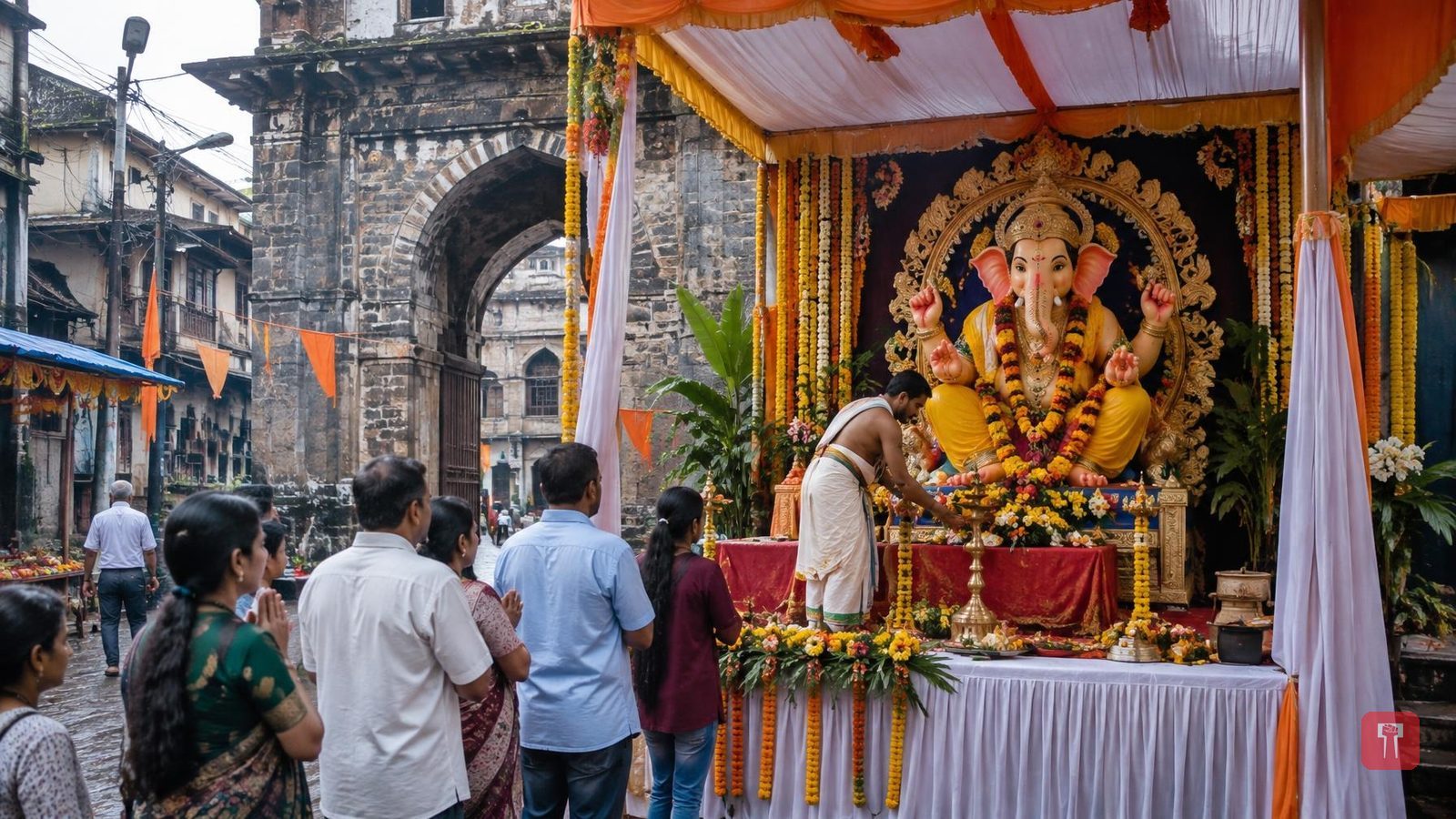
Ganeshotsav is usually imagined as a festival that begins on Bhadrapada Shukla Chaturthi and ends on Anant Chaturdashi. In Nagpur, however, one Ganesh idol is installed after the regular festival, during Pitru Paksha. It is called the Maskarya Ganpati, also known as the Hadapakya Ganpati. The festival has a history of 239 years.
The tradition is linked to the Bhosale royal family of Nagpur. It is said to be not merely an expression of religious faith but a confluence of history, royal splendour, folk arts and social life. Times have changed, the form of the festival has changed and the city has grown, yet the Pitru Paksha Ganeshotsav is still preserved.
The festival is said to have begun in 1787. Nagpur's king at the time, Shrimant Khandoji Maharaj Bhosale, also known as Chimnabapu, had gone on a campaign to Bengal and returned to Nagpur victorious. By then the usual Bhadrapada Ganeshotsav was over, and the idol had been both installed and immersed. The king regretted having missed the festival, and also wished to celebrate the victory in Bengal.
On the advice of the royal priests, it was decided to reconcile the two feelings. Although the usual period had passed, the tradition of installing Ganpati during Pitru Paksha and celebrating the festival began from then. The festival later became a distinct chapter in Nagpur's cultural history.
There is also an interesting story behind the name. In those days the festival was not only about religious ceremonies. For the public's entertainment there were performances of mimicry, lavani, powada, khadi gammat and other folk arts. Humour and banter had a special place in them. The idol is said to have got the name Maskarya Ganpati from this tradition of jesting. In the Vidarbha dialect, Pitru Paksha is called Hadapak, so the Ganpati installed in this period is also known as Hadapakya Ganpati. The two names thus belong to the same Ganpati.
Ganeshotsav generally begins on Bhadrapada Shukla Chaturthi. The Maskarya Ganpati, however, is installed in the Bhadrapada Krishna Paksha, that is, in Pitru Paksha, around Bhadrapada Krishna Chaturthi. The festival lasts a few days and ends with immersion after a mahaprasad and other religious programmes. After the bustle of the regular Ganeshotsav subsides, Nagpur again sees an atmosphere of devotion and enthusiasm for Ganesh.
The original centre of the festival is associated with the Mahal area of Nagpur, where the Senior Bhosale palace stands. Even after the monarchy ended, social conditions changed and modernity came to the city, the historical importance of the festival has not diminished. The festival is said to be carried forward today through the Maharaja of Nagpur Trust. Efforts are under way to pass this heritage to future generations.
The form of the idol has also remained an attraction. The idol was earlier said to have 18 arms and stand about 21 feet tall. Its height was reduced after 2005. The grandeur of the idol rests on a history of nearly two and a half centuries.
