

Vidarbha marks Hadpakya Ganpati festival during Pitru Paksha, a tradition since 1787
The festival, begun by Khandoji Maharaj Bhosle of Nagpur in 1787, is held in Pitru Paksha, well after the usual Ganeshotsav.
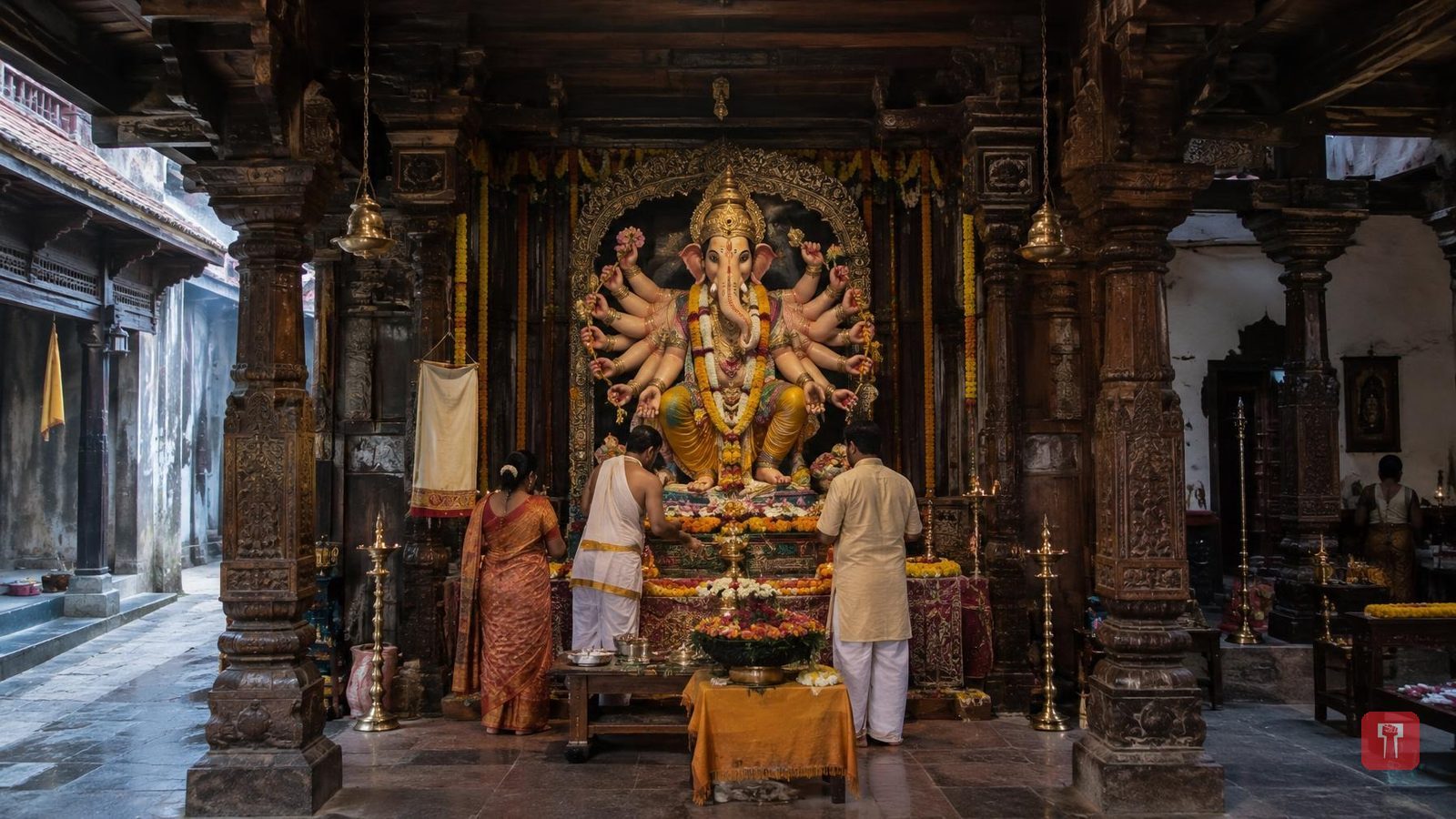
Vidarbha in Maharashtra has a Ganeshotsav tradition that is observed at a time quite different from the usual Ganesh festival. Called the Hadpakya Ganpati festival, it is distinct from the regular Ganeshotsav.
In Nagpur and several other parts of Vidarbha, the tradition is still carried forward as a religious and cultural practice. It is recorded as having begun in 1787, which means the tradition is completing about 239 years.
In Hinduism, Pitru Paksha is generally regarded as important for remembering ancestors and performing shraddha rites, and no auspicious work is undertaken during this period. Even so, Ganpati is celebrated in Vidarbha at this very time, and this gives the festival here its distinct identity.
The festival is not confined to Vidarbha. It is also observed in the border areas of Madhya Pradesh. Pandhurna and Chhindwara districts, adjoining Nagpur, have a large Marathi population, which is why it is held there too.
On the name, under local tradition Pitru Paksha is also called Hadpak in Vidarbha. The Ganpati installed during Pitru Paksha therefore came to be called Hadpakya Ganpati. In some places it is also known as Maskarya Ganpati.
According to history, Shrimant Khandoji Maharaj Bhosle of the Bhosle royal family of Nagpur, also known as Chimanabapu, began the festival in 1787. It is said that when he was returning from a campaign in Bengal, the time for the traditional Ganpati festival had passed. After discussions with the royal priest and scholars, it was decided to celebrate the festival on Sankashti Chaturthi in the Krishna Paksha of Bhadrapada. This tradition later became known as the Hadpakya Ganpati festival.
The Hadpakya Ganpati idol is known for a form that differs from ordinary Ganesh idols. By tradition, the idol has 18 arms. In some craft traditions, this is linked to a combined form of Mahalakshmi's 14 arms and Ganpati's four arms. This form of Ganpati is regarded as a symbol of different powers coming together.
In earlier times the festival was not merely a religious event. Cultural programmes such as lavani, bharud, powada, plays, nakla and khadi gammat were held. The festival has changed over time, and it now features orchestra performances, light music, plays and other social programmes.
The Hadpakya Ganpati at the Bhosle Rajwada in Nagpur's Mahal area is regarded as the main centre of this tradition. The idol is installed on the Chaturthi of Pitru Paksha and the festival runs for about ten days. It concludes on Bhadrapada Krishna Dwadashi, when the idol is immersed.
