

Nagpur swimming pool operators fear closure as water shortage deepens
Operators say they will follow any order but argue pools should not be singled out, citing recycling systems and non-drinking water sources.
 Images are not validated/verified
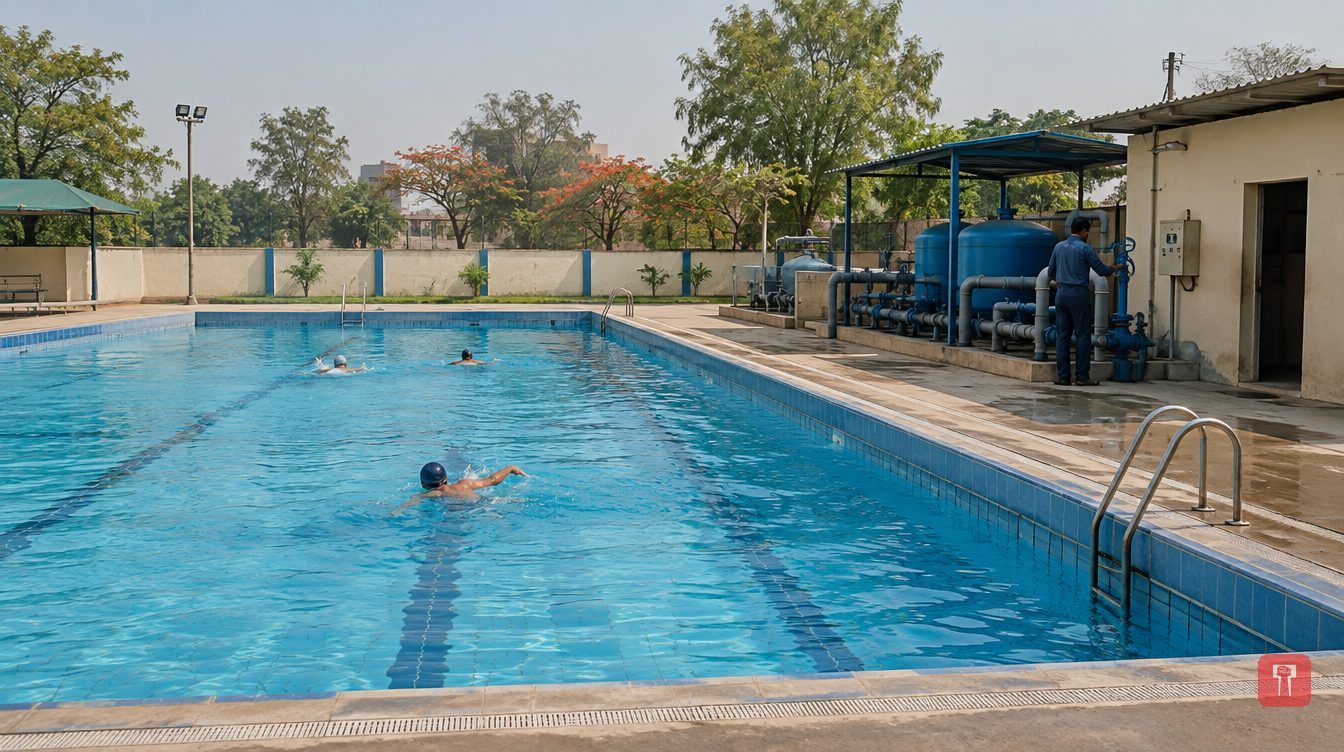
Nagpur's water crisis is worsening. Groundwater levels are falling and restrictions have been placed on the use of borewells. The administration's attention has now turned to the city's swimming pools, and with pressure to save water mounting, pool operators fear they may have to shut down.
Operators say they will abide by whatever directions the District Collector, the Nagpur Municipal Corporation (NMC) or the Nagpur Improvement Trust (NIT) issues. But they argue that swimming pools should not be singled out as a major cause of water wastage.
Swimming pools in Nagpur broadly fall into two kinds. Some draw water from their own wells or borewells, or from a source such as Ambazari. The rest depend directly on the municipal corporation's supply. This difference could matter in measures to curb water consumption.
Prashant Ugemuge, managing director of Midland Sports and Wellness, which runs a swimming pool of the NIT, said his pool and showers use water from Ambazari. "The water in our pool and showers comes directly from Ambazari. It has nothing to do with the drinking water that reaches homes. People in Nagpur do not use Ambazari water for drinking," he said.
Ugemuge also questioned the perception that pools are repeatedly emptied and refilled, using a great deal of water. "Once a pool is filled, the same water is filtered and lasts for months. The water that is lost is mainly what splashes out while swimming or is used in showers," he said. He added that no closure order has been received so far and that any order that comes will be followed.
Ugemuge said more attention should also be paid to household habits. He cited everyday practices such as taking long showers and leaving the tap running while shaving. According to him, households can save a good deal of water by bathing with a bucket and keeping taps closed.
He also called for wider use of treated sewage water for purposes other than drinking, such as washing cars and watering gardens. He said this water is already used at some IT parks, and asked why it could not be used in large residential and commercial buildings.
Dr Jayprakash Duble is a former deputy director (sports) and an international swimming coach. He runs the National Institute of Swimming on Manewada-Besa Road. He said changes in pool technology have cut water wastage considerably. "Earlier, a swimming pool had to be emptied every 15 days. Technology has changed now. Today's pools run on closed-loop systems, in which water is filtered, recycled and reused," he said.
According to Duble, under the right conditions a pool can use less water than people bathing separately at home. "If 200 people bathe at home, the water for 200 baths goes down the drain. If the same 200 people use a pool, the water can be filtered and reused. If showers are used responsibly and the system is good, a pool can save more water than people bathing individually," he said.
Operators say pools that draw water from sources other than drinking water and use modern recycling systems should be treated differently from those that take water directly from the municipal drinking water network.
It is not yet clear whether the administration will impose a restriction. For now, operators are awaiting government directions. The larger challenge is for every sector, from households to commercial establishments, to use water more responsibly. The question is whether Nagpur can handle its water crisis through considered conservation and recycling measures rather than a uniform restriction on everyone.

Comments
No comments yet. Be the first.