

Nagpur's new office towers fall short on parking, lifts and upkeep, writer argues
A writer says Nagpur's fast-rising commercial buildings are built on old infrastructure, with parking, lifts, safety and maintenance lagging behind.
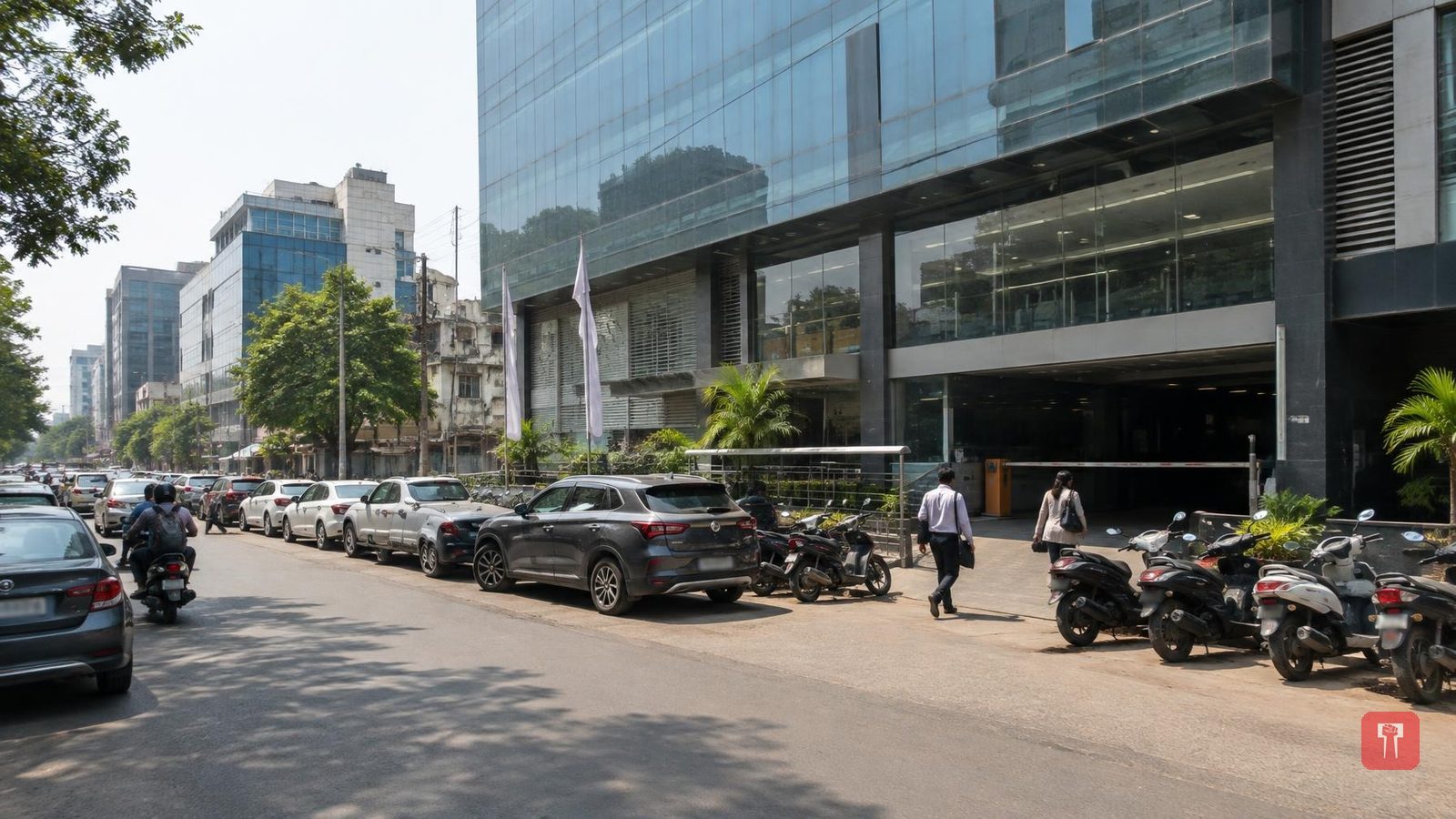
Nagpur's skyline is changing fast. Tall commercial buildings are coming up in the older business districts of Civil Lines, Ramdaspeth and Dhantoli. Behind the glossy brochures, however, businesses see a different picture, the article says. The writer argues that city planning, builders' accountability and safety systems have fallen far behind. Buildings are being built for the future, the writer says, but they stand on old infrastructure.
Parking is the biggest problem, the article says. Under Maharashtra's Unified Development Control and Promotion Regulations (UDCPR), one car parking space is required for every 100 square metres (about 1,076 square feet) of commercial space. A 1 lakh sq ft building may house more than 200 offices, yet the rule requires only 100 parking spaces. In the metro's TOD belt, that figure halves to about 50. To meet the numbers on paper, builders install mechanical stack and puzzle parking. In Nagpur's harsh summers, retrieving a car takes time and the systems often break down, so they go unused. As a result, cars spill onto the roads and cause congestion on main roads. The writer says almost every large building falls short on parking, with the exceptions of VR Mall, Ryan House and Shriram Tower in Sadar.
Lifts are in the same state. To increase the saleable area, builders install only as many lifts as the law requires. At peak hours, lobbies become as crowded as railway platforms and working time is lost. The writer also points to RERA. Under MahaRERA, commercial space must be sold on actual built-up area. Sales teams nonetheless quote an inflated "super built-up" figure, which makes the per-square-foot rate look lower. At the time of the sale deed, however, the actual built-up or carpet area is used. The buyer is caught in this "two ledgers" system, the writer says.
The writer says the glass facades on Wardha Road and in Civil Lines imitate Western coastal architecture. In Nagpur's summer heat of +45 degrees Celsius, glass creates a greenhouse effect and raises air-conditioning costs. There are almost no cradles or specialised cleaning crews for washing the windows of tall buildings, so the glass looks dirty within a few months.
The article also raises questions about policy and the municipal corporation's capacity. Because the same UDCPR rules apply across Maharashtra, the writer says, Nagpur is treated like Mumbai or Pune. Its layout, climate and dependence on private vehicles are ignored. Many commercial buildings lack modern fire-fighting systems or a valid occupancy certificate from the Nagpur Municipal Corporation (NMC). The article adds that while buildings are rising to 70 to 100 metres, the fire brigade has no hydraulic ladder vehicle that can reach such heights.
Looking at office space in Bengaluru, the writer says the difference was stark. Good projects there offer 2 car parking spaces per 1,000 sq ft, twice Nagpur's ratio. Parking slots are rented out separately at Rs 3,000 to Rs 10,000 a month. Faster lifts and escalators running directly from two basements to the lobby are used to ease crowding. In Nagpur, summers are intense, metro use is slow and last-mile connectivity is limited. The writer therefore suggests that a Grade A project should provide 3 parking spaces per 1,000 sq ft, or about 300 in a 1 lakh sq ft building.
The writer says developers should focus on net profit rather than the urge to use 100 per cent of the FSI. Wealthy Nagpur businessmen drive expensive cars, yet their offices are in old, poorly maintained buildings. In such 30-year-old buildings they take space at Rs 5,000 to Rs 8,000 per sq ft and then spend Rs 5,000 per sq ft on interiors. Meanwhile, some builders are alleged to use side margins illegally, convert terraces into private units or use shared lifts for themselves.
The article mentions some of Nagpur's pioneering projects. In the 1990s, Poonam Chambers, by N. Kumar and Linkhouse Hotels Pvt. Ltd., came up on Chhindwara Road in Bajrangi Town. In Civil Lines, SDPL's Gulmohar was the first in the city to offer duplex flats. In 1995, a flat of about 2,500 sq ft sold for Rs 20 lakh. Amruta Manor was the first in Nagpur to cross Rs 1,000 per sq ft, with the first unit sold by Roshan Real Estate at Rs 1,100 per sq ft. At Alankar Real Estate Pvt. Ltd.'s Heritage, 100 to 120 concrete pillars in the basement were demolished and rebuilt for reasons of layout and vastu. At Shriram Tower in Sadar, Roshan Real Estate leased 5,000 sq ft to Max New York Life. Kukreja Infrastructure and Shree Bhagirath Realty Pvt. Ltd. (SB Rander Group) also delivered large flats through projects such as Altair in Civil Lines. Luxury apartments in Nagpur now sell for Rs 10 crore to Rs 20 crore.
The writer says that building well and differently pays. The writer also advises builders that constructing a building is only half the job and that maintenance is an important part of the brand. The article also notes that Dr T. Chandrashekhar (IAS), as NMC commissioner and Nagpur Improvement Trust (NIT) chairman from 2000 to 2002, implemented the Integrated Road Development Project (IRDP).
