

Congress holds Nagpur, RJD wins Patna teachers' seat, SP takes Varanasi in MLC polls
 Images are not validated/verified
Results of recent Legislative Council polls in Maharashtra, Bihar and Uttar Pradesh show a setback for the BJP in some seats and wins for the Samajwadi Party and RJD in others.
The results of the recent Legislative Council (MLC) elections in Maharashtra, Bihar and Uttar Pradesh have raised several questions in political circles. Candidates of established parties faced a challenge on some seats. It would not be right to call these results a personal defeat for any national leader, but one important question does arise: are parties that are strong in national politics equally effective among different local and professional groups of voters?
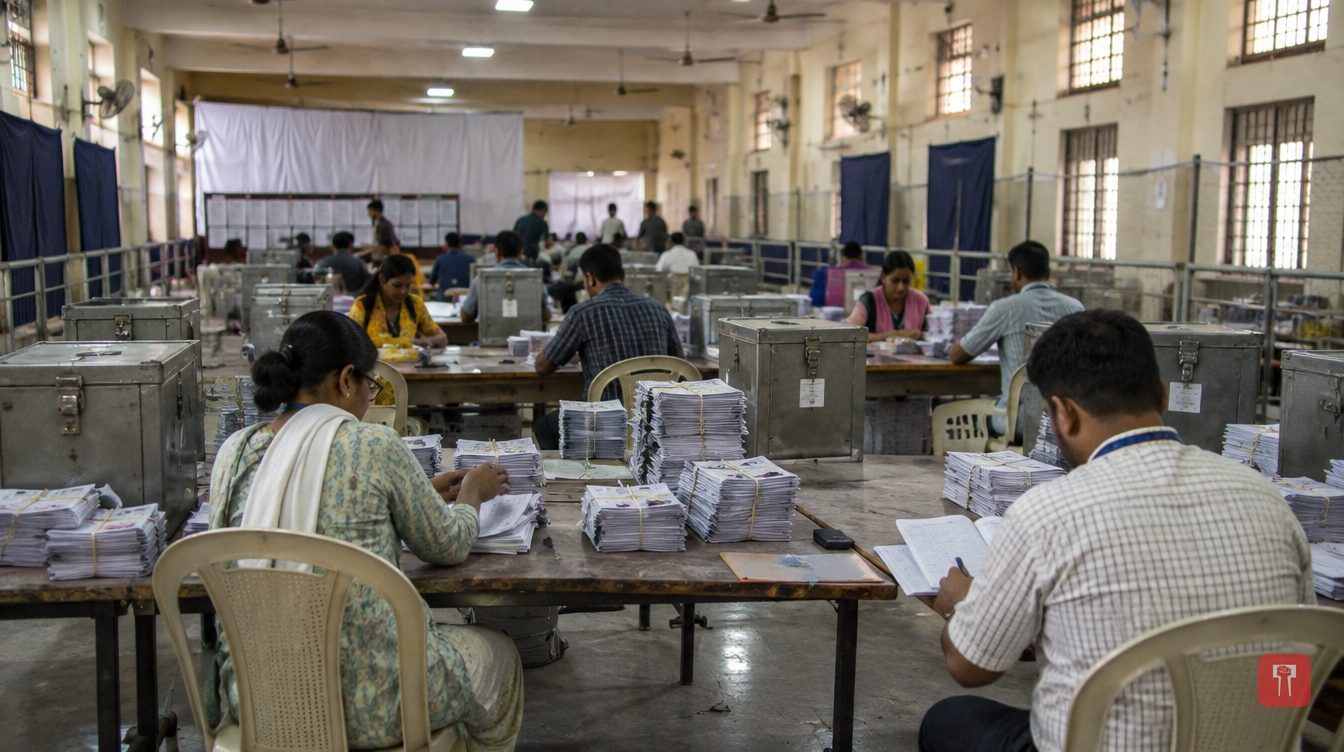
The contest in the Nagpur division graduates' constituency drew the most attention. Congress MLC Abhijeet Wanjari retained his seat by defeating BJP candidate Sudhakar Kohale by 3,271 votes. Wanjari polled 67,231 votes and Kohale 63,960. Independent candidate Nitesh Karale got 24,249 votes. The counting lasted more than 40 hours. After first-preference votes were counted in the second round, Kohale was ahead by 4,294 votes, but the final result changed once the preferential votes were counted.
Nagpur is the home city of Maharashtra Chief Minister Devendra Fadnavis and Union Minister Nitin Gadkari. Gadkari represented this graduates' constituency in the Legislative Council for a long time. Both leaders had campaigned for the BJP candidate. Even so, neither Fadnavis nor Gadkari was a candidate in this election, so calling it their personal defeat would be factually wrong. It can be seen as a setback to the BJP's attempt to regain its old hold on Nagpur. The votes polled by Karale affected the contest, but to understand by how much, the transfer of preferential votes and every stage of the count would have to be examined.
In Bihar's Patna teachers' constituency, Rashtriya Janata Dal (RJD) candidate Dr Sanjeev Kumar Singh defeated senior BJP leader Naval Kishore Yadav. Singh got 4,487 votes and Yadav 3,430, a winning margin of 1,057 votes. Naval Kishore Yadav had represented the constituency for about three decades. This is a major political setback for the BJP. The question now is whether local issues of teachers were decisive, whether there was resentment against the sitting representative, or whether the RJD's organisation and the candidate's personal contacts counted for more. A firm answer will come only from a detailed study of the issues, voters' reactions and the questions raised during the campaign. The result was different in the Patna graduates' constituency, where Janata Dal (United) leader Neeraj Kumar retained the seat.
In Uttar Pradesh, Samajwadi Party's Lal Bihari Yadav won the Varanasi teachers' constituency. Varanasi is Prime Minister Narendra Modi's Lok Sabha constituency, which is why the result drew attention. But Modi was not a candidate in this MLC election, which is separate from the Lok Sabha election and has different voters. It would therefore be wrong to say that Modi lost in Varanasi. The result does, however, show that the BJP's national-level influence does not guarantee victory in every local or professional constituency.
In Lucknow, the same city produced two different results. The BJP's Umesh Dwivedi retained the teachers' constituency seat, while the Samajwadi Party's Kanti Singh won the graduates' constituency. Lucknow is the Lok Sabha constituency of Defence Minister Rajnath Singh, but he was not a candidate in either election, so it would be wrong to say he lost.
Three questions emerge from these results. First, does national popularity translate into votes in local elections? A party's Lok Sabha performance is no guarantee of victory among specific groups of voters such as teachers or graduates. In these elections, voters may give more weight to the candidate's availability, local problems, professional interests and personal contact. Second, how much does the choice of candidate matter? Nagpur and Patna show that party backing and long experience do not by themselves bring victory, although the results alone cannot establish whether the defeat was due to the choice of candidate, local resentment or something else. Third, how decisive are preferential votes? In Nagpur, the candidate who led in the early rounds lost in the end, so it is important to watch the full count and not the initial trends.
The question also arises whether these elections got as much space in the media as their political importance warranted. Answering it would require a factual comparison of the prominence of headlines, the length of television coverage, space in newspapers and the depth of analysis.
On the whole, the results in Nagpur, Patna and Varanasi show the importance of local politics. Political impact is not uniform across constituencies, and different groups of voters can decide differently from national elections. Even so, it would be premature to say on this basis that a wave of change is sweeping the country or any entire state. The real significance lies in understanding the choice of candidates, local contacts, voters' expectations and the parties' grassroots strength.
Reach readers on the ward they actually live in.
Advertise with Prime Time 24Reach readers on the ward they actually live in.
Advertise with Prime Time 24Reach readers on the ward they actually live in.
Advertise with Prime Time 24
Comments
No comments yet. Be the first.