

Nagpur Medical College renovates 11 wards, adding 13 beds in each
Eleven wards at the Government Medical College and Hospital in Nagpur have been renovated, raising capacity from about 275 to about 418 beds.
 Images are not validated/verified
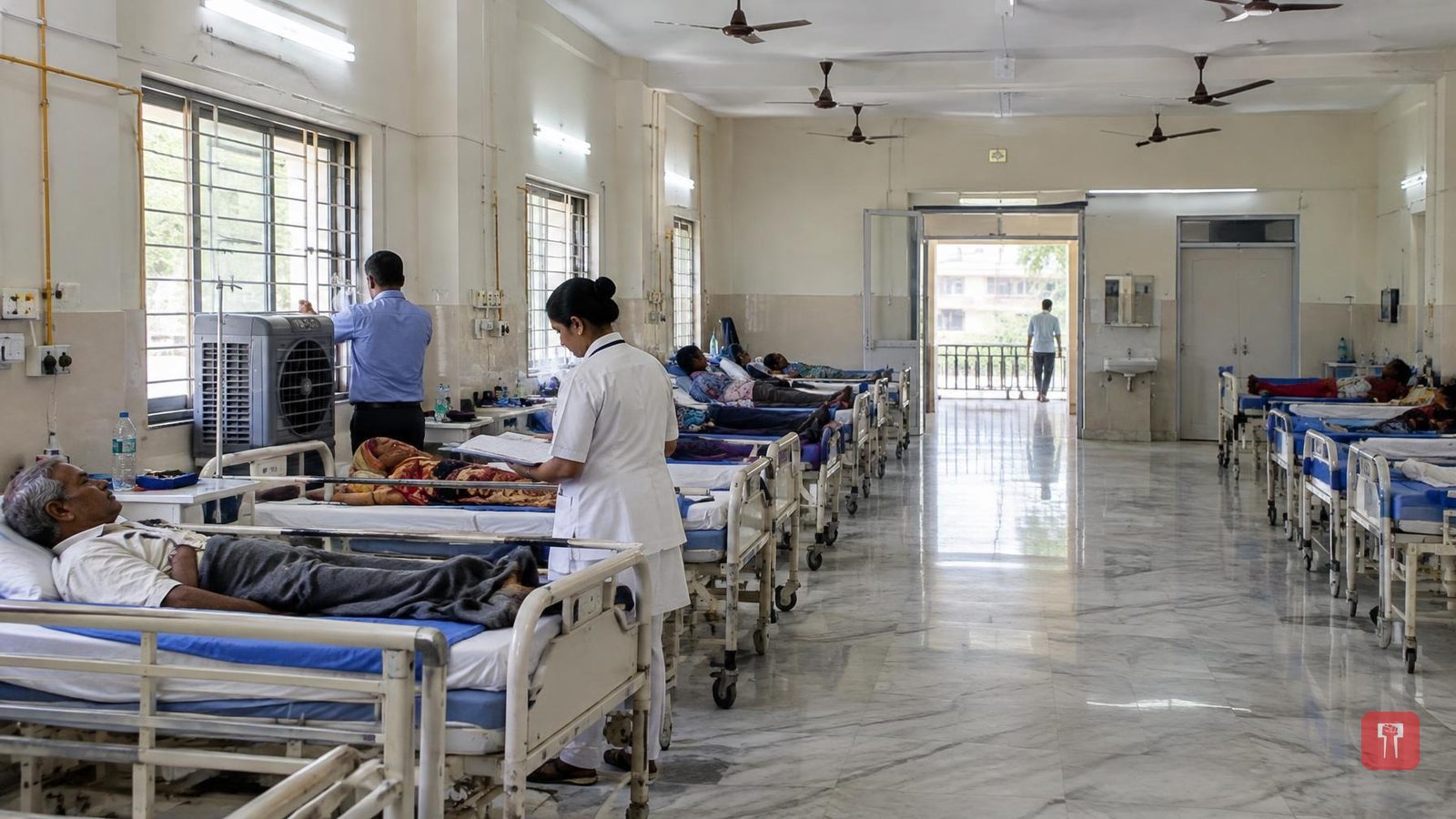
Several development works are under way at the Government Medical College and Hospital (GMCH) in Nagpur to improve facilities for patients. As part of this, the hospital's wards are being renovated and modernised, and work on 11 wards has been completed so far.
The wards look completely different after the repairs, and patients are getting a better environment than before. Marble has been laid in the verandas as well as the wards, while old and damaged toilets have been repaired and improved.
To give relief from the heat, four to five coolers have been installed in each ward, and all wards have fans. Old electrical fittings have been removed and replaced with new ones, making lighting and the power supply in the wards better organised than before.
Bed capacity has also been increased with the renovation. Each ward earlier had about 25 beds and now has 38. That is 13 more beds in every ward, roughly 52 per cent more capacity.
Across the 11 wards, there were about 275 beds earlier and capacity has now reached about 418, a gain of about 143 beds. Under the norms of the National Medical Commission (NMC), the emphasis in wards is on patient comfort, adequate spacing, cleanliness and necessary support facilities.
With marble in the floors and verandas, better toilets, new electrical fittings and adequate air and light, patients are getting a clean environment. Earlier, broken toilets and filth caused trouble for patients and their relatives. These problems have now eased considerably.
According to the hospital's official information, an average of 90 to 120 patients are admitted here every day.
Dr Raj Gajbhiye, dean of the college, said the development works are changing the face of the hospital and patients are getting better facilities. According to him, facilities will improve further once the institution becomes autonomous. Dr Gajbhiye said patients, relatives and doctors have also been relieved of the filth and stench, there is no shortage of medicines, and efforts are continuing to ensure patients get the maximum benefit.
In all, marble, repaired toilets, coolers and fans, new electrical fittings and additional beds: all these changes have been completed in the 11 wards.
