

Nagpur hawkers object to draft Maharashtra street vending scheme 2026, submit 13-point demands
Town Vending Committee member Abdul Razzaque Qureshi and other hawker representatives say the draft scheme goes against the 2014 Act, the 2016 Rules and the Constitution.
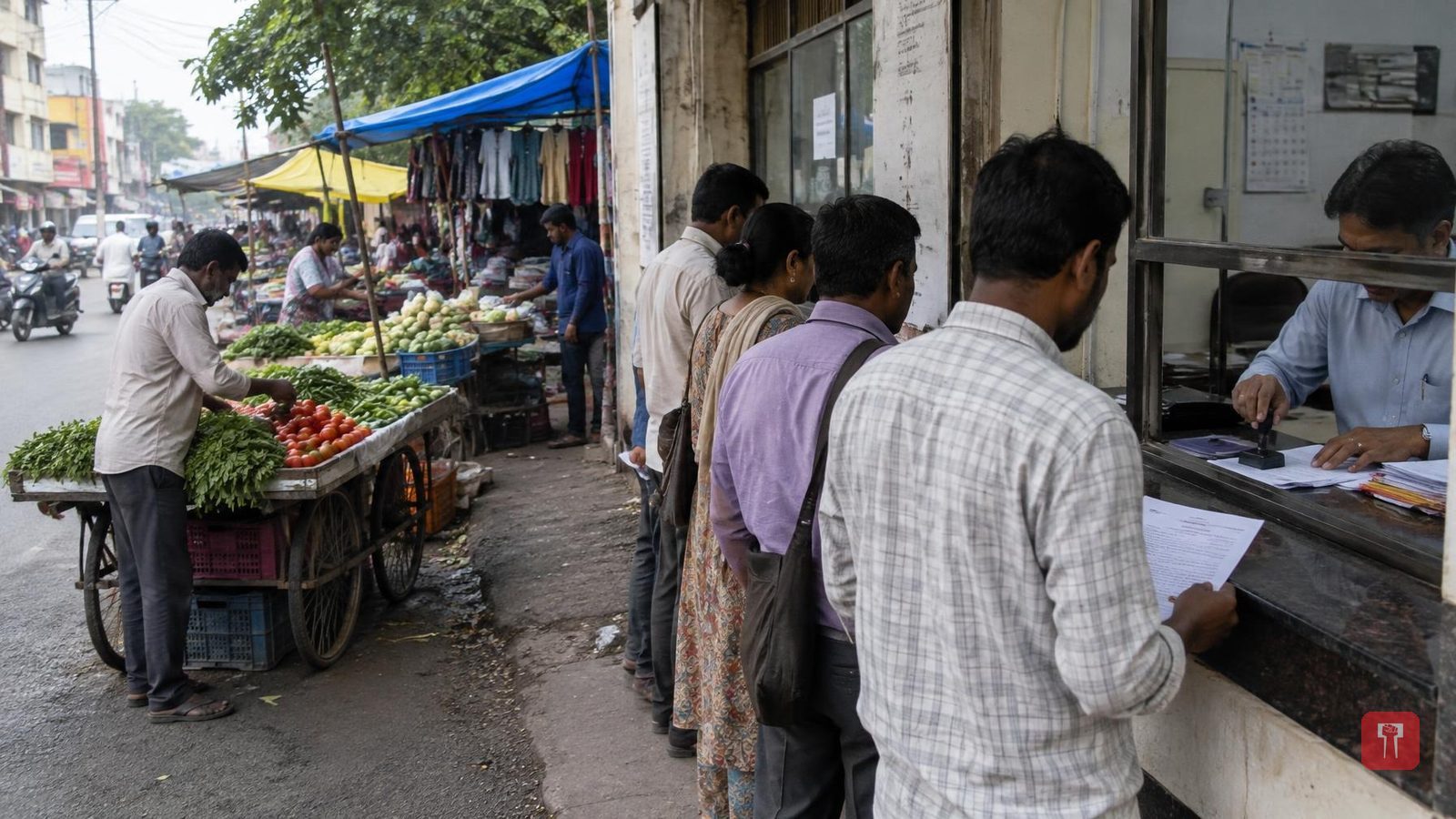
The Maharashtra government has recently released the draft of the "Street Vendors Livelihood Protection and Street Vending Regulation Scheme 2026". Street vendors and hawker representatives in Nagpur are deeply unhappy with it. They say the draft is not in the interest of those who work on pavements and is being used to rein them in.
Town Vending Committee (TVC) member Abdul Razzaque Qureshi and other hawker representatives on Monday submitted a formal "objections and suggestions" letter. It was addressed to the Principal Secretary of the state Urban Development Department, the Nagpur Municipal Commissioner, the District Collector and the Police Commissioner.
The representatives say the proposed scheme is contrary to the Street Vendors (Protection of Livelihood and Regulation of Street Vending) Act, 2014, the Maharashtra Rules 2016 and articles of the Constitution of India. They also cited directions given by the Bombay High Court on April 30, 2026. According to them, the court said vendors' objections must be considered before the scheme is finalised and that the first and second schedules of the law must be followed.
The letter first objects to the age condition. The draft scheme sets a minimum age of 18 for eligibility. The representatives argue that under Section 4(1) of the central Act of 2014, vendors identified in the survey who have completed 14 years are eligible, and that vendors should not be denied their right by imposing a stricter condition.
Citing Sections 3(3) and 18(3) on protection from eviction, they demand that no hawker be removed until the survey is complete and certificates are issued. A 30-day written notice should be mandatory before any eviction or relocation. In cases of seizure, they want it made compulsory under Section 19 that a receipt and list of goods seized by the municipal corporation or its anti-encroachment squad be given immediately. They also want an independent "grievance redressal and dispute resolution committee" under Section 20, with its details made public to all vendors.
The representatives also accused the Nagpur Municipal Corporation and the local administration of ignoring the rules. They say the law gives a right of appeal against TVC decisions, but the corporation has so far not appointed an appellate authority. The hawkers whose votes formed the TVC have still not received licences, despite promises by the Municipal Commissioner. They also say that the forcible removal of hawkers by the corporation and traffic police, and the declaration of no-vending zones on the pretext of traffic and congestion, are unconstitutional.
Hawkers have only 8 representatives on the Town Vending Committee. The representatives allege that this is why the corporation, under administrative pressure, gets resolutions passed against hawkers. They have demanded that the number of hawker members be increased and that NGOs with political backgrounds and nominated members be removed. They also said that if the TVC chairperson ignores the genuine demands of hawker members, a retired judge or police officer should be appointed to run the committee.
Qureshi made it clear that the hawker community fully respects traffic, pedestrian safety, public health and cleanliness, and is not against regulation. But, he said, ending vendors' livelihoods in the name of regulation and depriving them of legal rights will not be acceptable.
The representatives' 13-point demands include the following: all objections should be disposed of transparently before the scheme is finalised; all provisions contrary to the 2014 Act and the Maharashtra Rules 2016 should be removed from the draft; the protective rights under Section 3(3) should not be disturbed under any circumstances; under Section 10, a vendor should get a full hearing before a licence is cancelled or suspended; relocation should be the last option; there should be a separate special survey for natural markets, existing markets and markets more than 50 years old; the norm of 2.5% of the total urban population should serve only to measure capacity and not as a ground to evict vendors; and every section of the draft should undergo a legal scrutiny at the state level.
