

Bal Drishti: Mumbai civic schools screen over 40,000 pupils for eye defects, 361 get spectacles
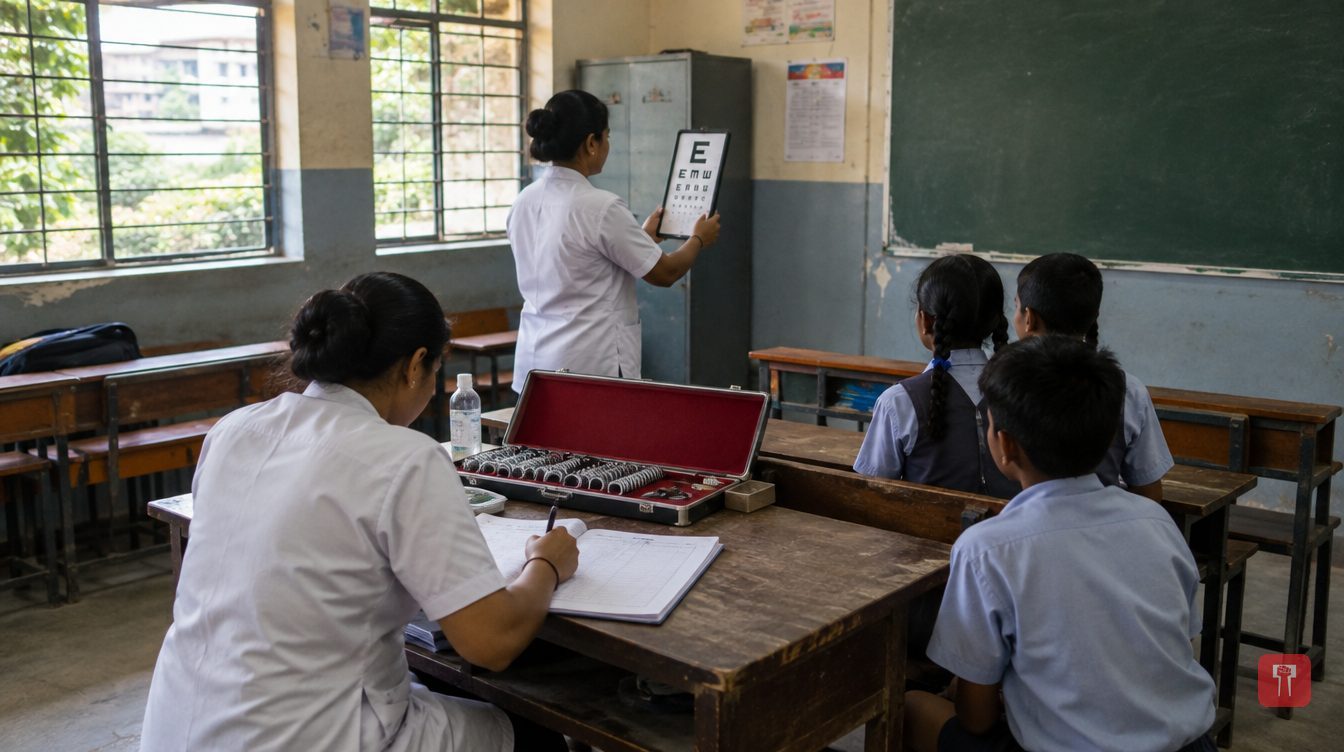
The BMC and Vision Foundation of India have screened 40,270 pupils in 227 municipal schools to detect and treat refractive errors among children who struggle to see the board.
 Images are not validated/verified
More than 40,000 children in Mumbai's municipal schools have had their eyes checked since February under Bal Drishti, a programme run by the Brihanmumbai Municipal Corporation (BMC) together with the Vision Foundation of India. The effort aims to find children who are slipping behind in class simply because they cannot see the blackboard properly, and to get them treatment. It is described as the first initiative of its kind, and Chief Minister Devendra Fadnavis took the lead in setting it up.
The long-term goal is to examine the eyes of three lakh pupils across 1,200 municipal schools within three years. Between February and September 2026, 40,270 pupils in 227 of these schools were screened. Those schools have 59,150 pupils on their rolls, so the screening has reached 68 per cent of them. Among those examined, 20,390 are boys and 19,880 are girls, which means boys and girls took part in almost equal numbers.
Bal Drishti concentrates on spotting and treating refractive errors, and it is tied to the School Health and Wellness Programme run under Ayushman Bharat. The thinking behind it is that young children seldom tell anyone they cannot see clearly. Instead the problem shows up in behaviour: a child sits right next to the board, avoids reading, or copies from the board very slowly. Teachers and parents often read these signs as carelessness or lack of interest in studies. The programme stresses catching the condition in time and linking the child to care before that mistake is made.
The screening has also turned up some serious defects. One pupil has myopia of minus 11.50 SPH in one eye, and the reports of some pupils go as high as minus 16 SPH. Zero is taken as normal vision, and high myopia starts from minus 6. At such levels, objects even a few centimetres away can look blurred. One pupil has been diagnosed with cataract, and many conditions that had gone unnoticed at home or in the classroom were brought to light.
Colour vision deficiency has been found in 31 pupils. The defect cannot be corrected, but finding it early lets parents and teachers adjust the way they teach. The information also helps in giving the right guidance on further studies and career choices.
So far, 361 pupils have been given spectacles. Those suspected of having an eye problem are sent for a detailed examination at the Vision Foundation of India's community eye clinic on Tardeo Road, where it is decided whether they need spectacles, specialist treatment or surgery. Parents are kept in touch through home and school visits, and follow-up continues until treatment is complete. Four pupils have so far undergone surgery for squint.
The initiative also points to national figures. An estimated 93 lakh children in India are visually impaired. A 2022 study in the Indian Journal of Ophthalmology put the indirect loss to India's gross national income from childhood blindness at about Rs 1,300 crore. Refractive errors and amblyopia are cited as the main causes of childhood blindness, and more than 75 per cent of visual impairment can be prevented or corrected with treatment.
Chief Minister Fadnavis has taken note of the work done by the BMC and Vision Foundation of India teams, who carry out the screening, referrals and home-visit follow-up. The initiative is proving important in connecting children who cannot see the board to the eye care they need, before their difficulty is mistaken for carelessness.
