

Italy's Meloni government approves security decree with tougher penalties for violent protests
The decree sets jail and fines of up to 20,000 euros for violence at protests and makes parents liable when minors take part.
 Images are not validated/verified
The government of Italian Prime Minister Giorgia Meloni has formally approved a new security decree to curb violent protests. Protest and peaceful demonstration are considered everyone's right in a democracy, but when protests turn into violent riots, vandalism of public property and looting of shops, the administration has to take firm steps.
Under the decree, committing violence during a protest, attacking police or damaging public property will now invite heavy punishment. Those found guilty face jail and a fine of 20,000 euros, which works out to roughly more than Rs 21 lakh. The decision has revived debate, especially in Europe, over rules to protect public property.
The most discussed part of the law concerns minors. Teenagers aged 14 to 17 are often found vandalising, setting vehicles on fire or looting shops under cover of a crowd during protests. Earlier, their age gave them protection from the law. Under the new decree, if minors are proved to have been involved in such violence, their parents will face direct legal action and heavy financial penalties.
Italian police have also been given special powers to detain, on the basis of suspicious behaviour, teenagers aged 14 to 17 who may pose a threat to public safety. The government has used the rule to send a clear message that giving children good values and keeping them from the path of violence is the first responsibility of parents.
A post going viral on social media, citing Meloni, says that if five or more people gather during a protest and throw stones, firecrackers or sticks, they could face up to five years in jail and a fine of up to 20,000 euros. The post also says that whoever damages public property will have to pay for it, and that parents will be financially liable for a minor's offence.
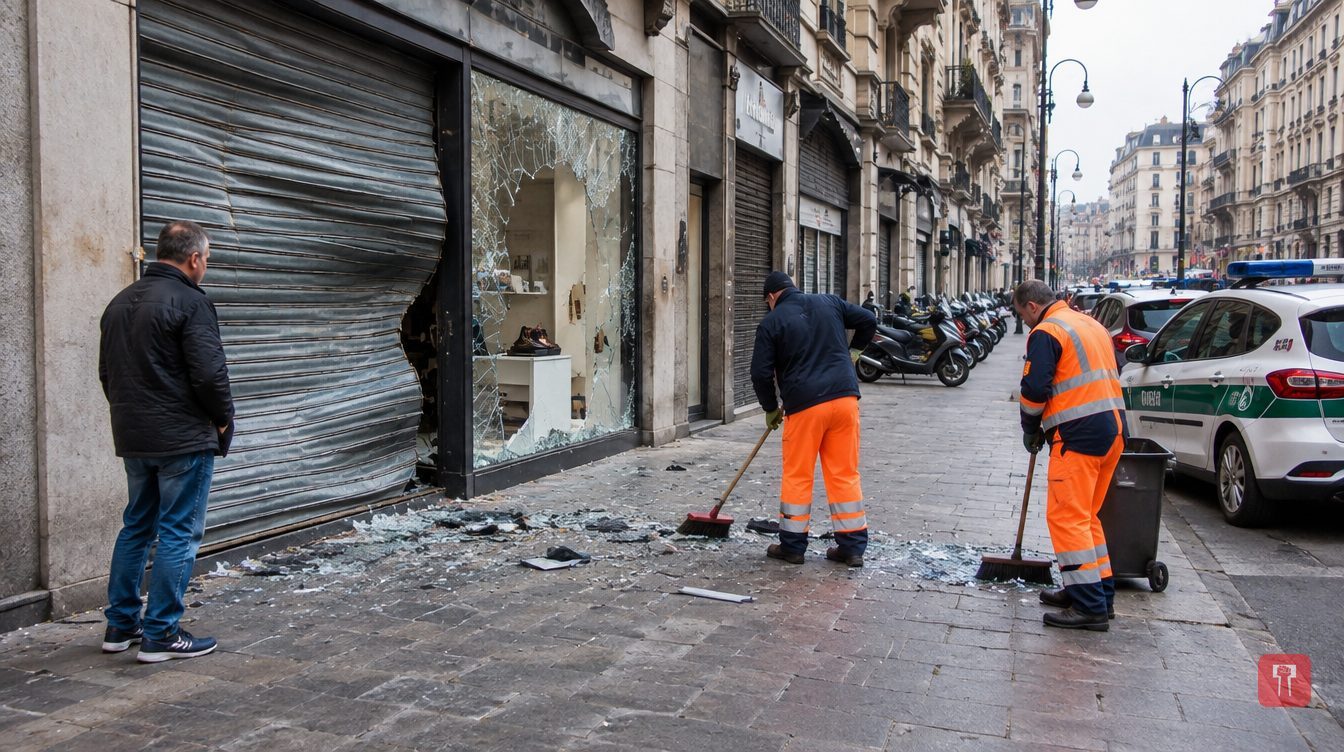
The decision is attributed to events in northern Italy. Sharp protests were held recently in Milan, regarded as Italy's economic capital. Rowdy elements created mayhem in the city in the name of protest. Shops were vandalised on the streets, business premises were looted and police trying to keep the peace were directly attacked. The city suffered heavy economic losses and fear spread among ordinary people.
Taking the incident seriously, Prime Minister Meloni said: "Theft, vandalism and violence can never be justified by calling them part of a movement or protest. The government will make no compromise in maintaining public safety and law and order." The cabinet then cleared the security decree.
Under the new rules, anyone who is part of a group of at least five people that endangers public safety or creates an atmosphere of fear during a protest can be jailed for up to five years. Covering the face with a handkerchief, mask or helmet to hide identity has also been strictly banned. The step is meant to make it easier to trace rioters who flee after violence and evade security agencies.
Local administrations have been given the legal right to assess the public or private property damaged in violence or vandalism and recover the full cost from the protesters concerned or their organisation. This will end the thinking that "government property belongs to no one".
The Italian government's decision is being compared with laws in different countries. In Indian media and political circles, it is being linked to Uttar Pradesh's law on recovery of damages to public property. Uttar Pradesh too has provisions for recovering the cost of damage from rioters and vandals and for strict action against their properties.
However, the constitutional framework, legal process and policing system of Italy and India are entirely different. Even so, the two countries appear to share a similar approach on protecting public property and preventing crimes committed in the name of protest. Italy's new law could also become a model for other European countries.

Comments
No comments yet. Be the first.