

Imran Khan told to leave India by Oct 28 over immigration violations; OCI card rules in focus
Mumbai Police and the FRRO have served the actor a notice to leave India by October 28, 2026, putting the rules for OCI cardholders under scrutiny.
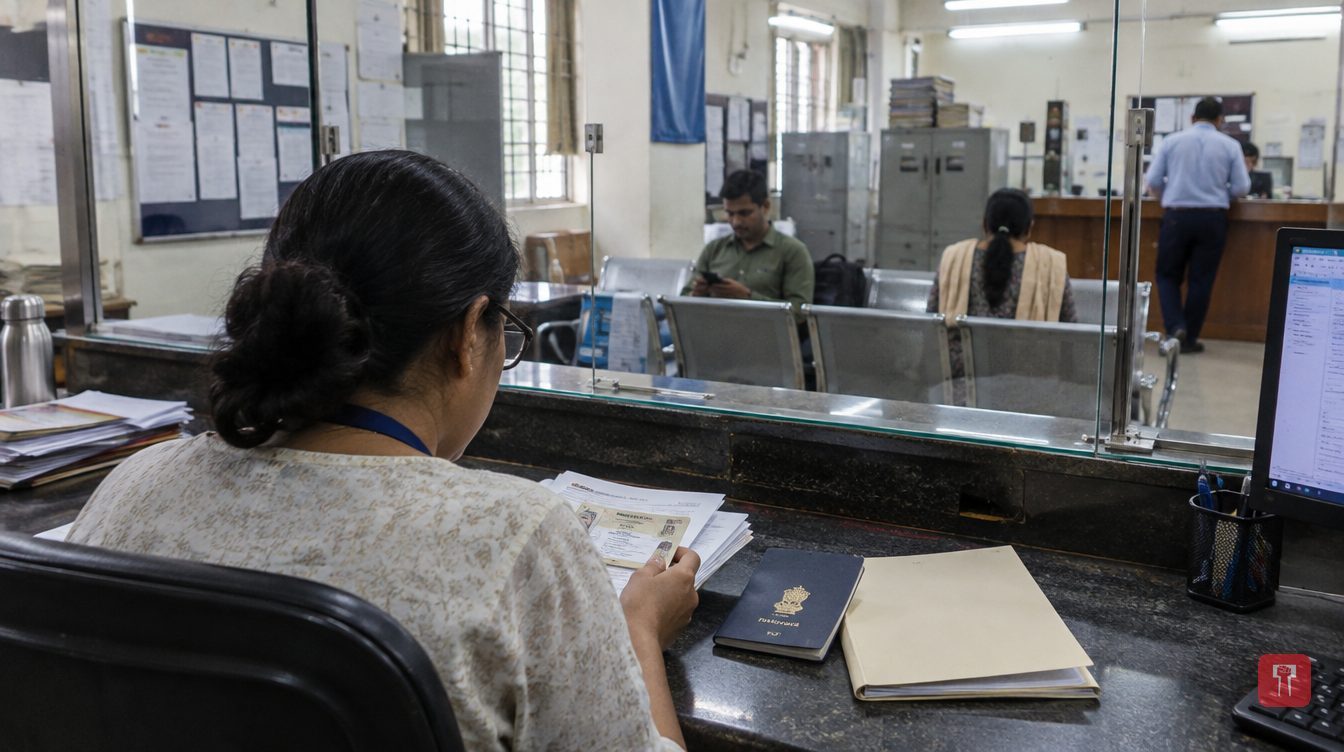 Images are not validated/verified
Bollywood actor Imran Khan, a nephew of Aamir Khan, has run into legal trouble. Imran holds American citizenship and is also an Overseas Citizen of India (OCI) cardholder. Mumbai Police and the Foreigners Regional Registration Office (FRRO) have served him a notice to leave India by October 28, 2026, in a case of violation of immigration rules.
Following the incident, people across the country want to know what an OCI card is, what special rights it confers and how stringent the action can be if the rules are broken.
The Union Home Ministry has notified several changes under the Citizenship (Amendment) Rules, 2026, for the convenience of people of Indian origin settled abroad and for digital transparency. From June 30, 2026, the government has put in place a fully digital e-OCI card system. The rules have brought relief to crores of people of Indian origin living abroad, but the risk of legal action remains if they are not followed properly.
Under Article 9 of the Indian Constitution, dual citizenship is not permitted in India. If an Indian voluntarily takes the citizenship of another country, his or her Indian citizenship ends automatically. About 49 per cent of the world's countries, such as the United States, Canada, the United Kingdom and Germany, recognise dual citizenship, but India, China and Japan have no such provision.
To address this problem, the government amended the Citizenship Act, 1955, in August 2005 and launched the OCI scheme. The first OCI card was issued on January 9, 2006, on Pravasi Bharatiya Divas. In simple terms, an OCI card works like a lifelong multiple-entry visa for foreign citizens of Indian origin.
Under the new rules in force in 2026, all OCI services have been made faster and more transparent. The entire process of OCI registration, renewal and surrender of the card is now 100 per cent online, and submitting paper copies is no longer required. If an OCI cardholder renews a foreign passport, the details must be updated on the OCI online portal within 90 days, or three months, of the new passport being issued.
Cardholders no longer have to get the OCI card reprinted or book an appointment at a VFS centre each time a new passport is issued. Uploading the details on the online portal is now enough. Sharing biometric data has been made mandatory for faster travel and security at Indian airports, and this is directly linked to the fast-track immigration system. Revised fees for a new OCI, for updating details or for a duplicate card have also been in force since April 1, 2026.
A person must be of Indian origin to get an OCI card. Those whose parents, grandparents or great-grandparents were ever Indian citizens, or were eligible to become Indian citizens on January 26, 1950, can apply. A foreign spouse of an Indian citizen or an OCI cardholder can also get an OCI after two years of continuous marriage. However, holders of Pakistani or Bangladeshi citizenship are not given an OCI card for security reasons.
Applicants must fill in an online form on the Government of India's official portal, ociservices.gov.in. They have to upload a photograph, a digital signature, a foreign passport and proof of earlier Indian citizenship, such as an old Indian passport or a birth certificate. Once verification is complete, the applicant receives the e-OCI in digital form.
An OCI cardholder has the right to travel to and from India at any time for life, to stay for as long as they wish, and to stay without registering at any police station or FRRO. They can do business and take up jobs, open bank accounts and avail of economic and educational facilities in the same way as Non-Resident Indians (NRIs).
However, OCI does not amount to full citizenship. OCI holders have no right to vote in India, cannot contest elections and cannot hold any government job or constitutional post, such as that of a judge or the President. Most importantly, they are not permitted to buy agricultural land, plantation land or a farmhouse in India. If they violate immigration rules or pose a threat to national security, the government can cancel their OCI card and order them to leave the country.
