

How to perform Navratri havan at home on Ashtami and Navami: materials, steps and mantras
Devotees traditionally perform a havan on Ashtami and Navami to close Navratri; here is what is needed and the mantras offered in order.
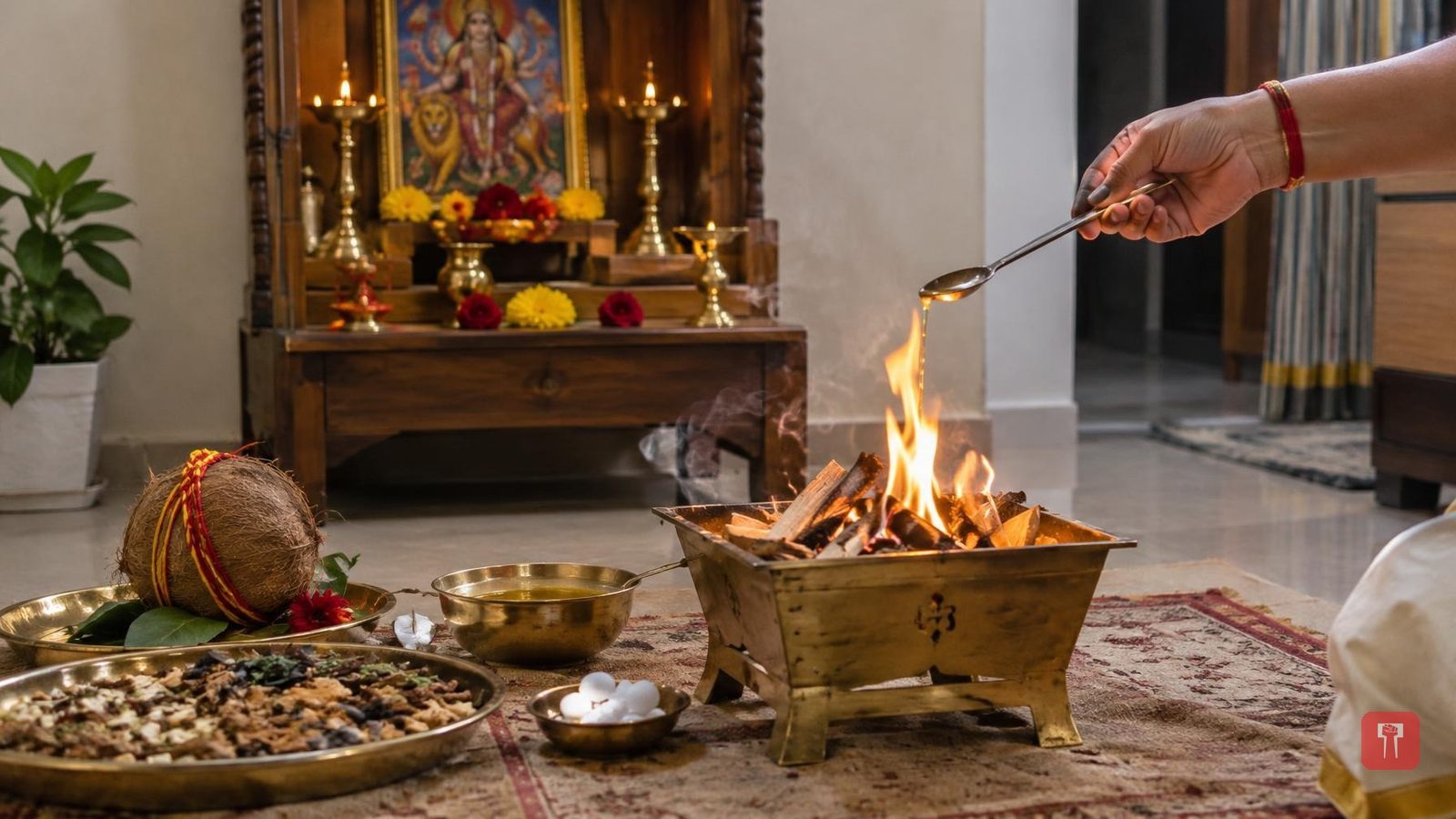 Images are not validated/verified
Performing a havan on Ashtami and Navami during Navratri is an old tradition. It is believed that the havan pleases the Goddess, who fulfils all the wishes of her devotees. In Hinduism, a havan at the end of Navratri is given particular importance.
A havan kund is needed at home for the ritual. Mango wood, ghee, camphor and items for the naivedya offering are also required. Special attention to cleanliness is advised during the Navratri havan.
First, pure desi ghee is offered five times with these five mantras: Om Prajapataye Swaha. Om Indraya Swaha. Om Agnaye Swaha. Om Somaya Swaha. Om Bhuh Swaha.
If two or more people are performing the havan, one member should offer the ghee while the others offer the havan samagri. The mantras are: Om Suryaya Namah Swaha. Om Chandraya Swaha. Om Bhaumaya Namah Swaha. Om Budhaya Namah Swaha. Om Gurave Namah Swaha. Om Shukraya Namah Swaha. Om Shanaye Swaha. Om Rahave Namah Swaha. Om Ketave Namah Swaha.
Next, the Gayatri Mantra is chanted 21 times and the naivedya is shown to the deity. The mantra is: Om Bhur Bhuvah Svah, Tat Savitur Varenyam, Bhargo Devasya Dhimahi, Dhiyo Yo Nah Prachodayat. Swaha (21 times).
Then ghee is offered in the havan with these mantras: Om Ganeshaya Namah Swaha. Om Gauriyaya Namah Swaha. Om Navagrahaya Namah Swaha. Om Durgaya Namah Swaha. Om Mahakalikaya Namah Swaha. Om Hanumate Namah Swaha. Om Bhairavaya Namah Swaha. Om Kul Devataya Namah Swaha. Om Sthan Devataya Namah Swaha. Om Brahmaya Namah Swaha. Om Vishnave Namah Swaha. Om Shivaya Namah Swaha.
The Navadurga Navratri havan mantras are: Om Durga Devi Namah Swaha. Om Shailputri Devi Namah Swaha. Om Brahmacharini Devi Namah Swaha. Om Chandraghanta Devi Namah Swaha. Om Kushmanda Devi Namah Swaha. Om Skanda Devi Namah Swaha. Om Katyayani Devi Namah Swaha. Om Kalratri Devi Namah Swaha. Om Mahagauri Devi Namah Swaha. Om Siddhidatri Devi Namah Swaha.
Om Jayanti Mangalakali Bhadrakali Kapalini Durga Kshama Shiva Dhatri Swaha, Swadha Namastute Swaha.
Om Brahma Murari Tripurantakari Bhanu Shashi Bhumi Suto Budhashcha Gurushcha Shukre Shani Rahu Ketau Sarve Graha Shanti Karah Bhavantu Swaha.
Om Gurur Brahma, Gurur Vishnu, Gurur Devo Maheshwarah, Guru Sakshat Parabrahma Tasmai Shri Guruve Namah Swaha.
The Mahamrityunjaya Mantra is then used for 11 offerings: "Om Tryambakam Yajamahe Sugandhim Pushtivardhanam / Urvarukamiva Bandhanan Mrityormukshiya Maamritat, Mrityunjaya Namah Swaha."
One offering is made with this mantra: Om Sharanagat Deenart Paritrana Parayane, Sarvasyartihare Devi Narayani Namostute. Swaha.
108 offerings are made with the Goddess's Navarna beej mantra: "Om Aim Hreem Kleem Chamundaye Vichche. Swaha".
The verses the gods recited in praise in the fifth chapter of the Durga Saptashati are also offered in the havan. These include verses beginning "Ya Devi Sarvabhuteshu", which name the Goddess in the forms of Vishnumaya, consciousness, intelligence, sleep, hunger, shadow, power, thirst, forbearance, lineage, modesty, peace, faith, radiance, Lakshmi, occupation, memory, compassion, contentment, mother and delusion. After each verse, "Namastasyai Namastasyai Namastasyai Namo Namah. Swaha" is recited.
Offerings are then made with these verses: Indriyanamadhishthatri Bhutanam Chakhileshu Ya. Namastasyai Namastasyai Namastasyai Namo Namah. Swaha. Chitirupena Ya Kritsnametad Vyapya Sthita Jagat. Namastasyai Namastasyai Namastasyai Namo Namah. Swaha.
Stuta Surai Purvamabhishtasamshraya. Tatha Surendrena Dineshu Sevita. Karotu Sa Nah Shubhahetureeshwari. Shubhani Bhadranyabhihantu Chapadah. Swaha. Ya Sampratam Choddhatadaityataapitai. Rasmabhirisha Cha Surairnamasyate. Ya Cha Smrita Tatkshanameva Hanti Nah. Sarvapado Bhaktivinamramurtibhih. Swaha.
Finally, after the havan, a red and yellow thread is tied around a coconut. Its top is cut off and ghee, betel nut, cloves, nutmeg and whatever prasad is available are put inside, along with the remaining havan samagri. The coconut is then placed in the middle of the fire in the havan kund while the Purnahuti mantra is recited.
The Purnahuti mantra: Om Purnamadah Purnamidam Purnat Purnamudachyate, Purnasya Purnamadaya Purnamevavashishyate.
Chanting this mantra completes the final offering. After the entire naivedya, the family performs aarti together, the havan is carried out, and forgiveness is sought from the Goddess at the end. This is how the Navratri havan can be performed at home.
