

How to fill the goddess's lap on Ashtami: items, saree and blouse piece rules
The god bharai ritual, in which a married woman's lap is filled with auspicious items, is also performed for the goddess on Navratri's Ashtami.
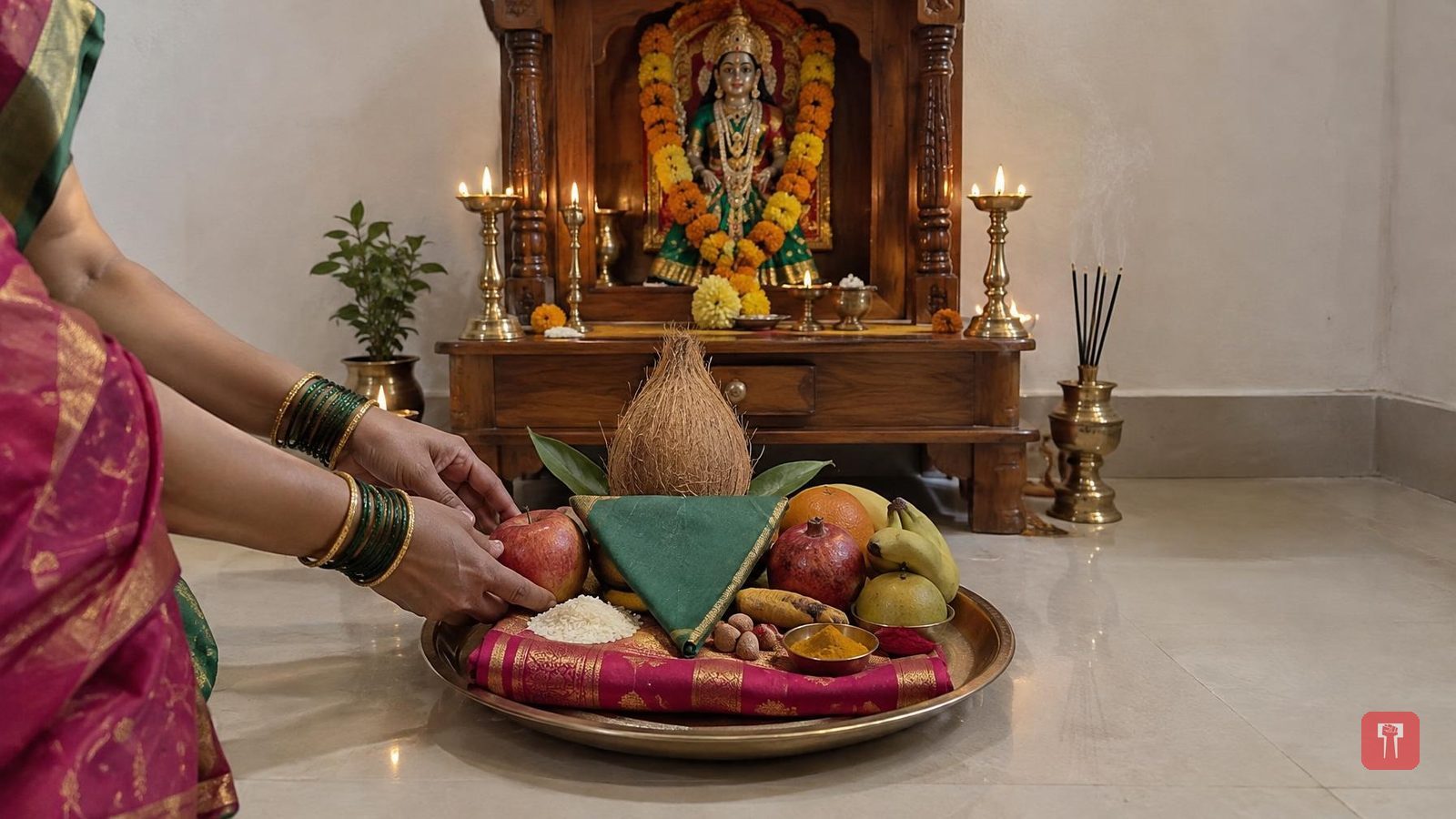 Images are not validated/verified
As per tradition, a married woman who visits a home is never sent away empty-handed. She is bid farewell only after her lap has been filled. Many people today think this is merely a formality, but a deeper meaning lies behind it.
Filling the lap, or "god bharai", is an important rite in this culture. Its main purpose is to bless the woman so that she has children and her womb prospers. In a way, it honours her power to become a mother.
"God" refers to the lower abdomen below the navel, where a woman's womb lies. Just as the soil has the power to grow new grain, a woman's lap has the power to bring forth new life. For this reason, only married women's laps are filled, not those of widows.
The rite is also performed at weddings. It is also called "phal bharna" or "phalshobhan", and in villages it is still called "phal bharna". When a daughter leaves for her in-laws' home, her lap is filled so that her marital home may be filled with fruits and flowers.
Nothing is put into the lap without reason; every item has a meaning. The items are rice, dry coconut, coconut, betel nut, a turmeric root, five kinds of fruit, and turmeric and kumkum. Rice stands for prosperity and betel nut for wholeness. The coconut is considered a remover of obstacles, while turmeric and kumkum are symbols of marital good fortune. All these items are said to bring auspiciousness and good health.
While the lap of a new bride is filled, five married women come and put these items into the end of her saree and bless her with good children.
This practice is not of today; it has been followed since very ancient times. However modern people become, it is performed specially on occasions such as a wedding or the birth of a child. This shows how important it is.
Just as women's laps are filled, the goddess's lap is filled too. It is done especially on Ashtami of Navratri, or when something good has happened. The reason given is that the good fortune received came through the goddess, so the lap is filled to thank her.
The goddess is never offered a six-yard saree. She is always given a nine-yard saree and a blouse piece. The nine-yard saree symbolises the goddess's nine forms, and the triangular blouse piece is considered to symbolise the power of the three gods, Brahma, Vishnu and Mahesh.
It is said that the saree should be of silk if possible, because the good energy emanating from the goddess's idol stays longer in silk. The blouse piece is placed on the saree, and the coconut, rice and other items of the god bharai are placed on the blouse piece. The tuft of the coconut should always face the goddess. The goddess is then told, "Mother, accept this god bharai, and may your grace remain on us like this."
This is the tradition of filling the lap. It is not merely a custom but a mark of respect for a woman's creativity and her motherhood.
