

Gondpipri ration grain lying unissued in shops for three months as POS machines stay down
Ahead of Dussehra and Diwali, October's subsidised grain has been lying with ration shopkeepers since July, with POS machine and NIC delays blamed.
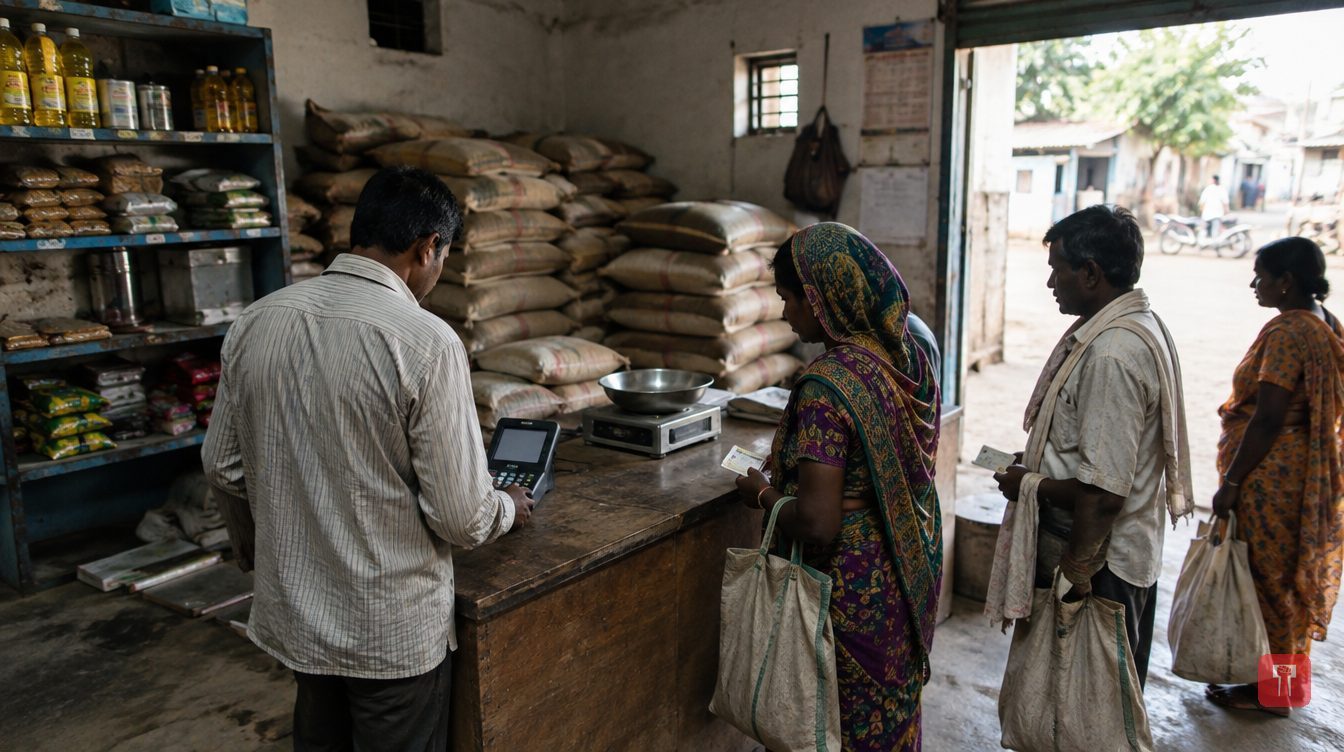 Images are not validated/verified
With festivals under way in Gondpipri, distribution of subsidised ration is stuck on technical hurdles. Dussehra and Diwali are close, and needy and poor families are having to wait for the grain that is their entitlement. The POS machine is reportedly not working, and October's grain has been lying with fair price shopkeepers since July.
More than three months have passed, yet the grain has not reached beneficiaries. Questions are being raised about the functioning of the system concerned.
Through the public distribution system, the government gives poor and needy families grain at low prices or, as per the rules, free of cost. But if people do not get grain despite its being in the shop because of technical hurdles, what is the use of the system, people are asking.
The processing of October's grain is said to have been pending since July. Because the grain cannot be distributed even though it is in the shop, ration card holders are facing hardship.
The shutdown of the POS machine is being cited as the reason distribution has stopped. It is also being said that the NIC system has not yet completed the entry or the required process for this grain, which is why distribution is held up.
Citizens are also asking who is ultimately responsible for removing the technical hurdles and why the process is delayed. They are asking why ordinary beneficiaries should bear the burden of technical problems in a government system.
Dussehra and Diwali are days of joy and enthusiasm, to be celebrated with family. But for families struggling for their daily bread, ration grain matters a great deal. Many families depend on this system to meet their grain needs at home. If distribution remains stuck at festival time, poor families' budgets are likely to be upset. Buying grain from the market at higher prices is beyond many families.
People are also contending with drought, rising household expenses and the struggle to meet daily needs. At such a time, they look to the government's grain distribution system for timely help. If there is delay in the name of technical problems, the economically weaker sections are hit hardest. The administration should take this seriously.
There is a demand that the supply department, the tehsil administration and the technical system work together. Residents want clear information on what the POS machine problems are, which process is pending at the NIC level and how long it will take for grain distribution to return to normal.
The administration is being asked to take these steps: fix the POS machine's technical problems immediately; follow up with the NIC to get the pending process completed; begin distributing the grain lying in ration shops at once, as per the rules; give beneficiaries a clear distribution schedule; and investigate the causes of the delay and fix responsibility.
The scheme exists to get grain to the poor on time. If grain lies in the shop and is not distributed because of a technical hurdle, questions about the efficiency of the system concerned are natural.
