

Gold not compulsory on Dhanteras; brass, copper vessels and coriander seen as auspicious too
 Images are not validated/verified
Scriptures do not make buying gold obligatory on Dhanteras, and several other purchases are considered equally auspicious, the article says.
Dhanteras (Dhanvantari Jayanti) holds an important place in Hindu scripture and Indian culture. Buying something new on this day is considered highly auspicious. Many people believe only gold or silver should be bought. The question is whether buying gold is truly binding, and what to buy if one cannot afford it.
According to the scriptures, buying gold on Dhanteras is considered good, but it is by no means compulsory or binding. In the scriptures, "dhan" (wealth) does not mean only money or gold and silver. Health, prosperity, grain and contentment are also part of wealth. There is therefore no need to buy gold by stretching beyond one's means, borrowing, or carrying a burden on one's mind. What matters here is faith and joy, not the price of the item.
If one does not wish to buy gold or has no budget for it, the items listed below are considered highly auspicious and rewarding according to the scriptures and astrology.
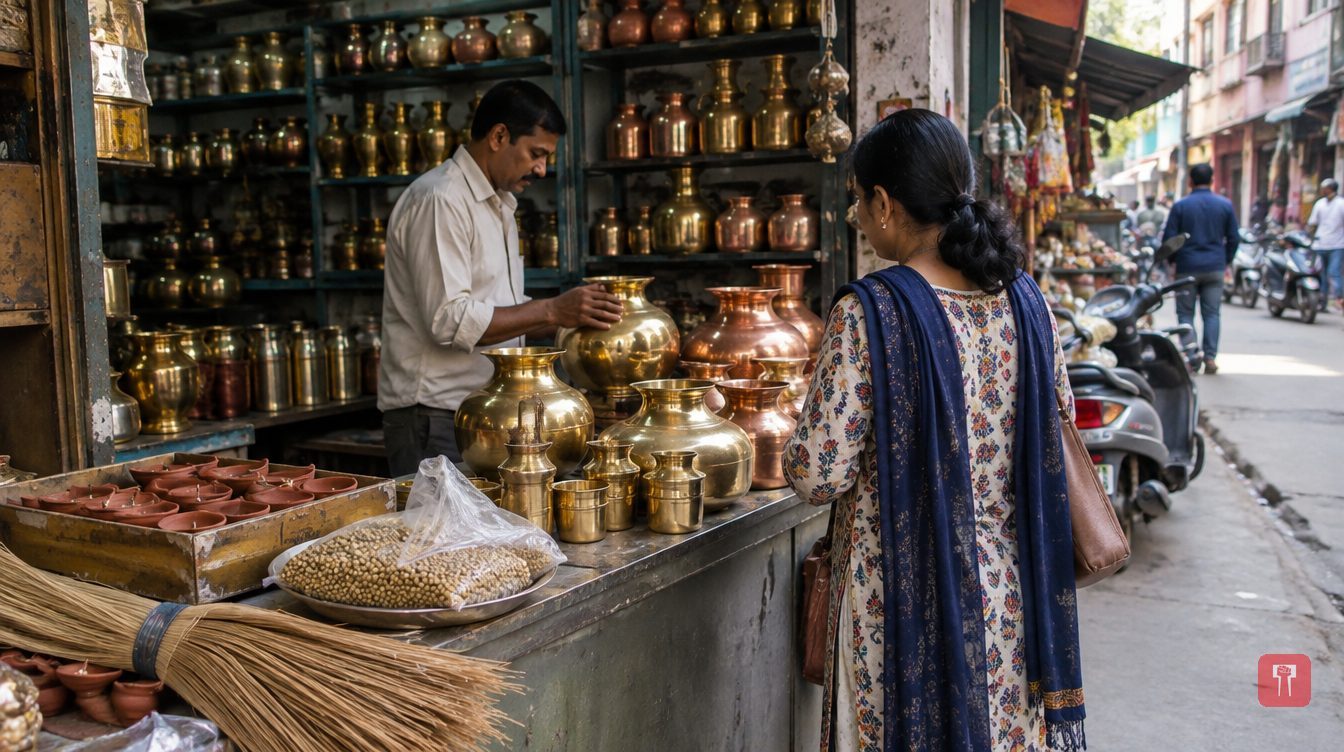
First, brass or copper vessels. Dhanteras is chiefly the day Lord Dhanvantari, the god of health, appeared. When he emerged from the churning of the ocean, he held a brass pot filled with nectar. For this reason, buying a brass or copper vessel or water pot on this day is considered as auspicious as buying gold.
If gold seems expensive, a small silver coin, a silver lamp or a silver spoon can be bought. Silver is regarded as a pure metal that brings peace of mind.
There is also an old tradition of buying whole coriander seeds. Coriander is considered a symbol of prosperity. A little whole coriander is placed before Goddess Lakshmi during the Diwali puja. After Bhaubeej, it is sown in a pot or garden at home. It is believed that just as the coriander plants grow, the prosperity of the household grows.
Buying rock sugar, batasha or khil for the Lakshmi puja and the offering is also described as auspicious. The broom is regarded as a form of "Lakshmi" and is said to drive poverty and negative energy out of the house. On Dhanteras a new broom is bought and worshipped, so that the home remains clean and positive. Clay lamps, diyas and a new idol or picture of Lakshmi and Ganesha for the Diwali puja are also said to be bought on this day.
Since the physician Dhanvantari appeared from the churning of the ocean, prayers for good health are offered on this day. The scripture says "the first happiness is a healthy body", meaning good health is the greatest wealth. In the evening, a lamp is lit outside the house for Yamaraj, facing south. This is called Yamadeepdan. According to the scripture, it protects family members from untimely death.
The legend associated with it is that the son of King Hema was cursed to die of a snake bite on the fourth day after his wedding. On the night of the fourth day, his wife piled gold and coins in the palace and lit lamps all around. Dazzled by the glow of the lamps and the gleam of the gold, Yamaraj, who had come disguised as a snake, could not enter. The prince's life was thus saved. Since then the custom of lighting lamps and worshipping Yama on this day began.
Articles on subjects such as religion, astrology, Vastu and Feng Shui are for readers' information. Experts should be consulted before trying any practice related to them.
Reach readers on the ward they actually live in.
Advertise with Prime Time 24Reach readers on the ward they actually live in.
Advertise with Prime Time 24Reach readers on the ward they actually live in.
Advertise with Prime Time 24
Comments
No comments yet. Be the first.