

Foreign selling, weak rupee weigh on market; Shankar Sharma urges looking beyond Sensex and Nifty
Senior investor Shankar Sharma says index moves alone do not explain the fall, and cautions on liquidity, currency risk and unlisted tech bets.
 Images are not validated/verified
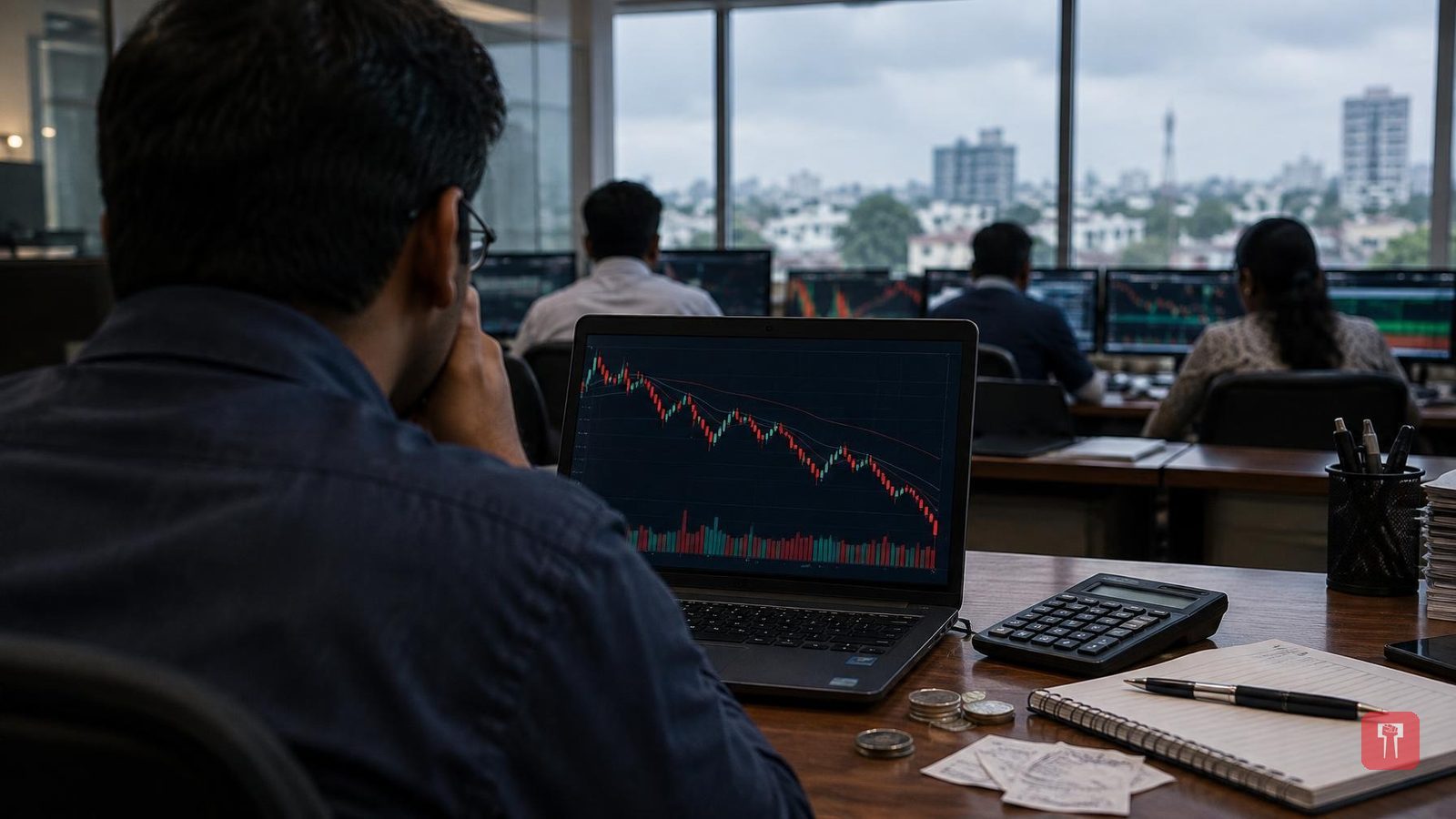
The year 2026 has brought several challenges for investors in the Indian stock market. Continued selling by foreign institutional investors, a falling rupee and higher crude oil prices have put pressure on the market. Senior investor Shankar Sharma says that looking only at the Sensex and Nifty is not enough to understand the market's decline.
On October 12, 2026, the market opened strongly, but the gains did not last through trading and the major indices slipped into the red. According to available data for October, foreign portfolio investors had pulled out about Rs 44,166 crore from the Indian stock market. Their selling in 2026 had by then exceeded Rs 3 lakh crore.
Higher crude oil prices, a higher yield on bonds in the United States and a stronger dollar are seen as the main reasons. For a country like India, which imports crude oil on a large scale, costlier oil can add to inflationary pressure. When the dollar strengthens, foreign investors may find it more attractive to put money in other markets, which creates pressure for capital to leave the Indian market. Even so, it is not right to focus only on foreign selling; companies' performance, their valuations and investors' appetite for risk also have to be considered.
According to Sharma, one major problem with the Indian market is that the indices rest on a few select large companies. Even when the Sensex and Nifty rise, most companies may be performing poorly. Investors should therefore look at equal-weight indices, in which each company gets roughly equal importance, along with market-capitalisation-based indices. The state of midcap and smallcap companies also shows how broad a rally is.
Sharma also voiced concern about market depth and liquidity. Especially in smallcap shares, if trading volumes are low, it can be difficult to sell when needed. If a lower circuit is hit, selling orders can have trouble getting executed. Instead of investing on seeing cheap or fast-rising shares, it is important to understand the ability to buy and sell, and the risk.
The fall in the rupee has a two-sided effect as well. When calculating returns, it is not enough to look at profit in rupees; one also has to consider the currency in which the money will later be spent. Someone who has to spend in dollars or euros on education abroad, travel or any other purpose must look at both the returns in rupees and the rupee's value against that currency. After the Reserve Bank's steps on October 12, the rupee showed some strength against the dollar. Even so, up to that point in 2026 the rupee had fallen about 6.5% against the dollar. This means that even if returns in rupees are positive, their value can decline for spending in a foreign currency. However, it is not that every investor must invest in foreign markets. The decision should depend on one's own needs and risk tolerance.
In a podcast discussion, Sharma gave his views on global stock markets. He is not entirely pessimistic about global shares. But his outlook on the US market is bearish, and on the Indian market moderately bearish. He does not see as much weakness in emerging markets and Latin America. In the discussion on portfolios, spreading investment across Europe, emerging markets and Latin America was mentioned. Exchange traded funds (ETFs) from firms such as BlackRock and Vanguard can be used to take part in the markets of different countries. An ETF allows investment in many companies of a country or region through a single product. But in foreign investment, one must also look at currency changes along with market swings, transaction costs, taxes and the structure of the fund. There is no guarantee that any foreign market will give good returns going forward.
Describing his own portfolio, Sharma said gold and silver together make up about 10%. The share of debt, meaning bonds or fixed-income investments, is also important and was put at roughly 15% to 20% of the total portfolio in the discussion. Three separate aims are visible in this structure: growing capital over the long term through shares, bringing diversification through alternative assets such as gold and silver, and keeping some money ready for other opportunities while earning a relatively stable income from debt. Still, gold and silver prices can also fall. So it is not right to invest the same amount simply because a well-known investor holds a share of these metals in his portfolio. The share should be decided only after considering the investment horizon, the need for money, the whole portfolio and the capacity to bear possible losses.
For the next 3 to 5 years, Sharma has drawn particular attention to the technology sector in India. According to him, tech companies play a big role in some successful markets in the US and Asia, whereas pure technology businesses have limited representation in India's major indices. He therefore suggested looking for investment opportunities in tech companies, especially those not yet listed on the stock market. Such companies may make big gains ahead, but the risks can also be higher. Valuing shares of unlisted companies is difficult, they require deep study of financial information, business stability and future growth, and such shares may also not be easy to sell. Sharma also highlighted the possibility that some companies, instead of succeeding as expected, may fail completely.
The essence of Sharma's views is that investment decisions should not be made by looking only at the direction of the Sensex and Nifty, the popularity of a country's market or past returns. It is necessary to look together at how broad a rally is, how much liquidity the shares have, what effect changes in the rupee have, and how balanced the different assets in the portfolio are. A fall is not only about losses; it is also a chance to review one's investment strategy. But changing investments in haste during a fall, or taking big risks out of greed for the possible returns of another market, is not right.
