

Congress's Abhijit Wanjari wins Nagpur graduates' seat by 3,271 votes, BJP's Sudhakar Kohle loses
 Images are not validated/verified
Congress's Abhijit Wanjari defeated BJP's Sudhakar Kohle in the Legislative Council's Nagpur graduates' constituency, in a city seen as a BJP and RSS bastion.
Congress candidate Abhijit Wanjari defeated BJP candidate Sudhakar Kohle in the Nagpur graduates' constituency election to the Legislative Council. Nagpur is regarded as a stronghold of the BJP and the Rashtriya Swayamsevak Sangh (RSS), and the Congress win has set off discussion in political circles. How the picture changed during counting and how the second-preference votes were tallied became a particular talking point of this election. The reasons behind the BJP's defeat are now being examined.
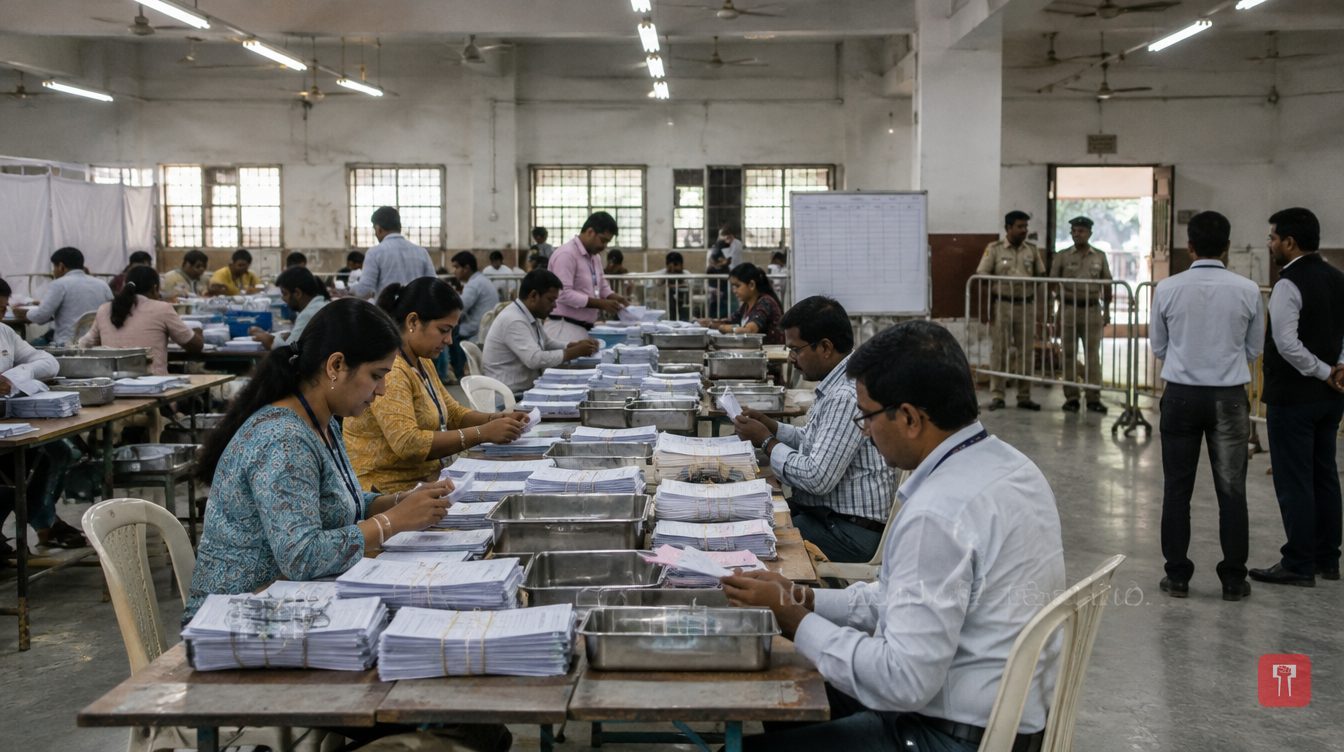
The contest between the two major parties was close from the start of counting. It is said that the arithmetic of the result changed once second-preference votes on the ballots of independent candidate Nitesh Karale began to be counted. After that, Wanjari's lead kept growing and an atmosphere of enthusiasm took hold among Congress workers.
BJP candidate Sudhakar Kohle, for his part, had declined to draw any final conclusion about a win or loss before counting was complete. He had claimed that around nine thousand BJP votes had been rejected, and on that basis had commented on the counting process.
In counting by order of preference, every vote matters. The result can hinge on how much each candidate benefits from next-preference votes after the first-preference votes are counted.
According to current figures, Abhijit Wanjari (Congress) received 67,231 votes, while Sudhakar Kohle (BJP) received 63,960 votes. The margin of victory was 3,271 votes. Independent Nitesh Karale received 25,908 votes. The result is a political setback for the BJP in Nagpur. Congress workers are upbeat about the party's success in an area where the Sangh has influence.
Because Karale received more than 25,000 votes, attention turned to the next-preference votes on his ballots. The graduates' constituency election is based on preference voting, so candidates' votes can shift in later rounds of counting. Even so, it cannot be concluded that all the votes Karale received went to Congress. For that, the official breakdown of the counting has to be seen.
Several factors have to be considered in analysing the BJP's defeat. The concerns of graduate voters, the candidates' image, work at the local level and the organisational strength of the parties can influence voting. How voters responded on job opportunities, education issues, youth concerns and local development is also important. The change in the final result brought about by preference counting has also become a main subject of discussion. However, to say with certainty that any single reason was decisive in the BJP's defeat, separate and official information is needed.
Nagpur is the headquarters of the RSS and is considered an important area for BJP politics. A Congress win on such a seat has added to the significance of the result. It could give Congress an opportunity to raise the confidence of its workers at the local level. The result is also seen as important for the party with an eye on upcoming elections. But it would not be right to draw conclusions about the political mood of the whole state from the win on one seat.
Wanjari's 3,271-vote win, the votes received by Karale and the process of preference counting are all being discussed. Political observers are now watching what lesson the BJP draws from this result and how Congress capitalises on the win in its future politics. On the whole, the Nagpur result has shown that the arithmetic of an election can change even in a traditional stronghold.
Reach readers on the ward they actually live in.
Advertise with Prime Time 24Reach readers on the ward they actually live in.
Advertise with Prime Time 24Reach readers on the ward they actually live in.
Advertise with Prime Time 24
Comments
No comments yet. Be the first.