

Congress's Abhijit Wanjari wins Nagpur graduates' seat on second-preference votes, beating BJP
 Images are not validated/verified
Congress's Abhijit Wanjari won the Nagpur division graduates' constituency by 3,271 votes after second-preference transfers overturned the BJP's first-round lead.
Nagpur is regarded by the BJP not merely as a political centre but as a stronghold shaped by the influence of Union Minister Nitin Gadkari and Chief Minister Devendra Fadnavis. In the Legislative Council election from the Nagpur division graduates' constituency, Congress's Abhijit Wanjari defeated the BJP's Sudhakar Kohale. The result is now widely discussed.
The BJP had led in the early count and was also ahead in first-preference votes, so the party's victory was considered certain. But second-preference votes changed the whole picture. In the end Wanjari won by 3,271 votes, a major setback for the BJP. Questions have begun to be raised about the BJP's election management, its choice of candidate and its ties with its traditional voters.
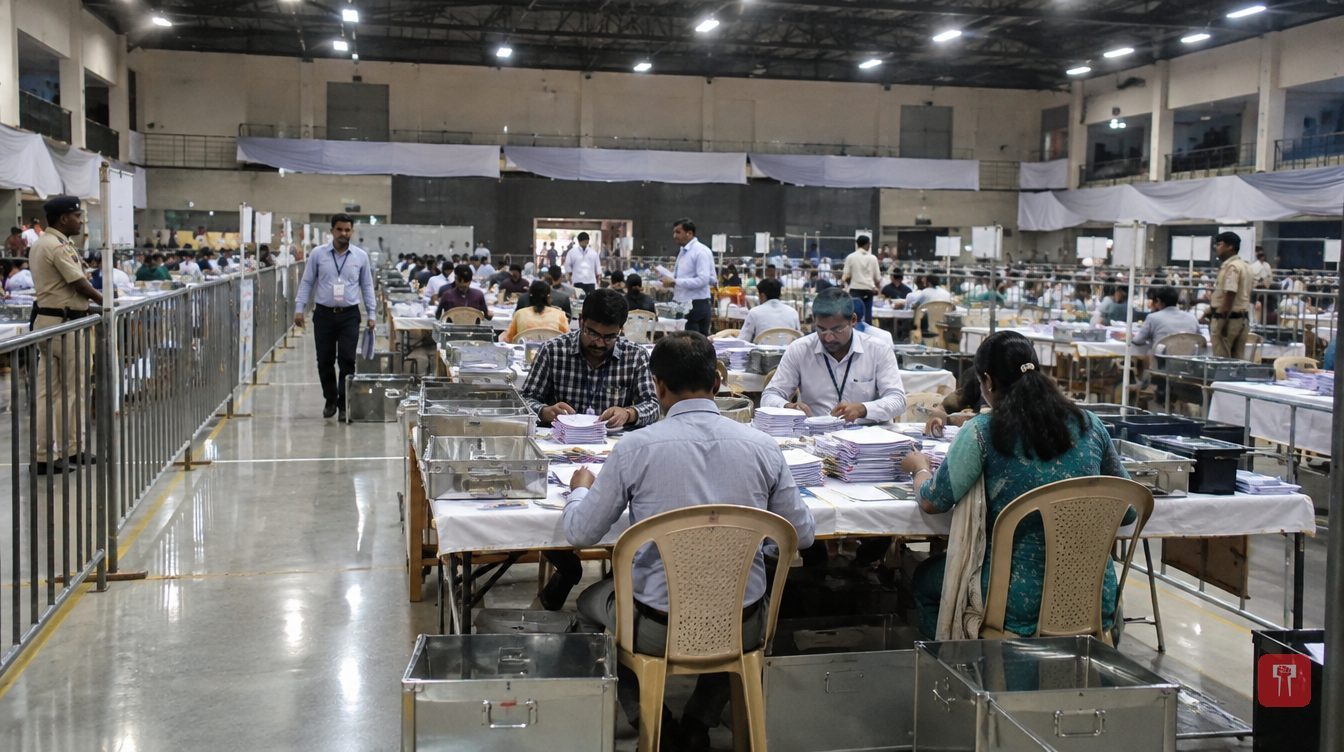
Counting began at 8 am on October 27 at the divisional sports complex in Mankapur. A total of 84 tables were set up and the process lasted more than 41 hours. Congress's Wanjari got 67,231 votes, counting first- and second-preference votes together, while the BJP's Kohale got 63,960. Vijayalakshmi Bidari, the returning officer and divisional commissioner, handed Wanjari the certificate of victory.
In two rounds of first-preference counting, no candidate reached the quota of 75,438 votes needed to win. Of 1,65,906 votes, 15,032 were invalid and 1,50,874 were counted as valid. Under election rules, second-preference votes were then counted and candidates were eliminated in turn. No candidate reached the quota even then. Finally, Wanjari, who had the most votes at 67,231, was declared the winner.
Several reasons are being cited for the BJP's defeat. The first is that differences in the Nagpur BJP surfaced during the selection of the candidate itself. It is said that this resentment made it a challenge to keep party workers united, and it is feared that it affected the later campaign and polling.
There was talk that Anil Sole had taken a rebellious stance together with Girish Vyas. The rebellion later subsided, but the question was raised whether the resentment it created had been fully removed. It is being said that the BJP paid the price for incomplete efforts to remove discontent within the party.
It is also being said that some of the BJP's traditional voters showed indifference to voting or expressed their anger by casting invalid votes. That is, the party's traditional influence alone was not enough, and the BJP fell behind in gathering active support from voters.
Shortcomings in election management are also being discussed. In first-preference votes the BJP had a lead of 4,291 over the Congress. But the objection being raised is that the count by order of preference was not properly thought through. Assuming that the first-preference lead would hold may have proved costly for the BJP. Similarly, in a graduates' election the votes of smaller parties and independent candidates can also be decisive, and it was necessary to understand the importance of second- and third-preference votes and reach out to those candidates. After the result it is clear that the BJP's strategy did not give these votes enough space.
Another talking point was that the BJP did not field a Brahmin candidate, and some voters of that community were therefore upset. It is said that whispers about this are going around within the BJP and the Rashtriya Swayamsevak Sangh as well. There are no official figures on how much this resentment affected the voting.
On the Congress side, it is said that Wanjari planned his strategy very shrewdly. He gathered the support of all the party's leaders and also took care to benefit from the votes going to other candidates. He stayed in touch with the other candidates and tried to win their second- and third-preference votes. This strategy proved decisive as votes were transferred on the ballot according to the next preference.
Nitesh Karale got 24,249 votes, which changed the arithmetic of both the BJP and Congress votes. He received about three and a half times as many votes as in the previous election. The political reading is that some of the anti-BJP resentment went to the other candidates. However, the number of votes alone cannot give a firm conclusion about each voter's thinking. The analysis says that on the ballots of some voters who gave Karale their first preference, the next preference benefited Wanjari.
After the result, BJP state president Ravindra Chavan has reportedly begun preparing a detailed review of the defeat. The affairs of districts in the Nagpur and Pune divisions will be examined, and the work of district presidents, MLAs and ministers may be scrutinised. It is said that the role played by allies in the election will also be reviewed. Chavan is reported to be meeting Union Home Minister Amit Shah on November 2, and a report on the reasons for the defeat, the role of Mahayuti allies and shortcomings in election management may be presented at that meeting.
Reach readers on the ward they actually live in.
Advertise with Prime Time 24Reach readers on the ward they actually live in.
Advertise with Prime Time 24Reach readers on the ward they actually live in.
Advertise with Prime Time 24
Comments
No comments yet. Be the first.