

Check BIS hallmark and HUID before buying gold this Diwali; short purity can bring compensation
Buyers should verify the hallmark, six-character HUID, net gold weight and bill, and can claim double the shortfall if purity falls below the stamped level.
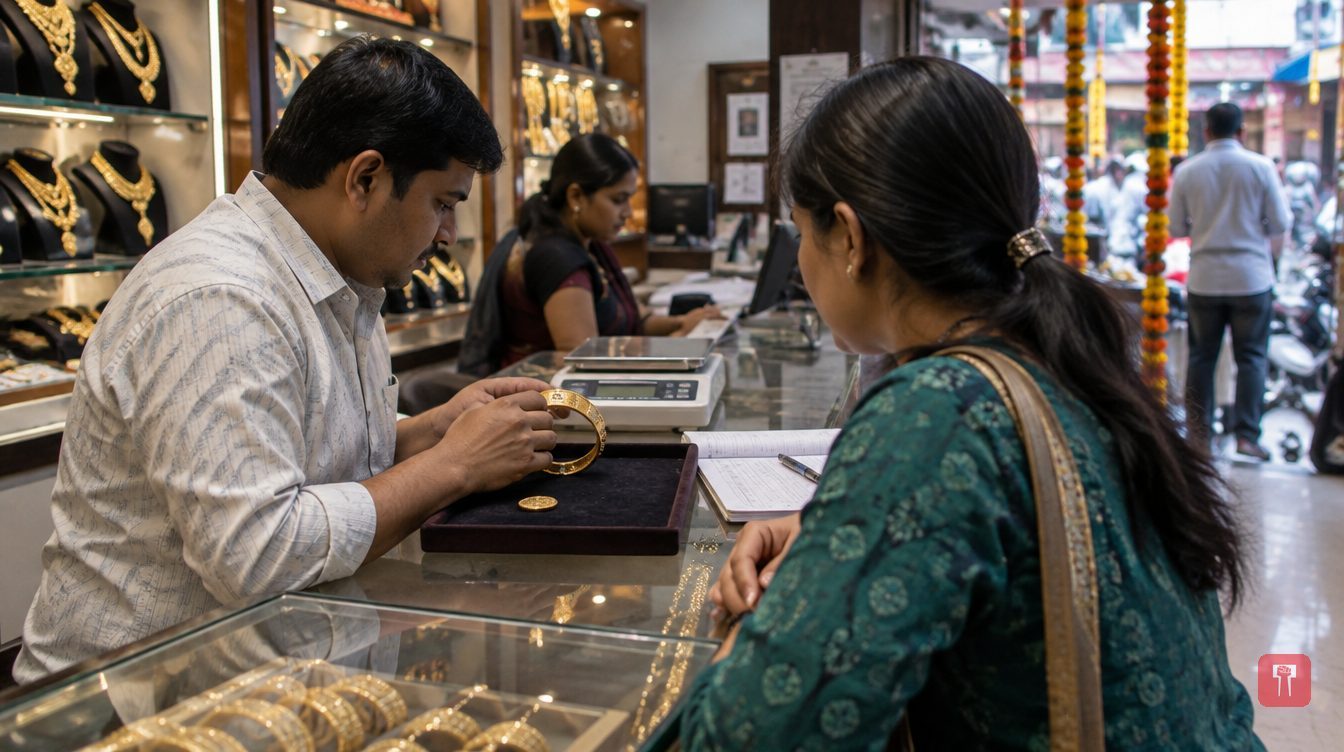 Images are not validated/verified
Those planning to buy gold jewellery, coins or biscuits on Dhanteras and Diwali should not decide on market rate and design alone. Gold prices keep moving, and even a small lapse can prove costly. Buyers should check the BIS hallmark on the jewellery, the 6-character HUID number, the actual weight of the gold and the purchase bill. If hallmarked jewellery turns out to be less pure than the level marked on it, the rules give the customer a route to compensation.
Gold and silver prices are currently at their lowest in six months. On January 29, 2026, gold touched a record Rs 1.93 lakh per 10 grams, and silver reached Rs 4.20 lakh per kg around the same time. Since then, gold has fallen by about Rs 50,000 and silver by a full Rs 2,25,000. Customers may therefore get gold at a comparatively lower price for Dhanteras and Diwali shopping. However, lower prices do not mean they will keep falling. Buyers should keep in mind their budget, the need for the jewellery and the actual rate on the day.
To check purity, first look for the BIS hallmark on the piece. It should carry three things: the BIS mark, the gold carat and fineness number, and the 6-character alphanumeric HUID.
For example, 22K916 on 22-carat gold means the piece is 91.6 per cent gold. Similarly, 18K750 on 18-carat gold means 75 per cent purity. Buyers should match the carat the jeweller quotes against the hallmark details. They should not stop at seeing a hallmark; they should also make sure the number is clearly legible and has an official entry.
The HUID can also be verified on the BIS Care app. Download the app, open it, choose the "Verify HUID" option and enter the 6-character HUID on the jewellery. Then compare the details on the screen with the hallmark. If the type of jewellery, the purity or other recorded details do not match, ask the jeweller for an explanation before buying. If the discrepancy is not resolved, do not buy merely on the jeweller's word.
It is essential to take a proper bill after buying jewellery. It is needed later when exchanging or selling the piece or complaining about purity. The bill should clearly show the description of the item, the net weight of the gold, the carat and fineness, the gold rate applied, making charges, applicable GST and the total amount payable.
If the jewellery is studded with stones, pearls or other decorative items, their weight should be treated separately from the weight of the gold. The weight of the whole piece is not the same as the gold in it, so check that the bill lists the net gold weight separately. Before buying, also understand the jeweller's terms for exchanging old jewellery and for resale. Ask whether making charges are refunded, how much the weight will differ if stones are removed and what deductions apply on repurchase, so that there is no confusion later.
What if the gold turns out to be less pure? Hallmarked jewellery carries a stated purity level. If a test shows purity below that level, the customer should not ignore it. Keep the original bill, the HUID and the hallmark details safe. Also get the piece tested at a BIS-recognised Assaying and Hallmarking Centre, a centre that tests gold purity. After testing, the centre issues a test report that records the identity of the jewellery. A fee may be charged for this service.
If the test report proves a shortfall in purity, complain to BIS or contact it for further action. Under BIS's consumer protection rules, if the purity of hallmarked jewellery is found to be below the marked level, the customer is entitled to compensation of twice the amount of the difference caused by the shortfall, along with the testing fee. The compensation depends on the weight of the jewellery and the shortfall found. However, the conditions of the relevant rules and the evidence requirements must be met to claim it, so the bill, the test report and the hallmark details should be kept safe.
Buying gold on Dhanteras and Diwali is considered auspicious by many Indian families. Gold coins, chains, rings and other jewellery are bought at this time. But with gold prices high, buying without confirming purity can cause financial loss. Before buying, check the market rate for the day, the BIS hallmark and HUID on the piece, and whether the net gold weight and carat are recorded on the bill. Understand the making charges, applicable taxes and the terms for repurchase of old jewellery. If purity is in doubt, seek help from an authorised testing centre. Real purity, a clear bill and verified hallmark details matter more than a low price.
Investors and customers continue to watch gold prices. In its projection issued in June 2026, J.P. Morgan Global Research said gold in the international market could head towards $6,000 per ounce by the end of 2026, and is expected to reach $6,300 per ounce by the end of 2027. Taking the dollar-rupee exchange rate into account, gold in the Indian market is projected to reach about Rs 2.13 lakh per 10 grams. But this is an estimate of a possible price, not a firm prediction. Global demand, geopolitical conditions, interest rate decisions by the US central bank and changes in currency exchange rates could make actual prices differ. Rather than buying merely in the hope that prices will rise, it is better to decide according to one's financial needs.

Comments
No comments yet. Be the first.