

Silver falls below Rs 2 lakh a kg, gold cheaper ahead of Diwali
Silver dropped to Rs 1,94,415 a kg and 24-carat gold to Rs 1,41,670 per 10 grams between September 30 and October 23, ahead of Diwali and the wedding season.
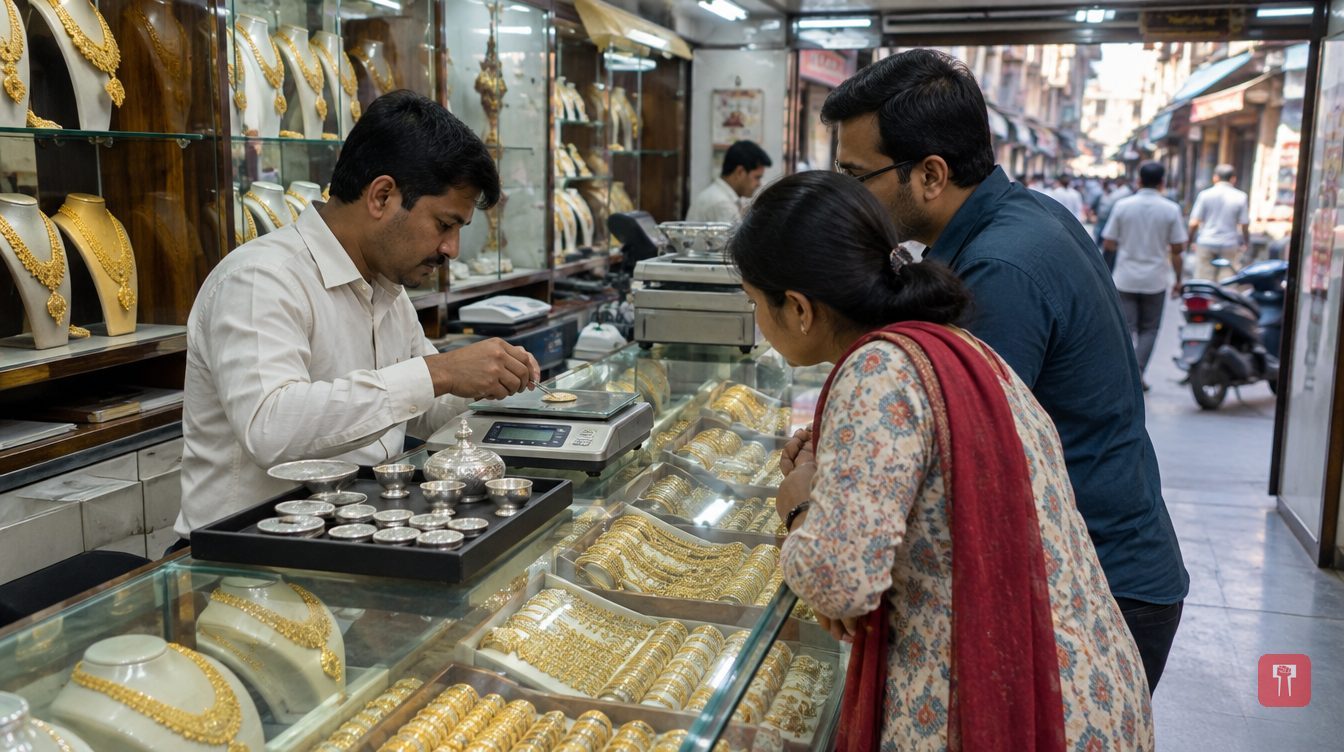 Images are not validated/verified
Diwali and the wedding season are only a few days away, and the gold and silver market has brought relief for buyers. After rising steadily for several weeks, prices have fallen sharply. Silver has slipped below Rs 2 lakh a kg and gold has also become considerably cheaper, giving middle-class and ordinary buyers a good opportunity.
Precious metal prices are seeing major swings in the Indian market and across the world. Data from the India Bullion and Jewellers Association (IBJA) and the Multi Commodity Exchange (MCX) show the following picture.
According to IBJA data, 24-carat gold was Rs 1,47,888 per 10 grams on September 30. On October 23 it fell to Rs 1,41,670. In just 24 days, 24-carat gold became cheaper by Rs 6,258. In the same period, 22-carat gold fell from Rs 1,35,915 to Rs 1,29,566 per 10 grams, a drop of Rs 6,349. Gold futures on the MCX are also under pressure and closed at around Rs 1,41,994 per 10 grams. Gold is now nearly Rs 50,000 below its record level.
Silver fell even more than gold. On September 30 a kg of silver was Rs 2,20,435, and by October 23 it had dropped to Rs 1,94,415. Silver thus became cheaper by Rs 26,020 a kg in a month. With the price below Rs 2 lakh, buyers of utensils, coins and other items have got significant relief. In August silver was at its peak of Rs 2,48,800, and it has since fallen by about Rs 56,000. Silver futures on the MCX are also trading below Rs 2 lakh.
There is no single reason for the fall; several international and domestic factors are at work together. The first is uncertainty over the US Federal Reserve and interest rates. The policies of the US central bank, the Fed, directly affect the gold and silver market. If interest rates in the US stay high, the appeal of gold declines because it pays no regular interest. For this reason, investors are moving to other options.
The second is the strength of US Treasury bonds and the dollar. The yield on Treasury bonds has risen and the dollar has strengthened. When the bond market offers good returns, investors withdraw money from gold, which is seen as a safe investment. This puts heavy pressure on gold and silver prices.
The third is renewed tension in the Middle East and rising Brent crude prices. These have revived worries about inflation. When oil prices rise, central banks tend to take tougher steps to keep inflation in check, which directly hurts gold prices.
The fourth is artificial intelligence (AI) and the equity market. Money is flowing out in large amounts from the technology sector, especially from the shares of AI companies. As a result, investors are turning to other financial instruments instead of safe assets, and sentiment across the market has been affected.
The fifth is profit booking. Over the past few months gold and silver had reached all-time highs. Silver prices rose 170 per cent in 2025. After the record levels were touched, investors began profit booking on a large scale, leading to heavy selling in the market.
There is also an interesting contradiction. While physical prices and the futures market for gold and silver are falling, the situation in gold exchange-traded funds (ETFs) is entirely different. Gold inflows into the world's major gold ETFs have continued for the 14th week in a row. Market experts say, "Long-term investors are steadily accumulating gold through ETFs to protect themselves from geopolitical risks and the falling purchasing power of currencies." This has helped prevent a complete collapse in gold.
Experts' views on what lies ahead are mixed. The future direction will depend on a few factors. Silver is used not only in jewellery but also widely in industrial sectors such as solar panels and electronics. A slowdown in manufacturing affects demand for silver. If industrial demand improves, silver prices could jump again. Central banks in many countries around the world are still adding gold to their reserves, which has given gold prices strong support. According to analysts, if inflation persists for long, central banks may delay interest rate cuts, which could keep gold under pressure for some time. But if an economic slowdown or uncertainty grows, gold will regain its shine as a safe investment.
Buying gold and silver on Dhanteras and Diwali is part of the culture, and demand remains steady with the wedding season close. According to the India Bullion and Jewellers Association, buyers have had good returns this year compared with last year, and the festivals have created enthusiasm in the market. Buyers should keep a few things in mind. Instead of buying only jewellery or bars, gold ETFs or Sovereign Gold Bonds (SGB, if available) can also be considered. When buying jewellery, check the making charges, GST and hallmarking fee, and remember that making charges are not refunded when jewellery is sold. It is not advisable to invest all one's capital at once on guesses such as whether prices will fall or rise further. Buying in instalments according to one's need and budget is always beneficial.
The fall ahead of the festivals is a big opportunity for buyers. Uncertainty persists because of the global market, but in Indian culture buying gold and silver is tied not only to investment but also to sentiment and prosperity. Buying sensibly after checking the latest prices in the local market will therefore be the better course this festive season.

Comments
No comments yet. Be the first.