

Buldhana plans fodder cultivation on 2,400 hectares near eight irrigation projects
 Images are not validated/verified
Irregular rain and drought-like conditions have raised fears of a fodder shortage of 1.52 lakh metric tonnes by the end of June 2027 in Buldhana district.
Irregular rainfall and drought-like conditions in Buldhana district are feared to hit crop yields. The question of fodder for livestock is also turning serious. The animal husbandry department faces the challenge of ensuring that the district's 10.85 lakh animals get enough fodder throughout the year.
In view of the likely shortage, a plan has been drawn up to grow fodder around the district's eight large water projects. A total of 2,400 hectares has been earmarked, and the emphasis will be on raising fodder production.
Going by the number of animals, the district needs 3,433 metric tonnes of fodder every day. The plan states that the total requirement for the period from October to June is 9,26,720 metric tonnes. Even after adding the fodder available and the production expected, a shortfall of 1.52 lakh metric tonnes is estimated by the end of June 2027.
To make up the gap, fodder production will have to be increased. Vacant land around the water projects will be used, and farmers will also be encouraged to plant fodder crops. If fodder runs short, livestock owners may have to buy it from outside, which could raise the cost of keeping animals.
A fund of Rs 2 crore is being readied through the District Planning Committee for distributing fodder seed. The seed will be supplied from this fund. Once eligible livestock owners receive the seed, it could help expand the cultivation of fodder crops. The administration wants to reduce the severity of the likely shortage by steering farmers towards fodder crops.
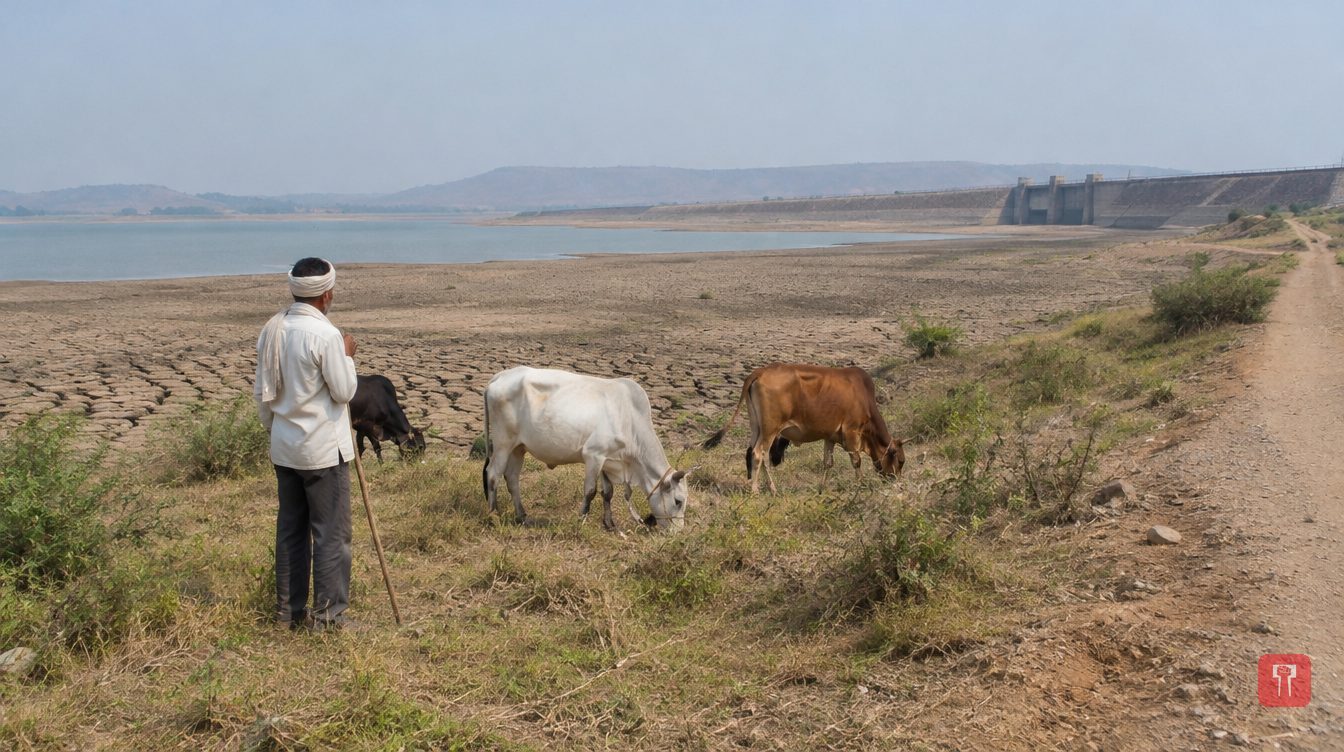
According to the plan, the largest area, 1,050 hectares, is proposed in the Khadakpurna project area. The plan covers 450 hectares in Pentakli, 375 hectares in Nalganga, 155 hectares in Gyanganga, 120 hectares in Koradi, 60 hectares in Palardhag, 48 hectares in Man and 66 hectares in Torna. In the areas of all eight projects, Khadakpurna, Pentakli, Nalganga, Gyanganga, Koradi, Palardhag, Man and Torna, fodder is to be grown on the reservoir bed.
The success of the plan rests on three things: seed arriving on time, sowing being done on time, and fodder crops getting the water they need. Water availability, sowing time, seed distribution and the response of farmers will together decide how much is actually produced and how serious the shortfall remains. In implementation, delivering seed on time, selecting beneficiaries and making proper use of the land to be planted will be important.
If fodder production rises, livestock owners will get relief. Sowing, upkeep and harvesting could also create jobs in villages. Even so, to keep fodder available for the animals, the administration will have to focus not only on drawing up the plan but also on carrying it out on the ground. Given the likely shortage, it will be necessary to raise fodder production and to manage the existing fodder properly.
Reach readers on the ward they actually live in.
Advertise with Prime Time 24Reach readers on the ward they actually live in.
Advertise with Prime Time 24Reach readers on the ward they actually live in.
Advertise with Prime Time 24
Comments
No comments yet. Be the first.