

Bhulabai festival, a folk tradition of Vidarbha and Marathwada, runs till Kojagiri Purnima
The festival, marked with folk songs, games and offerings, honours Goddess Parvati's visit to her parental home and gratitude for the harvest.
 Images are not validated/verified
Maharashtra's folk culture is rich in festivals, folk songs and traditions. One distinctive folk festival is Bhulabai, celebrated mainly in parts of Vidarbha, Marathwada and Khandesh. It brings together religious devotion, worship of nature, collective joy and cultural values. At a time when many folk traditions are fading in modern lifestyles, preserving the Bhulabai festival becomes all the more necessary.
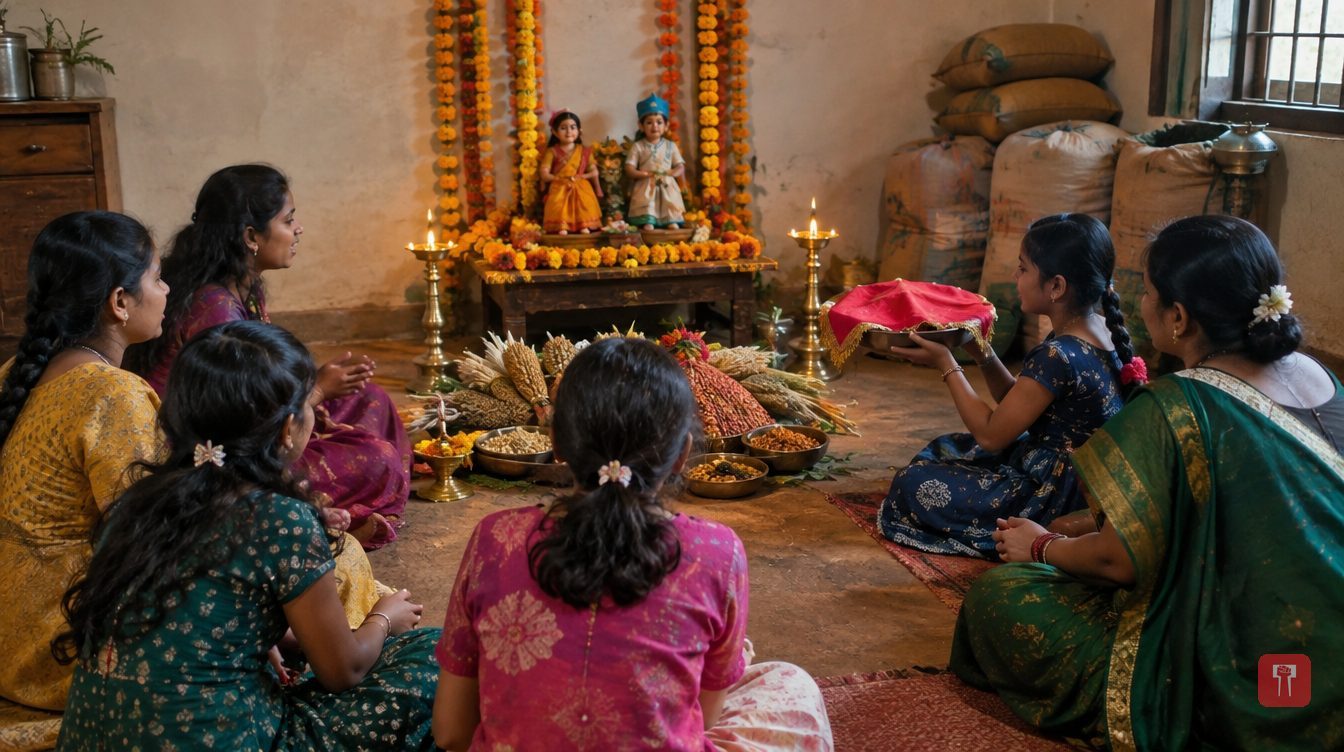
The festival generally begins during Navratri or from Dussehra and concludes on Kojagiri Purnima. Bhulabai is regarded as a symbol of Goddess Parvati and Bhuloji of Lord Shankar. According to folk tradition, it is believed that Goddess Parvati visits her parental home. For this reason, the festival reflects the warmth of the maternal home and the closeness of the family.
Bhulabai's arrival is like a daughter coming home to her parents. Love, devotion and joy find expression in the decoration, worship and group songs performed to welcome her.
After the monsoon, fields turn green and, as crops grow, the arrival of new grain begins to be felt. The festival, held at this time, is linked to a life that depends on farming. In some places, the idols of Bhulabai and Bhuloji are decorated with sorghum ears and a variety of grains. This decoration is regarded as a symbol of nature's abundance.
Grain is produced by the soil, rain, sunshine, seeds and the labour of farmers. The Bhulabai festival is folk tradition's natural way of expressing gratitude for all of these.
The greatest feature of the festival is its traditional folk songs. In the evening, girls and women gather to sing Bhulabai songs, move in a circle and play various games. The songs depict life in the maternal and in-laws' homes, family relationships, everyday events, humour and the inner world of women.
The prasad game is especially popular. A girl brings a food item and the other girls have to guess what it is. The game creates curiosity, quick thinking and joy. The tradition of sharing and eating the prasad together strengthens the spirit of community.
The festival concludes on Kojagiri Purnima, when worship, naivedya and distribution of prasad take place. In some places there is a tradition of offering rabri as naivedya, while in some areas 32 kinds of dishes are prepared. There is also a custom of giving food for the journey when Bhulabai is bid farewell. This tradition reflects love, hospitality and the warmth of the maternal home.
The Bhulabai festival is not merely a religious rite but a living heritage of Maharashtra's folk culture. It offers a fine blend of gratitude to nature, the sweetness of folk songs, friendship, belonging and collective joy. If the next generation sings these songs, plays the traditional games and understands the cultural values behind the festival, the folk tradition will certainly get new life.
