

Mumbai, Pune dams hold less water than last year, raising fears of summer cuts
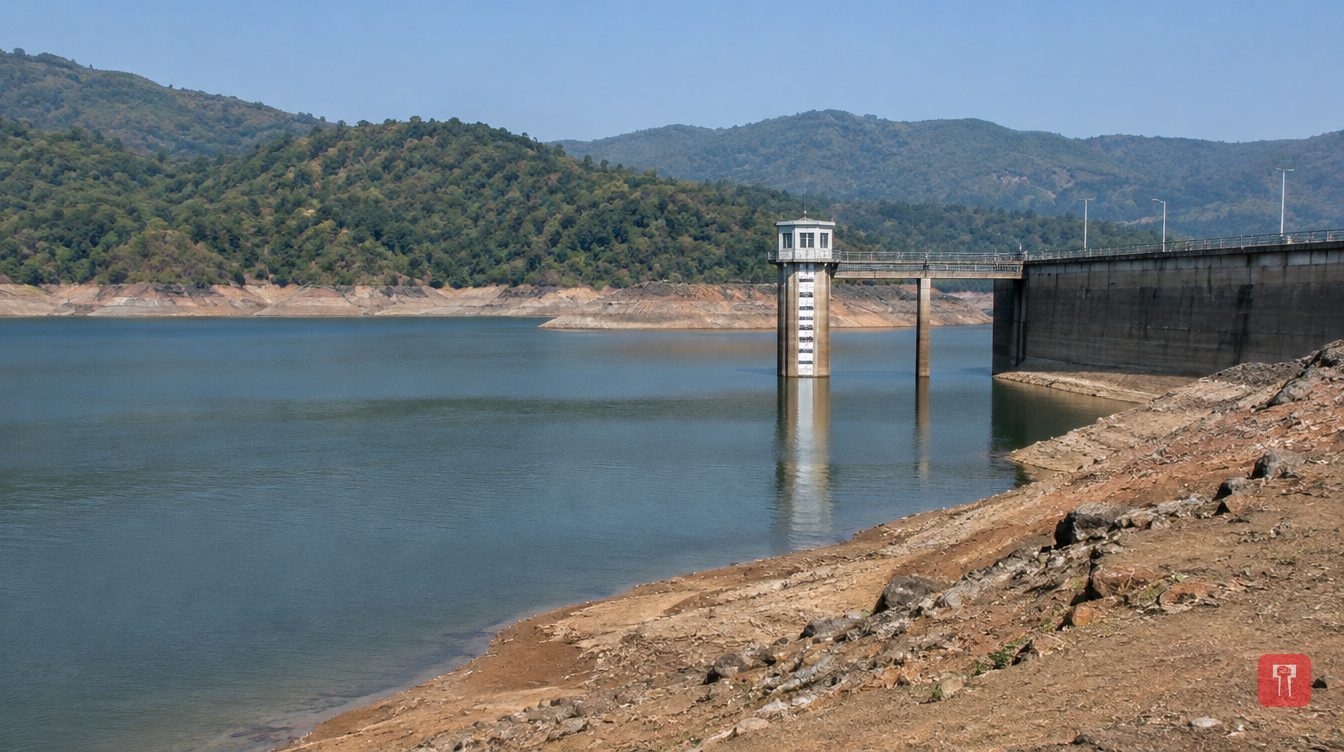 Images are not validated/verified
Mumbai's seven lakes stand at 82 per cent and Pune's Khadakwasla dams at 77.80 per cent, both below last year, after rain fell short under El Nino.
Winter is setting in across the state, and Mumbai and Pune are facing a challenge over their water reserves. Dams should hold good stocks after the monsoon, but this time rainfall fell short of expectations because of the effect of El Nino. As a result, the dams supplying both cities hold less water than they did last year.
Mumbai's seven lakes now hold 82 per cent water, while the Khadakwasla dam series serving Pune holds 77.80 per cent. The shortfall compared with last year is clear, and a water shortage is feared in the coming summer. In view of this, the Brihanmumbai Municipal Corporation has asked the state government for additional reserve water.
Mumbai gets its water mainly from seven lakes: Upper Vaitarna, Modak Sagar, Tansa, Middle Vaitarna, Bhatsa, Vihar and Tulsi. Together they hold 82 per cent. At this time in 2024 the figure was 91.80 per cent, and in 2025 it was 95 per cent. Rainfall in the lakes' catchment areas was below expectations, so the stock did not rise as much.
The levels in the individual lakes are: Upper Vaitarna 92 per cent, Modak Sagar 49 per cent, Tansa 79 per cent, Middle Vaitarna 82 per cent, Bhatsa 85 per cent, Vihar 91 per cent and Tulsi 85 per cent. Modak Sagar is well below the other lakes.
Mumbai needs about 4,100 million litres of water a day. To meet the year's needs, a stock of 14,47,363 million litres was expected in the seven lakes on October 1. If the monsoon is assumed to begin by mid-June next year, the present stock will have to last about seven and a half months. For this reason, the civic body has written to the state government seeking the reserve stocks of the Bhatsa and Upper Vaitarna dams.
The civic body wants 10 to 20 per cent more water than the currently sanctioned quota. According to civic officials, the state government has responded positively to the demand. Last year, 1,47,092 million litres of reserve water was given from Bhatsa and 90,000 million litres from Upper Vaitarna. The administration is planning to use these reserves again this time if needed.
Mumbai imposes a water cut of about 10 per cent every summer, which is lifted once the rains begin and the dams fill. Given the stock this time, a tough decision may have to be taken late in the summer. If the dams' stock reaches a critical level by the end of May, use of reserve water could begin. The administration has also kept in mind the possibility of raising the cut to 20 per cent if the situation worsens.
The Khadakwasla, Panshet, Varasgaon and Temghar dams, which supply Pune, together hold 22.67 TMC of water, or 77.80 per cent of total capacity. The figure is from the report of 5 pm on November 8. Khadakwasla has 1.28 TMC (64.75 per cent), Panshet 7.81 TMC (73.36 per cent), Varasgaon 10.63 TMC (82.94 per cent) and Temghar 2.95 TMC (79.62 per cent).
On the same day last year, the series held 28.23 TMC, or 96.84 per cent. The stock is 5.56 TMC lower this time.
Water is currently being released at 600 cusecs from Panshet, 600 cusecs from Varasgaon and 260 cusecs from Temghar, a total of 1,460 cusecs from the three. This water collects in the Khadakwasla dam. So far, 19.05 TMC has been released from the Khadakwasla spillway into the Mutha river. It then collects in the Ujani dam, on the border of Pune, Solapur and Ahilyanagar districts. On November 8, inflow of fresh water into the four dams was recorded as zero.
How long the water in the two cities will last cannot be given as a fixed date from the present percentages alone. The administrations of both civic bodies are planning to make the water last until August next year. Daily consumption, inflow into the dams, the supply plan, the availability of reserve stocks and the timing of the next monsoon are the key factors. How acute the shortage becomes in summer will depend on water use and rainfall in the coming months.
Reach readers on the ward they actually live in.
Advertise with Prime Time 24Reach readers on the ward they actually live in.
Advertise with Prime Time 24Reach readers on the ward they actually live in.
Advertise with Prime Time 24Choose primetime24.com as a preferred source on Google Google shows more stories from your preferred sources in Top Stories.
Reach readers on the ward they actually live in.
Advertise with Prime Time 24
Comments
No comments yet. Be the first.