

Doctors in Navi Mumbai remove 19-cm toothbrush from stomach of man who swallowed it while brushing
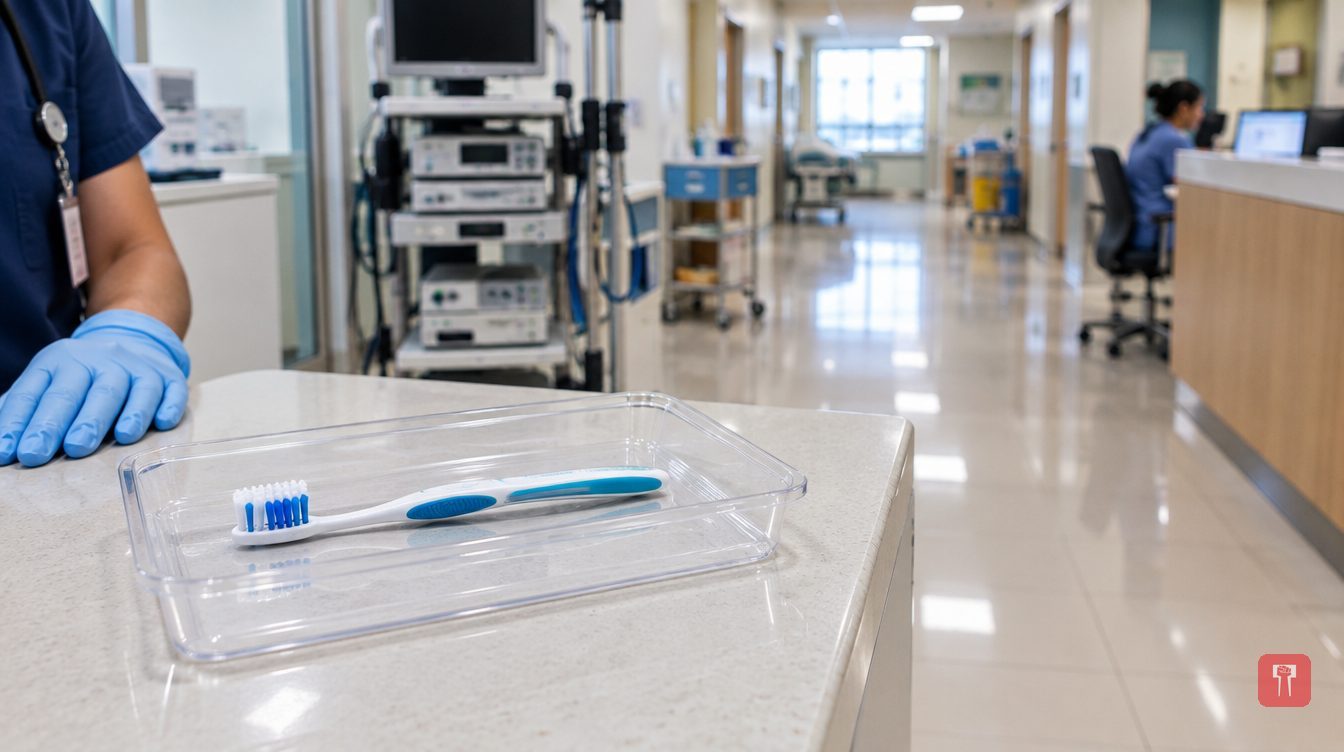 Images are not validated/verified
A 53-year-old Mumbai man swallowed a whole toothbrush on September 29; doctors at Medicover Hospitals, Navi Mumbai, removed it by endoscopy through the mouth.
A 53-year-old man from Mumbai swallowed an entire toothbrush while brushing on the morning of September 29. Doctors at Medicover Hospitals in Navi Mumbai removed it by endoscopy.
The patient said he woke as usual and went to the bathroom to clean his teeth. He also used the toothbrush to clean his tongue. "Suddenly the brush slipped while I was using it on my tongue and went down my throat. It had gone some distance. I tried to take it out, but nothing happened. I shouted for help, but my voice did not come out loudly. When my daughter came, I explained with gestures what had happened. She put her hand in my mouth and tried to pull the brush out, but it would not come. We both kept trying for several minutes," he said.
Despite the panic, the family did not lose their composure. They went to a neighbour's house, and the neighbour took them to a doctor. When the brush could not be removed at the clinic either, the patient was taken to Medicover Hospitals in Navi Mumbai.
At a press conference at the hospital on Tuesday morning, the medical team described it as a "very unusual medical emergency". The treating team was led by Dr Raosaheb Rathod, a consultant gastroenterologist, hepatologist and therapeutic endoscopist at Medicover Hospitals, Navi Mumbai.
Dr Rathod said the patient reached the hospital about three to four hours after swallowing the brush, with mild abdominal pain. Because the case was unusual, further tests were done. Endoscopy showed that a toothbrush 19 cm (about 7 inches) long was lodged in the patient's stomach. According to Dr Rathod, a toothbrush is long and rigid, is hard to move back and forth in the digestive tract, and can cause injury or get stuck in narrow spots.
Dr Rathod said a roughly 30-minute endoscopic procedure was planned to remove it. It was not easy, because the brush was stiff and straight and lay across the stomach, making it difficult to grasp and to bring through the bends of the digestive tract. The doctors fitted a hood to the tip of the endoscope, caught one end of the brush with it and pulled it out slowly.
The patient was kept under general anaesthesia for a short time. According to Dr Rathod, the brush first got stuck where the stomach meets the food pipe. After repeated attempts and changes in the patient's position, it was moved past that point. It then lodged in the throat near the upper oesophageal sphincter and the post-cricoid region. The brush was rigid and could not bend with the curves of the food pipe, so it had to be turned with greater care. In the end it was removed intact through the mouth.
A repeat endoscopy later showed no injury to the upper or lower oesophageal sphincter. The patient's symptoms improved and, after observation in the recovery room, he was discharged in stable condition within three to four hours of the procedure.
Thanking the doctors, his family and all well-wishers, the patient said: "I was taken to the operation theatre at 2.40 pm that day and reached home by late evening. I am very grateful for the outcome. Now I use the toothbrush only for my teeth, not for my tongue. At that time I was afraid I would not be able to breathe. Thanks to God and everyone who helped, I will be able to see one more Diwali."
The doctors said cases of people swallowing things such as fish bones, toothpicks or chikoo seeds come up regularly and need immediate treatment, but swallowing an entire toothbrush is a rare and frightening case. They said delay in treatment can lead to complications such as intestinal obstruction and perforation.
Doctors advise anyone who swallows a toothbrush or another large object to go to a doctor immediately instead of trying home remedies. They said trying to induce vomiting, or to push the object down by eating, can injure the throat or food pipe, cause bleeding, or make the object lodge more tightly. They said timely treatment is the key to the patient's safety.
Reach readers on the ward they actually live in.
Advertise with Prime Time 24
Comments
No comments yet. Be the first.