

Bombay HC forms high-level panel to oversee BMC and MPCB as Mumbai air worsens
 Images are not validated/verified
The Bombay High Court has formed a committee to check how civic bodies and the MPCB are implementing pollution control measures in Mumbai and the Mumbai Metropolitan Region.
The Bombay High Court has set up a high-level committee to supervise how the Brihanmumbai Municipal Corporation and the Maharashtra Pollution Control Board (MPCB) deal with the steadily worsening air in Mumbai, its suburbs and the wider Mumbai Metropolitan Region (MMR).
The panel has two members: Amjad A. Sayed, a former Chief Justice of the Himachal Pradesh High Court, and Anuja Prabhudessai, a retired judge of the Bombay High Court.
Its job is to check whether the court's earlier directions are actually being followed and to go through the reports filed by the municipal corporations. It must also recommend steps for the short, medium and long term to bring pollution down.
The High Court had already appointed a separate committee that visits construction sites and looks into breaches of pollution norms. The new body will review what that committee finds. It has also been asked to look at further options, among them a Graded Response Action Plan (GRAP) for Mumbai and Navi Mumbai.
A Division Bench of Chief Justice Chandrashekhar and Justice Gautam A. Ankhad took the step because pollution has not eased despite repeated court intervention. The judges observed that the compliance affidavits filed by the municipal corporations and the MPCB point to no significant improvement in air quality.
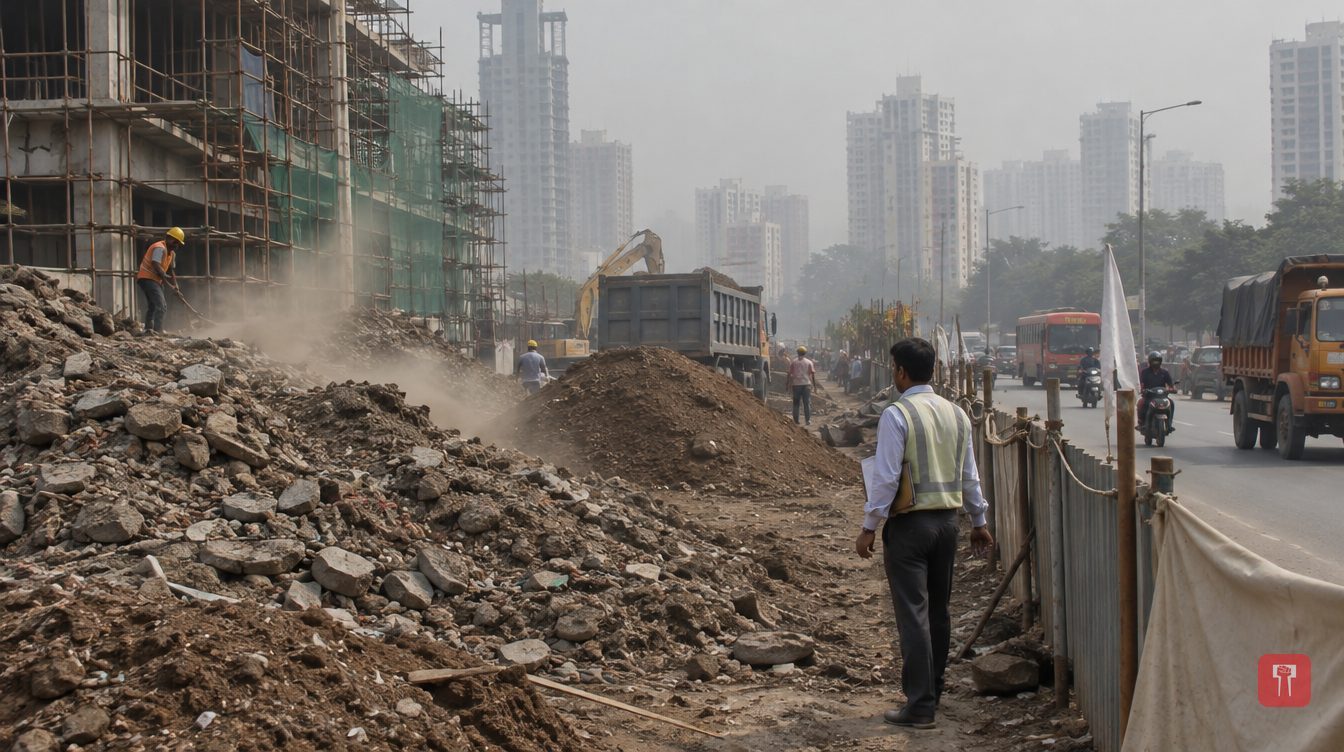
The Bench listed a string of failings. Many construction sites have no instruments to monitor air quality. Enforcement squads of the civic bodies are not carrying out proper inspections. Violations found during earlier inspections were not followed up with suitable action. Building material, debris and soil left lying in the open at many places was described as a serious concern.
The court also voiced unease about the absence of accountability even though a great deal has been spent on pollution control. It pointed out that Rs 360 crore was set aside for ward-level cleanliness programmes in 2024-25, yet the improvement that was expected cannot be seen on the ground.
The judges questioned how effective the MPCB's enforcement machinery is, too. In their view, simply filing compliance affidavits does not show that pollution control measures are working in practice.
The committee has the power to consult experts in the environmental and medical fields, to hold meetings and, where needed, to inspect sites. It must submit a preliminary report by March 5 and then report to the court every month.
The High Court has cautioned that any authority or individual that refuses to cooperate with the committee, or ignores its directions, could face contempt of court proceedings.
Reach readers on the ward they actually live in.
Advertise with Prime Time 24Reach readers on the ward they actually live in.
Advertise with Prime Time 24Reach readers on the ward they actually live in.
Advertise with Prime Time 24
Comments
No comments yet. Be the first.