

Yogasana and Mallakhamb win praise from China, South Africa at BRICS sports festival in Ahmedabad
Yogasana, Mallakhamb and Kalaripayattu drew applause at the first BRICS traditional and indigenous sports festival, which brought about 160 players and delegates from 10 countries.
 Images are not validated/verified
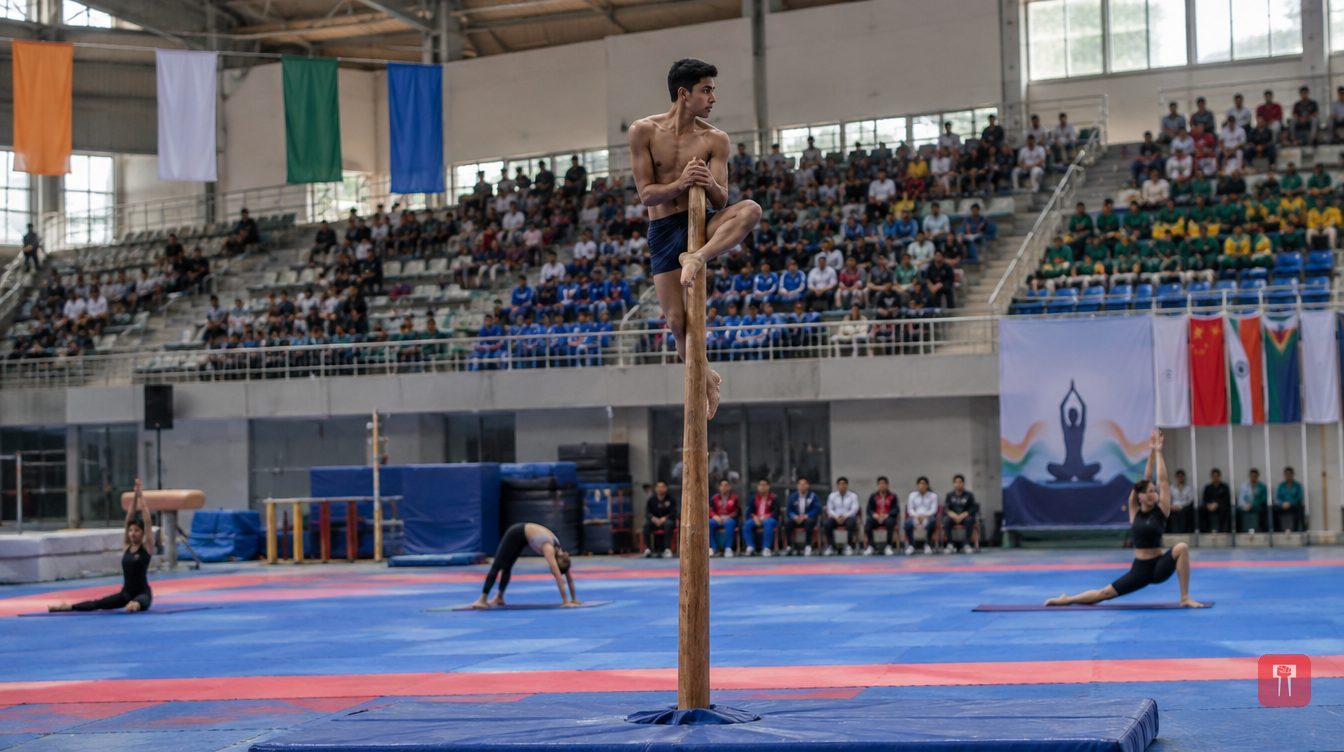
Yogasana impressed delegates from China and South Africa at the first BRICS Traditional and Indigenous Sports Demonstration Festival 2026, held at the Veer Savarkar Sports Complex in Ahmedabad. Mallakhamb and Kalaripayattu also won over the audience. About 160 players and delegates from 10 countries took part in the one-day event.
At the festival on Monday, each country showed its traditional and indigenous sports. These included China's wushu, India's mallakhamb, Kazakhstan's togyzkumalak and Brazil's Brazilian jiu-jitsu. India's presentation also featured yogasana, which showed the growing interest in yoga across the world. Delegates from China and South Africa praised Indian yogasana in particular.
South Africa's chef de mission, Philasande Mcwilili, spoke about the importance of yoga. According to him, yoga is among the popular activities in South Africa too. Many people practise it to reduce stress, increase flexibility and keep the body refreshed. "We love yoga very much," he said.
About 3,000 spectators were present at the Veer Savarkar Sports Complex. They warmly applauded the mallakhamb performance by the Indian youth team. A rhythmic and attractive yogasana presentation followed.
China's chef de mission, Yi Liu, also praised Indian yogasana. "Today we saw and learnt a lot about yoga. During practice, we saw small children performing amazing movements. We want to know more about yoga," he said.
The festival gave players from different countries a chance to share information and experience about their sports. A Chinese wushu player taught the finer points of wushu to players at the Sports Authority of India's National Centre of Excellence in Narayanapura.
Delegates from the participating countries also praised India's hospitality and the organisation of the event. Yi Liu said the Chinese delegates had been welcomed warmly since reaching India. A dance team welcomed them even when they arrived at the airport at midnight. They also got to taste Indian and international food, and dosa was a special experience for them.
Zlata Yakovleva, head of the Russian delegation, also praised India's hospitality. She said that the friendship among BRICS countries and the chance to take part in such events together were her favourite things about the festival.
India had the largest contingent at the festival, with 50 participants. China sent 30, Iran 22 and South Africa 14.
Belarus showed gorodki, Bolivia showed lucha de cholitas and tinku, Brazil showed jiu-jitsu and capoeira, China showed lion dance, wushu and health qigong, and Iran showed zurkhaneh, haft sang and ghanyeh.
Kazakhstan presented traditional games such as asyk atu, togyzkumalak and Kazakh kuresi, Russia presented sambo and gorodki, South Africa presented kgati and intonga, and the United Arab Emirates presented Al Tabbah. India presented its cultural and sporting tradition to the world through mallakhamb, yogasana and Kalaripayattu.
