

Kautilya Economic Conclave praises India's growth, with talk of New Zealand trade deal
Economists and delegates at the Kautilya Economic Conclave 2026 lauded India's resilience and growth, and discussed climate cooperation and investment.
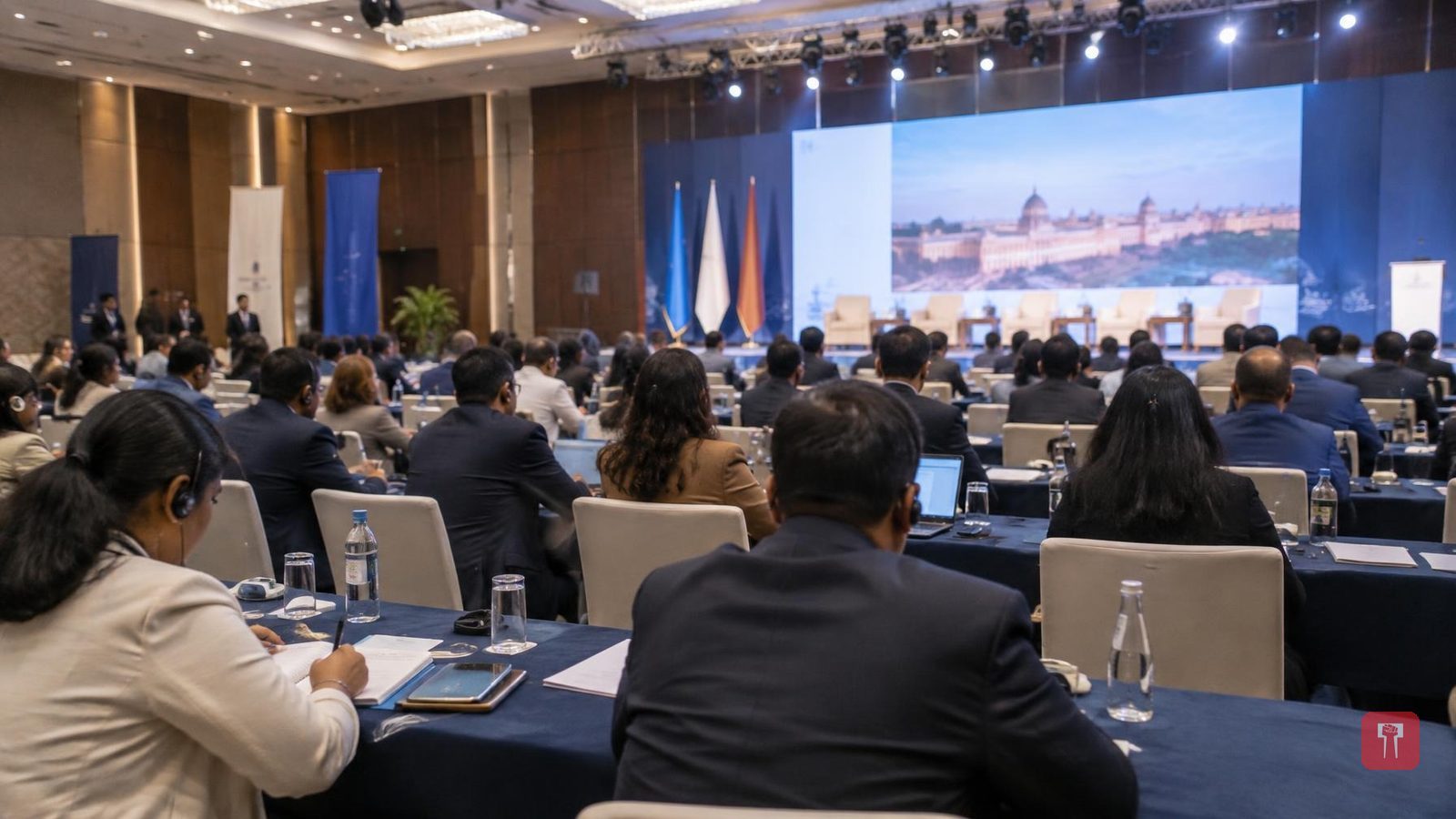
The world is grappling with economic uncertainty, rising inflation and geopolitical tension between countries. Even in these testing times, the strength and fast growth of the Indian economy are drawing the attention of economists worldwide. Noted economists, policymakers and international delegates gathered at the recently held Kautilya Economic Conclave 2026, where India's growth potential was openly praised. It was also underlined that India has become the safest and most rewarding destination for global investors.
After the Covid-19 pandemic, many developed countries struggled to steady their economies. India turned that crisis into an opportunity and carried out unprecedented economic reforms. The conclave held in-depth discussions on highly sensitive issues such as international trade, energy security, the risks of climate change and global supply chains. The way India has sustained its growth rate despite the threat of a global slowdown drew praise from the international community.
Swedish economist Erik Berglof said at the conclave that international participation in the Kautilya Economic Conclave is growing sharply every year, which shows India's global importance. He said the military conflict with Iran and rising geopolitical tension in West Asia have had a major impact on fuel supplies and inflation worldwide. The strain of this tension is being felt in the economies of many countries, including India.
To give relief to ordinary citizens and local businesses during this global crisis, the Government of India has introduced a number of financial concessions and schemes. This could add some pressure on the exchequer and on fiscal deficit plans. Maintaining fiscal stability without slowing growth is the main challenge before Indian policymakers. Even so, heavy demand in the domestic market is helping bring the situation under control quickly.
Climate change is not limited to any one country and has become the biggest shared threat to the whole world. Juliano Assuncao, director of Brazil's Climate Policy Initiative, said at the conclave that no country can face the climate crisis alone. International cooperation is essential for green energy, climate-friendly technology and sustainable development.
India and Brazil are playing an important role in this. Strategic and economic ties between the two countries have grown stronger through the BRICS forum. Investment by Indian companies in Brazil's energy and infrastructure sectors is rising steadily. New Zealand economist Professor John Gibson praised the recently concluded free trade agreement (FTA) with India. He said that in an atmosphere of global uncertainty, such bilateral trade agreements provide economic stability.
In the present era, economics and geo-economics cannot be separated. Kazuto Suzuki, director of a geo-economics institute in Japan, said that because of growing political and economic entanglements with China, Japanese industry sees India as a very safe and dependable market.
Japanese companies are not just selling their products in India. They are investing heavily to make India a global manufacturing hub for the long term. Thanks to India's large population (demographic dividend), skilled human resources, fast-improving infrastructure and the digital revolution, foreign investors' confidence in India is doubling day by day.
