

World Post Day: How India Post stayed relevant in the age of email and WhatsApp
On World Post Day, India Post's shift to e-commerce logistics and digital banking explains why the postal service endures despite email, WhatsApp and AI.
 Images are not validated/verified
World Post Day is observed across the world on October 9 every year. It marks the founding of the Universal Postal Union (UPU) in Bern, Switzerland, in 1874. Today an email goes off with one click, WhatsApp messages arrive in seconds and artificial intelligence (AI) drafts replies on its own. It is natural to ask why the postal service and paper letters are still alive.
The answer is that the post office has done more than survive. Riding on e-commerce and digital payments, it has transformed itself completely.
There was a time when a postman arriving with a bag in hand and a bicycle was awaited by an entire family. Whether it was a money order or a letter bringing news of a distant relative's well-being, the postman seemed a messenger of good tidings. Digital messaging has certainly reduced personal letters asking after one's health. But the importance of letters has not ended.
Legal documents, passports, driving licences, banking cards, papers for government schemes and the courts still rely on the postal service the most for official communication. At festival time, people still crowd post offices to send handwritten letters, greeting cards and rakhis.
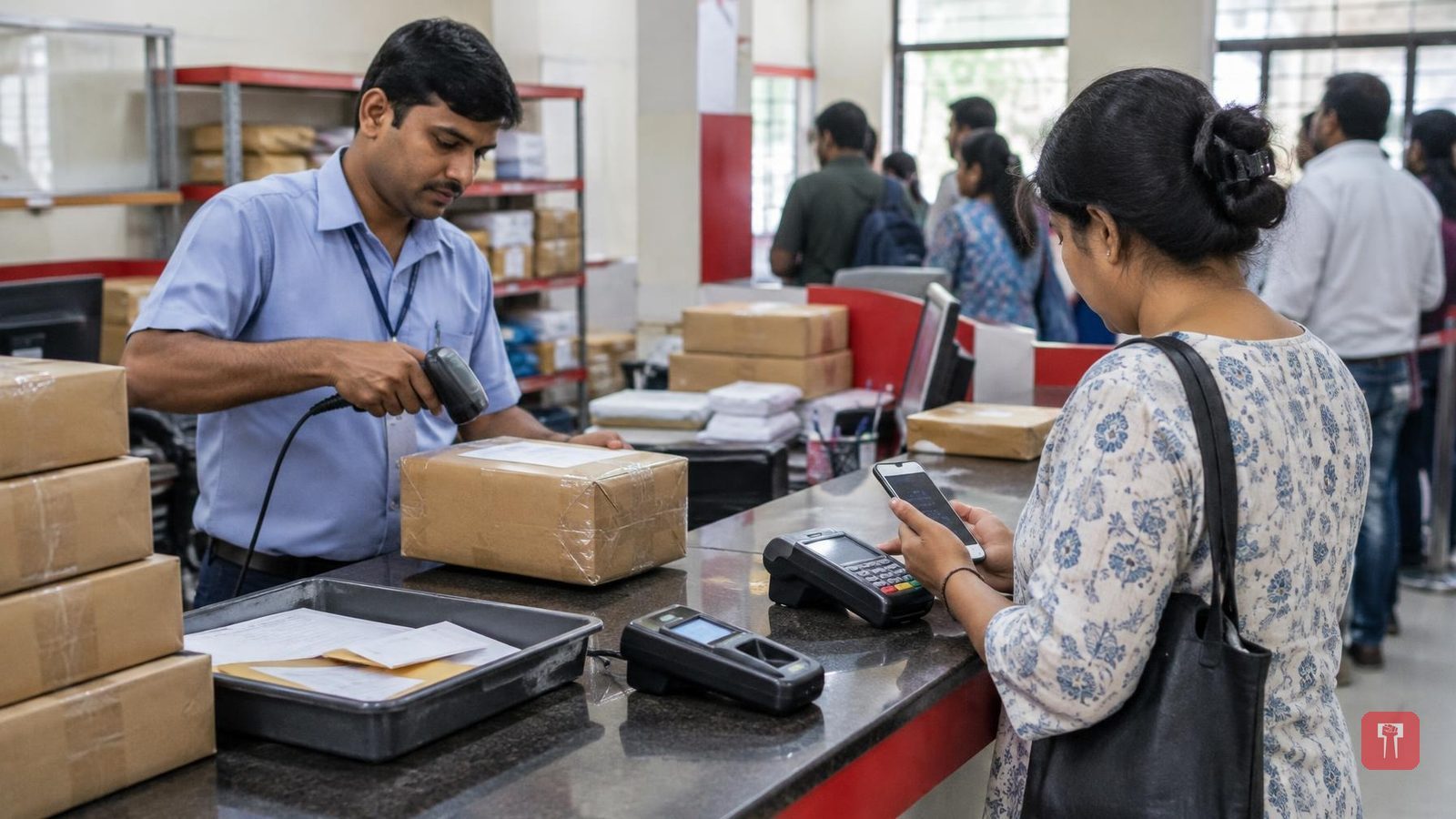
It had been assumed that digital technology would shut down the postal service. But India Post turned that challenge into a big opportunity. After e-commerce companies such as Amazon and Flipkart arrived, delivering goods to the doorstep became the biggest need. In every corner of the country, including remote and hilly areas that private courier companies' networks do not reach, the postal network was already in place.
For this reason the postal department has become the largest logistics partner in the e-commerce sector. With Speed Post, business parcels and modern tracking systems, lakhs of parcels are delivered safely every day. The old postal service has now turned into a state-of-the-art logistics and delivery network.
The biggest example of the postal service's modernisation is the launch of India Post Payments Bank (IPPB). In rural and semi-urban areas with no bank branches or ATMs, the department has taken banking services to people's doorsteps. Through the Aadhaar Enabled Payment System (AePS), any citizen can now withdraw cash from the postman by giving a thumb impression.
Today's postman does not just deliver letters. Carrying a smartphone and a biometric machine, the postman has become a "walking bank officer". Through digital payments, Digital Life Certificates, Aadhaar updates, Sukanya Samriddhi Yojana and the direct benefit transfer (DBT) of various government schemes into bank accounts, the post office has given the rural economy new strength.
However far technology advances, AI or digital messages cannot replace the human touch and trust. Indians share a distinct emotional bond with the post office and the postman. Even while adopting new technology, the postal service has not let that basic trust break.
An email can be deleted in a few seconds, but words written in ink on paper are kept for years as memories. Today the postal service, while honouring an old tradition, is working to fulfil the dream of a modern digital India. World Post Day is a day to appreciate this continuing service, trust and modern change.
